How Do Calories Actually Work for Weight Loss?
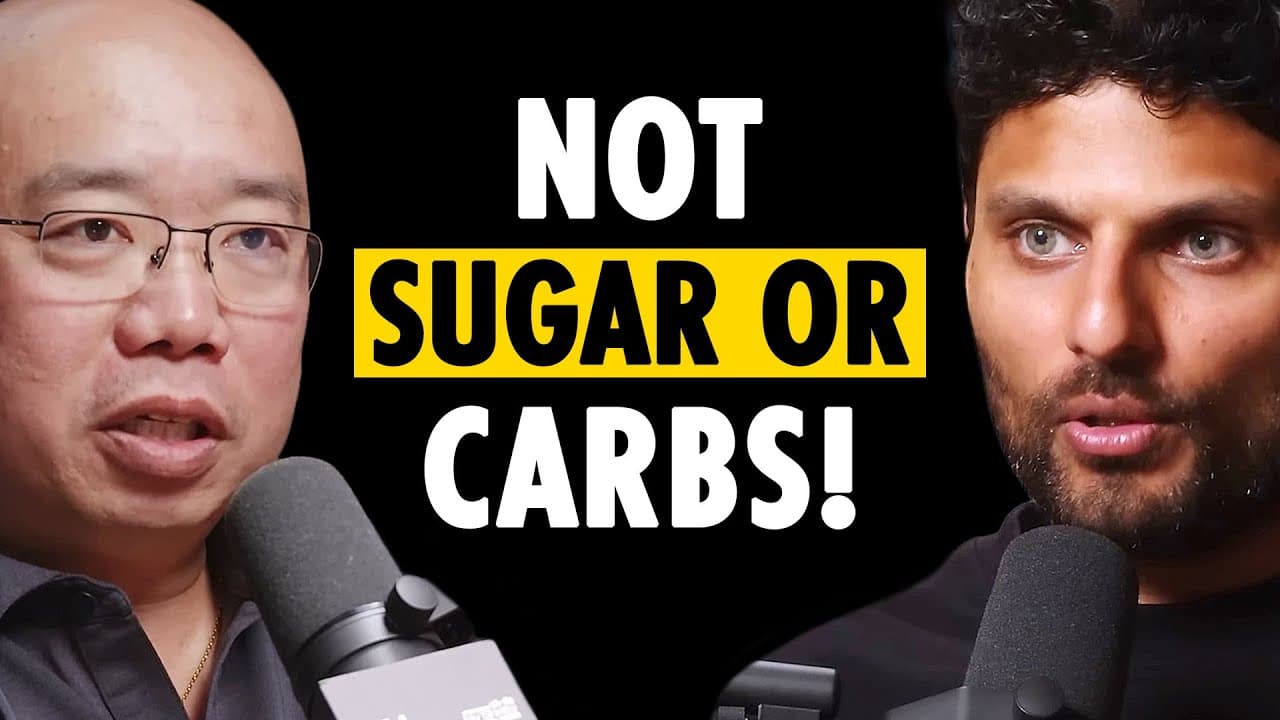
TL;DR
Calories are not identical in their effects on the body. The quality of food, protein and fiber content, and processing impact how many calories you actually absorb. Genetics influence hunger and fat storage, so weight loss is not just a numbers game.
Transcript
Why is it so difficult to lose weight? Because your brain hates it when you lose weight. You're fighting biology. Dr. Jio, welcome. Thank you so much. So, if calories is such a myth, how come so many people have used it as a strategy for weight loss? People get so obsessed with just the number that when they're cutting calories, they're considering... Read More
Key Insights
- Calories are not universally equivalent because the body’s energy extraction varies with food quality and processing, altering the usable energy per unit of food.
- Protein and fiber increase the work the body does to extract calories, reducing net energy absorbed compared to foods low in these components.
- Food processing can change how many calories are absorbed, with meals prepared over longer cooking times potentially yielding more usable calories than the same ingredients eaten raw.
- The comparison between different foods on a calorie basis is misleading if it ignores nutrient density, fat content, and the presence of micronutrients that affect health.
- Calorie counting alone can fail because it overlooks how dietary composition, not just total calories, influences weight management outcomes.
- Genetics influence hunger signals and fat storage pathways, meaning individuals vary in how easily they gain or lose weight irrespective of calorie totals.
- The discussion highlights that cooking fire and human evolution shaped energy availability, linking diet quality to cognitive and biological development across history.
- Diet advice should focus on improving overall diet quality, including protein, fiber, and nutrient-rich foods, rather than solely reducing calorie intake.
- More videos from this channel:
- More from this channel: Jay Shetty Podcast
Install to Summarize YouTube Videos and Get Transcripts
Explore YouTube Video Summarizer or Get YouTube Transcript Extractor
Questions & Answers
Q: What is the core argument against counting calories as the sole weight loss strategy?
The core argument is that calories are not a uniform measure of energy for the body. The way the body extracts energy depends on the food's quality, protein content, and fiber. Processing and preparation alter how many calories are actually absorbed, so two foods with the same labeled calories can yield very different net energy, influencing weight loss outcomes more than the label suggests.
Q: How do protein and fiber affect calorie absorption?
Protein and fiber force the body to work harder to extract energy from food. Higher protein and fiber contents slow digestion and metabolism, reducing the fraction of calories that are actually absorbed. This shifts the focus from simply counting calories to prioritizing foods that promote satiety and efficient energy use, which can aid weight management.
Q: Why can two foods with the same calorie count be nutritionally different?
Because processing and cooking alter energy availability. For example, desiccated or cooked forms can increase the absorbed calories compared to fresh forms. The same base ingredient can yield different net calories depending on processing, cooking time, and how the body digests and utilizes those nutrients, leading to different metabolic effects.
Q: What role does food processing play in calories consumed?
Processing can change how many calories are absorbed by the body. Cooked and processed forms may make more calories available to the body than raw counterparts, meaning equal labeled calories can result in different energy absorption and thus different impacts on weight and metabolism.
Q: How does genetics influence weight management according to the interview?
Genetics influence hunger signals, satiety, and how the body stores fat, meaning individuals may respond differently to the same calorie intake. These genetic differences can make weight loss easier for some and harder for others, underscoring why a one-size-fits-all calorie approach often fails.
Q: Why is it problematic to rely solely on calorie labels from restaurants or manufacturers?
Relying only on calorie labels ignores the quality and composition of the food, including protein, fiber, micronutrients, and processing level, all of which affect energy extraction. This simplification can mislead people into choosing foods that are technically low in calories but poor in nutritional value and satiety.
Q: What shift in dieting does the guest advocate?
The guest advocates focusing on diet quality rather than just calorie totals. This includes prioritizing high protein and high fiber foods, understanding that processing affects energy absorption, and recognizing genetic differences in hunger and fat storage. Such an approach supports sustainable weight management beyond simplistic calorie counting.
Q: How does cooking history relate to modern weight management discussions?
The conversation links cooking evolution to energy availability, suggesting that better cooking methods increased energy extraction historically and may influence metabolic efficiency today. Understanding this helps explain why the body responds differently to various foods and supports arguments for emphasizing diet quality over raw calorie counts.
Summary & Key Takeaways
-
In this interview, the host and guest discuss why calories do not count in isolation and how food quality, protein, and fiber influence energy extraction by the body. They explore cooking, processing, and the impact of genetics on hunger and weight management, challenging common dieting myths.
-
They emphasize that cheap, high calorie foods can mislead calorie counting while quality nutrients and processing levels alter actual energy availability, thereby affecting weight loss outcomes and overall health.
-
They stress that understanding individual differences, including genetics, is essential to designing effective, sustainable dietary changes beyond mere calorie totals.
Read in Other Languages (beta)
Share This Summary 📚
Summarize YouTube Videos and Get Video Transcripts with 1-Click
Try YouTube Summary with ChatGPT & Claude or YouTube Transcript Generator
Explore More Summaries from Jay Shetty Podcast 📚





Summarize YouTube Videos and Get Video Transcripts with 1-Click
Try YouTube Summary with ChatGPT & Claude or YouTube Transcript Generator