How Does Dopamine Drive Our Choices and Addictions?
TL;DR
Dopamine acts as the brain's key reward signal, reinforcing behaviors and shaping choices based on experiences. Drugs like cocaine hijack this system, resulting in rapid dopamine release that can lead to addiction and lasting changes in brain circuitry. The impact of dopamine on addiction varies with individual genetics and environmental factors, illustrating the complexity of human behavior.
Transcript
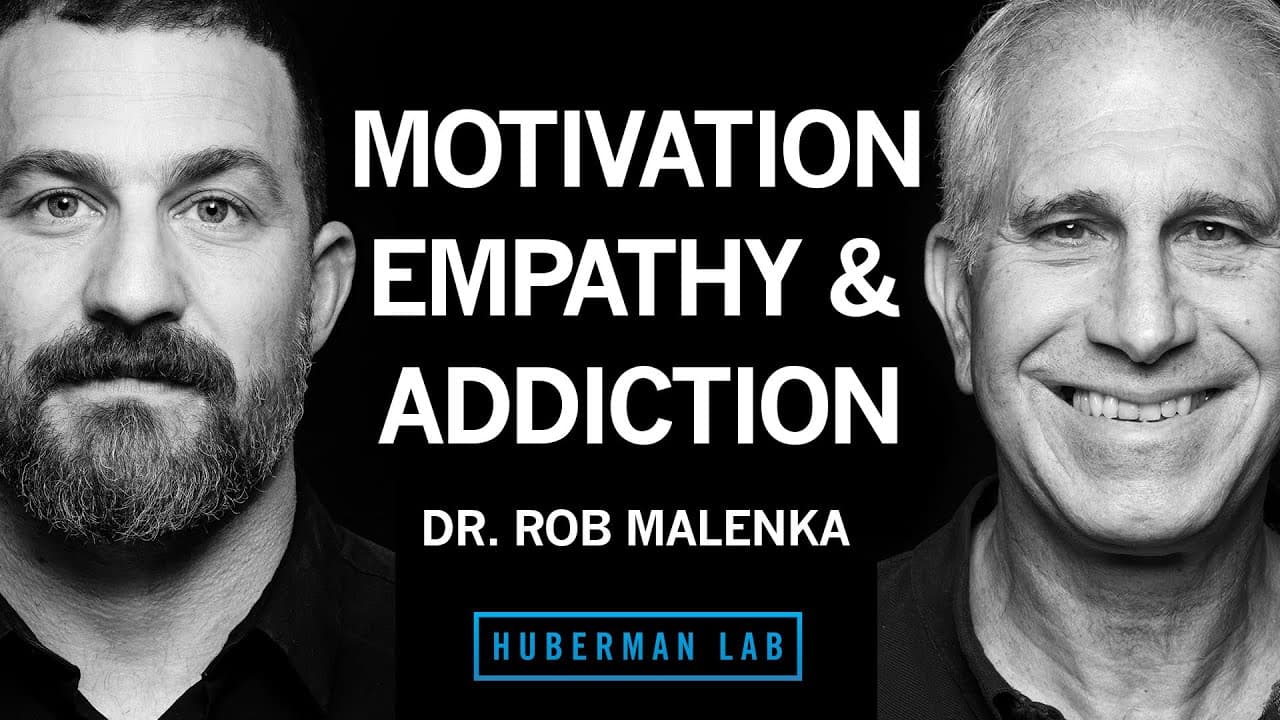
Andrew Huberman: [OPENING THEME MUSIC] Welcome to the Huberman Lab podcast, where we discuss science and science-based tools for everyday life. I'm Andrew Huberman, and I'm a professor of Neurobiology and Ophthalmology at Stanford School of Medicine. Today, my guest is Dr. Robert Malenka. Dr. Robert Malenka is a professor of Psychiatry and Behavior... Read More
Key Insights
- 🖐️ The dopamine system plays a crucial role in the brain's reward circuitry, reinforcing behaviors associated with rewarding experiences.
- 🥺 Drugs of abuse, such as cocaine and opioids, manipulate the dopamine system, leading to increased dopamine release in the brain's reward circuitry.
- 🧑🏭 Addiction involves complex interactions between genetic factors, environmental influences, and individual experiences.
- 💨 Different substances impact the dopamine system in unique ways, resulting in variations in the subjective experiences and addictive properties of each substance.
- 🧑🏭 The addictive liability of a substance is influenced by factors such as availability, route of administration, and individual susceptibility.
Install to Summarize YouTube Videos and Get Transcripts
Explore YouTube Video Summarizer or Get YouTube Transcript Extractor
Questions & Answers
Q: How does dopamine influence the brain's reward circuitry?
Dopamine is a key component of the brain's reward circuitry and signals the importance of certain stimuli or experiences. It reinforces behaviors that lead to rewarding experiences and motivates us to seek out those experiences again. Dr. Malenka's work shows that seeking pleasure, healthy or not, actually changes how dopamine is released and how it affects the brain.
Q: How do cocaine and opioids affect the dopamine system differently?
Both drugs manipulate the dopamine system but through different mechanisms. Cocaine prevents dopamine reuptake, causing dopamine to build up in the reward circuitry. Opioids increase dopamine activity indirectly, leading to a release of dopamine and its rewarding effects. These differences help explain why substances produce distinct subjective experiences.
Q: Can a single exposure to a drug cause lasting changes in the brain?
Yes. Even a single exposure to a drug like cocaine or opioids can alter the brain's neural connections. These changes can persist for days or weeks and contribute to the development of addictive behaviors, reflecting the neuroplasticity that Dr. Malenka's laboratory helped discover.
Q: What makes some people more susceptible to addiction than others?
The addictive liability of a substance is shaped by a combination of genetic factors, environmental influences, and an individual's personal history. Availability, route of administration, and individual susceptibility all play a role. It is still not fully understood why some individuals develop addiction while others do not.
Q: What is neuroplasticity and how does it relate to reward?
Neuroplasticity is the nervous system's ability to change in response to experience. Dr. Malenka's research merged the study of neuroplasticity with the study of dopamine, pleasure, and addiction. His lab showed that pursuing particular forms of pleasure changes the way reward circuitry works and alters how dopamine is released.
Q: Does the reward system also drive healthy behaviors?
Yes. The same dopamine-based reward circuitry that underlies addiction also reinforces healthy pleasures, including nutritious food and social connection. Dr. Malenka's work informs how we seek out these healthy rewards, showing the system is not only about drugs of abuse.
Q: How do dopamine and serotonin work together in the brain?
Neurochemicals like dopamine and serotonin work in parallel to reinforce behavior, increasing the probability that we will engage in certain types of thinking and actions. This reinforcement is what motivates us and shapes what we are likely to pursue in the future based on past choices.
Q: Who is Dr. Robert Malenka?
Dr. Robert Malenka is a professor of Psychiatry and Behavioral Sciences at Stanford University School of Medicine, and he holds both an MD and a PhD. His laboratory discovered some of the key components of neuroplasticity, and his research is considered central to textbook knowledge on how the brain's reward systems are organized and function.
Summary & Key Takeaways
-
Dr. Robert Malenka, a professor of Psychiatry and Behavioral Sciences, discusses the neurobiology of addiction, focusing on the role of dopamine in the brain's reward circuitry.
-
The dopamine system is responsible for signaling rewarding experiences and reinforcing certain behaviors.
-
Drugs like cocaine and opioids can cause changes in the brain's neural connections, leading to addictive behaviors and lasting effects on the dopamine system.
Read in Other Languages (beta)
Share This Summary 📚
Summarize YouTube Videos and Get Video Transcripts with 1-Click
Try YouTube Summary with ChatGPT & Claude or YouTube Transcript Generator
Explore More Summaries from Andrew Huberman 📚





Summarize YouTube Videos and Get Video Transcripts with 1-Click
Try YouTube Summary with ChatGPT & Claude or YouTube Transcript Generator