How Does AI Connect to Secret Societies?
TL;DR
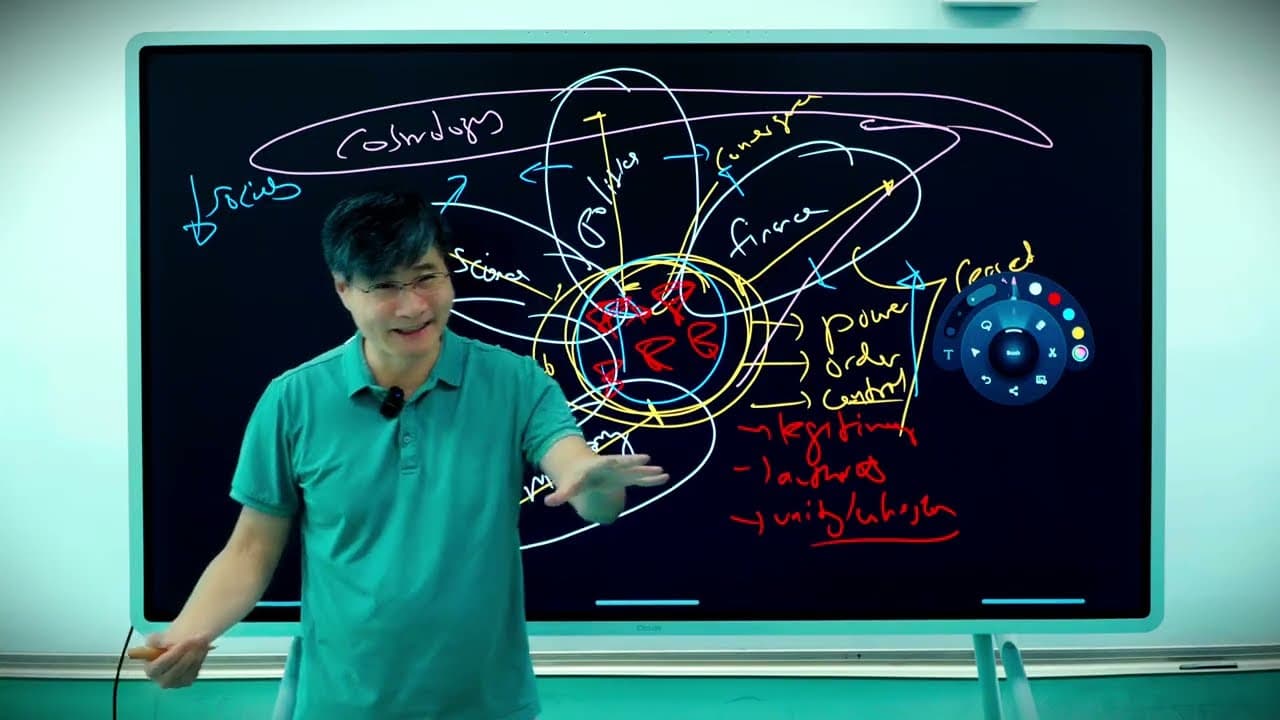
The lecture explores the connections between historical secret societies, like the Freemasons, and modern developments in AI surveillance. It suggests that these groups have always sought power, order, and control, and that AI is a modern tool to achieve these goals. The discussion includes historical context, philosophical underpinnings, and the potential future implications of AI in society.
Transcript
Last semester we looked at secret societies and esquetology, secret history. This semester we're doing game theory. In this class I want to connect the two and show you how the world works. Okay. So, first thing I want to do is go over some popular conspiracy theories about how the world works. And um there are different variations. So I'll just go... Read More
Key Insights
- The Knights Templars were a powerful medieval organization eventually outlawed due to their influence and alleged heretical beliefs.
- Freemasonry is viewed as a descendant of the Templars, with a focus on secret knowledge and societal influence.
- AI is seen as a modern tool for achieving power, order, and control, aligning with the goals of historical secret societies.
- The lecture suggests that modern tech leaders may be influenced by the philosophies of these societies, whether consciously or not.
- The concept of a technocracy, where society is governed by technical experts, is presented as a potential future outcome.
- Freemasonry and similar groups are depicted as seeking to create a 'holy empire of reason' through control and order.
- The lecturer argues that AI could be used to enforce societal norms and eliminate human error, achieving a form of utopia.
- The lecture critiques the notion of universal human subjectivity, suggesting it leads to societal issues that AI could solve.
Install to Summarize YouTube Videos and Get Transcripts
Explore YouTube Video Summarizer or Get YouTube Transcript Extractor
Questions & Answers
Q: How are the Knights Templars connected to modern secret societies?
The Knights Templars were a medieval organization known for their influence in politics, finance, and religion. They were eventually outlawed, but some believe they evolved into groups like the Freemasons. These modern secret societies are thought to continue the Templars' legacy of seeking power through secret knowledge and influence.
Q: What role does AI play in the vision of secret societies?
AI is seen as a modern tool for achieving the goals of historical secret societies, such as the Freemasons. These groups have always sought power, order, and control, and AI offers a way to enforce societal norms and eliminate human error. The lecture suggests that AI could help create a 'holy empire of reason' by controlling human behavior and achieving societal harmony.
Q: What is the concept of a technocracy, and how does it relate to AI?
A technocracy is a system where society is governed by technical experts rather than elected officials. The lecture suggests that AI could enable a technocracy by using data and technology to manage societal issues more effectively than traditional democratic systems. This aligns with the goals of secret societies to create order and control through advanced knowledge.
Q: How might modern tech leaders be influenced by secret society philosophies?
The lecture posits that modern tech leaders, whether consciously or not, may be influenced by philosophies similar to those of secret societies like the Freemasons. These leaders often seek to create transformative technologies and societal changes, paralleling the eschatological visions of these historical groups. AI is seen as a tool for achieving these transformative goals.
Q: What is the 'holy empire of reason' mentioned in the lecture?
The 'holy empire of reason' is a concept attributed to secret societies like the Freemasons, who seek to create a utopian society governed by reason and order. The lecture suggests that AI could be used to achieve this vision by enforcing societal norms and eliminating human error, thus creating a harmonious and controlled world.
Q: Why is human subjectivity critiqued in the context of AI and secret societies?
The lecture critiques human subjectivity as leading to societal issues like sin and error. It suggests that AI could eliminate these problems by enforcing uniform thinking and behavior. This aligns with the goals of secret societies, which seek to create a controlled and harmonious world, potentially at the cost of individual freedom and diversity of thought.
Q: What historical context is provided for the influence of secret societies?
The lecture provides a historical context by discussing the Knights Templars and their evolution into groups like the Freemasons. These societies are depicted as having a long-standing influence on politics, religion, and finance, using secret knowledge to achieve power and control. This historical influence is connected to modern developments in AI and technocracy.
Q: How does the lecture connect AI to eschatological visions?
The lecture connects AI to eschatological visions by suggesting it could help achieve the end goals of secret societies: a controlled, harmonious world. These groups are depicted as seeking to create a 'holy empire of reason,' where AI enforces societal norms and eliminates human error, thus achieving a form of utopia. This vision is critiqued for its potential to eliminate human subjectivity.
Summary & Key Takeaways
-
The lecture explores the historical influence of secret societies like the Knights Templars and Freemasons, suggesting they have always sought power through secret knowledge. It connects these goals to modern AI technology, proposing that AI could be used to enforce societal order and control, aligning with these groups' historical aims.
-
The lecturer argues that AI represents a continuation of the Freemasons' vision for a 'holy empire of reason,' where societal harmony is achieved through technological control. This vision is critiqued for potentially eliminating human subjectivity and individuality in favor of a controlled utopia.
-
Modern tech leaders are posited to be influenced by philosophies similar to those of historical secret societies, consciously or not. The lecture suggests that AI and technocracy could be tools for achieving a new world order, echoing the eschatological visions of groups like the Freemasons.
Read in Other Languages (beta)
Share This Summary 📚
Summarize YouTube Videos and Get Video Transcripts with 1-Click
Try YouTube Summary with ChatGPT & Claude or YouTube Transcript Generator
Explore More Summaries from Predictive History 📚




Summarize YouTube Videos and Get Video Transcripts with 1-Click
Try YouTube Summary with ChatGPT & Claude or YouTube Transcript Generator