What Do People Really Think Intelligence Means?
TL;DR
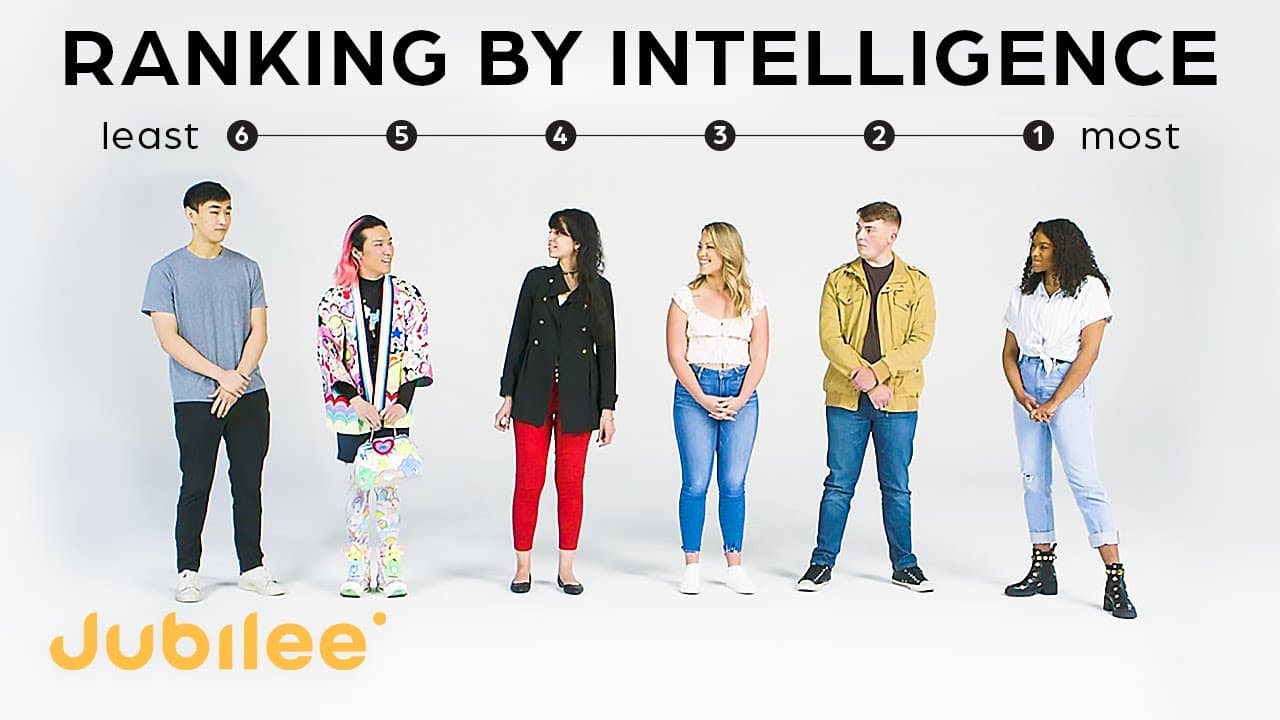
Participants define intelligence as a combination of adaptability, problem-solving skills, and common sense, emphasizing that education enhances but does not define intelligence. While emotional intelligence (EQ) is acknowledged as significant, first impressions can skew perceptions. Ultimately, intelligence is seen as a multifaceted concept that isn't fully captured by IQ tests.
Transcript
- Hey everyone. Thanks for tuning into another episode of Ranking. Before we get into our show, I wanna give a big shoutout to our sponsor, Grammarly. As CEO of Jubilee Media have to do a lot of writing, and Grammarly is an amazing digital writing assistant. The Grammarly browser extension is super simple to download. Just go to grammarly.com and c... Read More
Key Insights
- 🎓 Intelligence comprises adaptability, problem-solving skills, and common sense, with education contributing but not being essential.
- ❓ EQ, or emotional intelligence, is considered an important aspect of intelligence.
- 🎮 First impressions can influence perception of someone's intelligence, but they should not be the sole basis for judgment.
- 🙈 IQ tests are seen as flawed and limited measures of intelligence.
- 🎮 Education is beneficial but not the sole determinant of intelligence.
- 📶 Different individuals may have strengths in different areas of intelligence.
- 😑 The participants express humility and self-awareness in their individual rankings of intelligence.
Install to Summarize YouTube Videos and Get Transcripts
Explore YouTube Video Summarizer or Get YouTube Transcript Extractor
Questions & Answers
Q: What is the participants' understanding of intelligence?
The participants perceive intelligence as a blend of adaptability, problem-solving skills, and common sense, with education providing additional resources and perspectives.
Q: Are IQ tests accurate indicators of intelligence?
The participants express skepticism about the accuracy of IQ tests, citing flaws in their design and the limitations of quantifying intelligence with a single metric.
Q: How do first impressions affect judgments of intelligence?
The participants acknowledge that people form immediate opinions based on appearances but also note the importance of not solely relying on initial impressions.
Q: Does education play a significant role in intelligence?
While education can provide knowledge and resources, the participants emphasize that intelligence goes beyond formal education, including emotional intelligence and street smarts.
Key Insights:
- Intelligence comprises adaptability, problem-solving skills, and common sense, with education contributing but not being essential.
- EQ, or emotional intelligence, is considered an important aspect of intelligence.
- First impressions can influence perception of someone's intelligence, but they should not be the sole basis for judgment.
- IQ tests are seen as flawed and limited measures of intelligence.
- Education is beneficial but not the sole determinant of intelligence.
- Different individuals may have strengths in different areas of intelligence.
- The participants express humility and self-awareness in their individual rankings of intelligence.
- Intelligence is a multifaceted concept that cannot be fully captured by a single metric or test.
Summary & Key Takeaways
-
The participants share their definitions of intelligence, highlighting adaptability, problem-solving skills, and common sense as essential components.
-
Education is seen as helpful but not necessary for intelligence, with common sense being considered the most essential attribute.
-
The participants discuss first impressions and how they can influence judgments about intelligence.
Read in Other Languages (beta)
Share This Summary 📚
Summarize YouTube Videos and Get Video Transcripts with 1-Click
Try YouTube Summary with ChatGPT & Claude or YouTube Transcript Generator
Explore More Summaries from Jubilee 📚






Summarize YouTube Videos and Get Video Transcripts with 1-Click
Try YouTube Summary with ChatGPT & Claude or YouTube Transcript Generator