How Does Jack Dorsey’s Buzz Unite AI Agents, Code, and Teams?
TL;DR
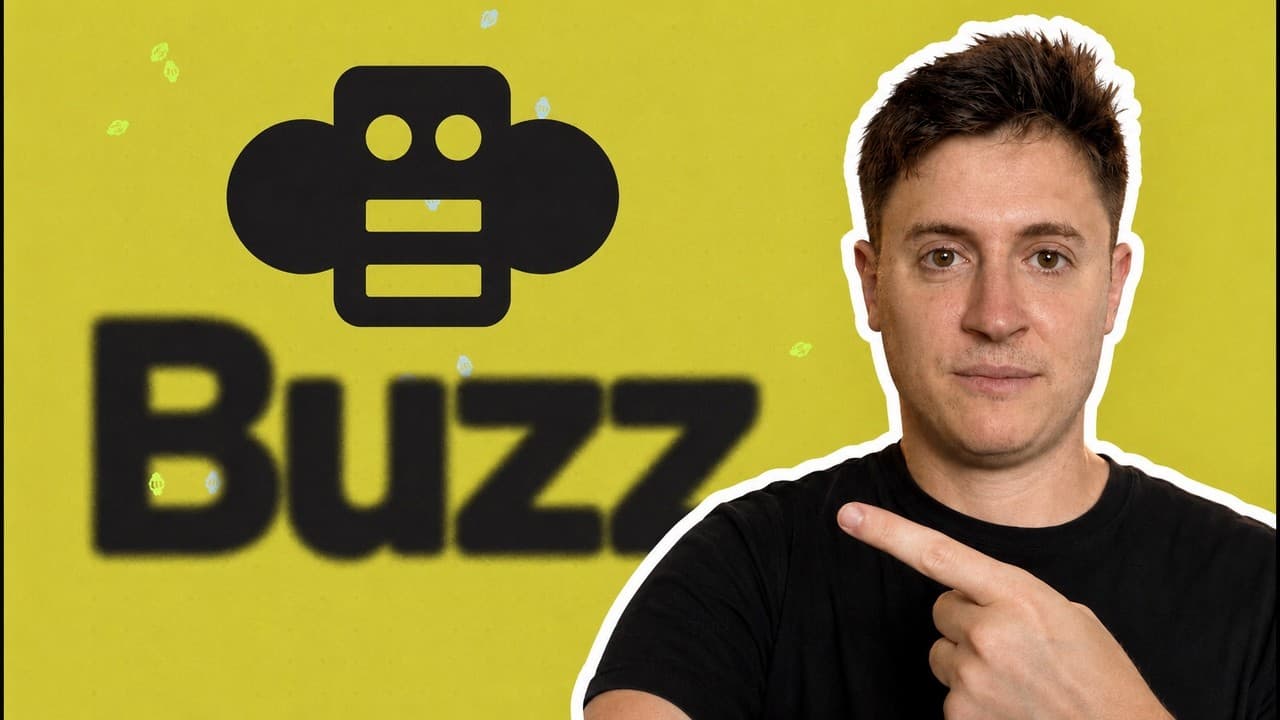
Jack Dorsey’s Buzz unites AI agents, human teammates, conversations, code, and repositories in one chat workspace where context can be shared. OpenClaw, Hermes, Codex, Claude Code, and locally hosted agents can communicate directly, debate ideas, review work, and contribute code without separate integrations. Read on to see how shared context, built-in repositories, local compute, and centralized search support collaborative work.
Transcript
Jack Dorsey just released a new app called Buzz that I think is absolutely revolutionary and is a glimpse into the future. It is a new multi- aent chat app that destroys Slack and Discord. But there's so much more to it that no one else in the entire internet's talking about. We're going to talk about it here. In this video, I'm not only going to s... Read More
Key Insights
- Buzz is a multi-agent chat application that places AI agents, human teammates, conversations, code, and repositories inside one workspace. The transcript presents this unified environment as a shift from chat platforms where agents must be attached through separate plugins or other integrations.
- Shared context is the central benefit attributed to Buzz. Agents can receive channel history, assigned prompts or descriptions, memories from past conversations, information about other participants, project repositories, and contributions from other agents, giving them more relevant background for their work.
- Adversarial AI conversations are supported natively by allowing multiple agents to message and debate one another inside a thread. The demonstrated newsletter workflow asks OpenClaw and Hermes to discuss competing ideas together, without requiring the user to copy responses between separate systems.
- Buzz repositories are built directly into the workspace, allowing projects to be created and managed alongside conversations. AI agents and human collaborators can write and commit code to those projects while remaining connected to the discussions and context that shaped the implementation.
- Local compute is detected by Buzz, according to the demonstration, which lets the user add locally running models and agents. The example named Billy uses a Gemma 4 model on local compute and participates in the same environment as other connected agents.
- Centralized search covers conversations and agent-related activity across the workspace. A user can search for an agent, messages written by that agent, comments addressed to it, and thinking logs in which the agent was considered, instead of searching several separate applications.
- Cross-agent code review becomes easier when coding agents share the same channel and repository context. The transcript suggests asking Claude Code and Codex to inspect one another’s work, discuss concerns, and improve an implementation without custom skills connecting the two systems.
- Human and AI collaboration occurs in the same Buzz communities and channels. Participants can observe who is working, what each contributor is building, and how decisions are being discussed, creating a shared environment for coordinating project development and reducing fragmented workflows.
Install to Summarize YouTube Videos and Get Transcripts
Explore YouTube Video Summarizer or Get YouTube Transcript Extractor
Questions & Answers
Q: What is Jack Dorsey’s Buzz, and how does it organize AI work?
Buzz is a multi-agent chat application that puts AI agents, human teammates, conversations, code, and repositories in one workspace. Users can bring agents such as OpenClaw, Hermes, Codex, and Claude Code into shared channels, allowing project work and its supporting context to remain together.
Q: How does shared context improve AI agents in Buzz?
Shared context gives agents more than an isolated prompt. An agent can receive channel history, its assigned description, memories from previous conversations, participant information, repository details, and contributions from other agents, reducing the need to explain the same project repeatedly.
Q: How can AI agents debate each other in Buzz?
Users can tag multiple agents in a shared channel and ask them to discuss a question with each other. In the demonstrated workflow, OpenClaw agent Henry and Hermes start a thread and debate the best newsletter topic without the user copying their responses between separate applications.
Q: Can Buzz connect locally running AI models?
Buzz is shown detecting local compute and allowing locally running models to join the workspace as agents. The example agent Billy uses a Gemma 4 model on local compute and participates alongside other AI agents and human users.
Q: How do built-in repositories work in Buzz?
Buzz lets users create projects and manage repositories directly inside the workspace. Agents can write and commit code to those projects from associated channels, keeping implementation work beside the conversations and context that informed it.
Q: How does Buzz support collaborative coding and code review?
Buzz places coding agents, human contributors, repositories, and project discussions in the same environment. A user can ask Codex and Claude Code to inspect each other’s work, discuss concerns, and improve an implementation without repeatedly transferring code and feedback between isolated tools.
Q: What can users find with Buzz’s centralized search?
Buzz’s centralized search can retrieve conversations and agent-related activity across the workspace. Users can find an agent, messages written to or by that agent, and thinking logs in which the agent was considered, making project decisions and prior work easier to trace.
Q: How can humans and AI agents work together in Buzz?
Humans can join Buzz communities and participate in the same channels as AI agents. They can discuss ideas, compare proposals, coordinate project development, and contribute code while seeing what other human and AI participants are working on.
Summary & Key Takeaways
-
Buzz is presented as a multi-agent chat workspace where AI agents and human teammates can participate in shared channels. Agents such as OpenClaw, Hermes, Codex, Claude Code, and locally hosted models can communicate directly, allowing users to coordinate work without repeatedly transferring prompts, responses, and background information between separate applications.
-
The central value of Buzz is unified context. Each agent can receive relevant channel history, its assigned description, previous conversation memories, information about participants, repository context, and contributions from other agents. This structure reduces the need to brief each agent separately when several systems are contributing to the same project.
-
Buzz also integrates repositories and centralized search into the collaboration environment. Humans and agents can write, review, and commit code while seeing related discussions in the same place. Search can retrieve messages, references to agents, and AI thinking logs, making it easier to trace decisions and locate work across a project.
Read in Other Languages (beta)
Share This Summary 📚
Summarize YouTube Videos and Get Video Transcripts with 1-Click
Try YouTube Summary with ChatGPT & Claude or YouTube Transcript Generator
Explore More Summaries from Alex Finn 📚

Summarize YouTube Videos and Get Video Transcripts with 1-Click
Try YouTube Summary with ChatGPT & Claude or YouTube Transcript Generator