How Long Should You Stay At Your Job?
TL;DR
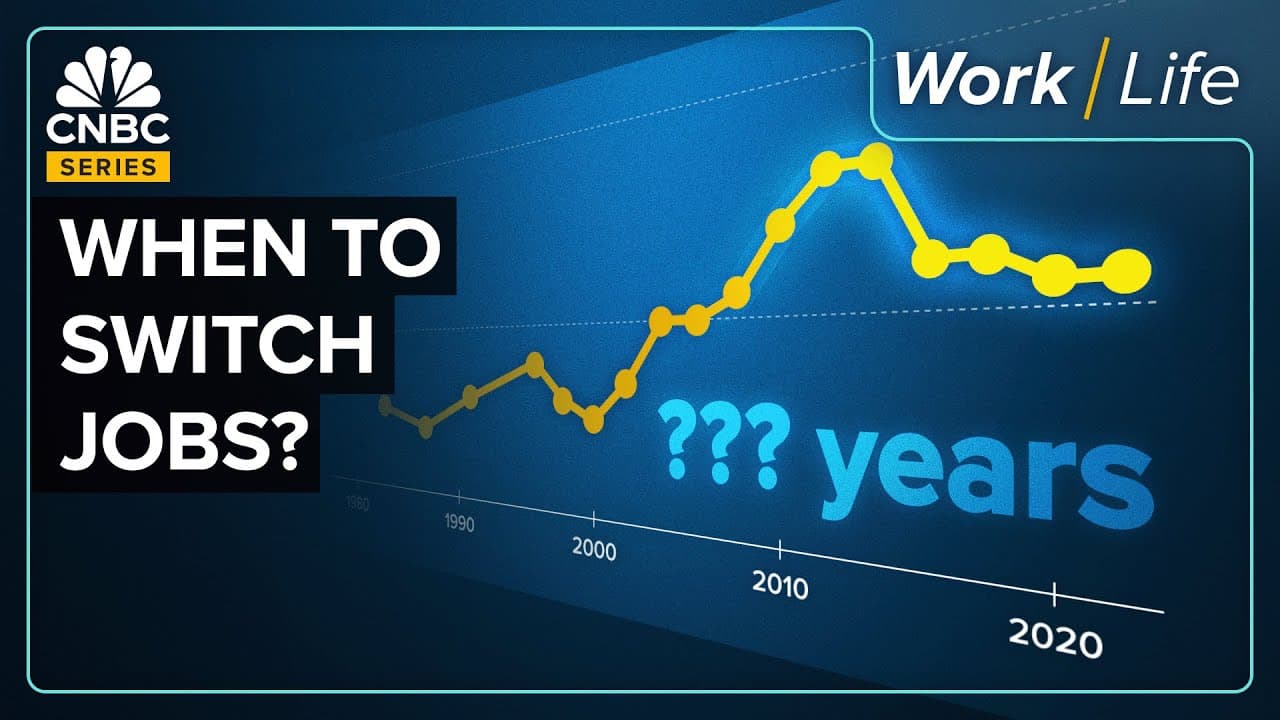
There is no single optimal job tenure: stay long enough to gain valuable skills and benefits, then move strategically when growth, pay, or well-being stalls. Americans had a median tenure of 4.1 years in 2022, while workers aged 20 to 24 typically stayed less than one and a half years. Read on to compare salary gains, career risks, and the factors that should shape your timing.
Transcript
95% of American workers said they planned to look for a new job in 2024. Money's a big part of this. 45% of American workers say they need a higher income. Job switchers increase their salary more quickly, on average, than those who stay put. In February 2024, people who stayed at their job for more than three months increased their salary by 5.1% ... Read More
Key Insights
- 👶 A notable 95% of American workers are seeking new job opportunities in 2024, mainly driven by salary aspirations.
- ☠️ Job switchers typically enjoy a faster rate of salary increases compared to those who remain in their positions, emphasizing the financial benefits of changing employers.
- 💤 Younger generations, especially Gen Z, prioritize career advancement and opportunities for growth, often opting to leave even in the presence of promotional pathways.
- 🤑 Employees should shift focus from tenure and money to skill development to make strategic and fulfilling career moves.
- 🥇 Organizations are increasingly recognizing the challenges associated with employee turnover and are placing importance on nurturing talent through upskilling.
- 🧑⚕️ The perception of job loyalty is evolving, and younger workers are less likely to feel obligated to remain with a single employer for an extended time.
- 😀 The job market is marked by substantial competition, and job seekers face significant burnout, necessitating a strategic and thoughtful approach to career transitions.
Install to Summarize YouTube Videos and Get Transcripts
Explore YouTube Video Summarizer or Get YouTube Transcript Extractor
Questions & Answers
Q: How long should you stay at your job?
There is no universal ideal tenure; the right timing depends on your age, skills, career goals, benefits, and opportunities for advancement. Americans stayed at their jobs for a median of 4.1 years in 2022, but workers aged 20 to 24 typically stayed less than one and a half years between 2002 and 2022.
Q: When should you consider leaving your job?
Consider leaving when you have acquired the skill you needed from the role or are no longer receiving opportunities to develop the skills required for your goals. Higher pay, limited room for growth, inadequate benefits, a toxic environment, and poor work-life balance are also common reasons to move.
Q: Does switching jobs increase your salary faster?
On average, job switchers received faster salary growth than workers who stayed put. In February 2024, people who had remained at their jobs for more than three months saw 5.1% year-over-year salary growth, compared with 5.9% for people who switched jobs.
Q: Why can changing companies accelerate career advancement?
Switching companies can be the fastest route to a more senior position and higher income. At a current employer, advancement may depend on someone leaving, receiving a promotion, or the company growing, while outside recruiters can offer workers more negotiating power.
Q: What risks should you consider before job hopping?
Moving too quickly can raise your salary and seniority without giving you enough time to build the necessary skills. Hiring professionals warn that rising through the ranks too fast can also make you an expensive employee who is easier to cut during a downturn.
Q: Can leaving a job too soon cost you benefits?
Yes, because some employment benefits accrue over time. For example, an employer may require you to remain for a certain number of years before you can keep its 401(k) match, so switching earlier could leave money on the table.
Q: Is job hopping mainly a Gen Z behavior?
The transcript suggests job hopping is driven more by age than generation. Adults born between 1957 and 1964 held an average of 12.7 jobs from ages 18 to 56, and nearly half of those jobs were held before age 25.
Q: What should you evaluate before accepting another job?
Assess whether the move supports your long-term skill development, career aspirations, salary needs, and well-being. Look beyond compensation to benefits, time off, work-life balance, workplace treatment, and whether the new role offers meaningful opportunities to grow.
Summary & Key Takeaways
-
A significant percentage of American workers are considering job changes in 2024 mainly for salary increases, as switching jobs often results in higher pay than remaining in one position long-term.
-
Younger generations, particularly Gen Z, prioritize career advancement opportunities and may prefer to leave jobs even with promotion possibilities, seeking better benefits and work-life balance.
-
The analysis emphasizes the need for strategic job moves, focusing on skill acquisition rather than salary alone, while noting the importance of understanding one's career trajectory before making significant changes.
Read in Other Languages (beta)
Share This Summary 📚
Summarize YouTube Videos and Get Video Transcripts with 1-Click
Try YouTube Summary with ChatGPT & Claude or YouTube Transcript Generator
Explore More Summaries from CNBC 📚





Summarize YouTube Videos and Get Video Transcripts with 1-Click
Try YouTube Summary with ChatGPT & Claude or YouTube Transcript Generator