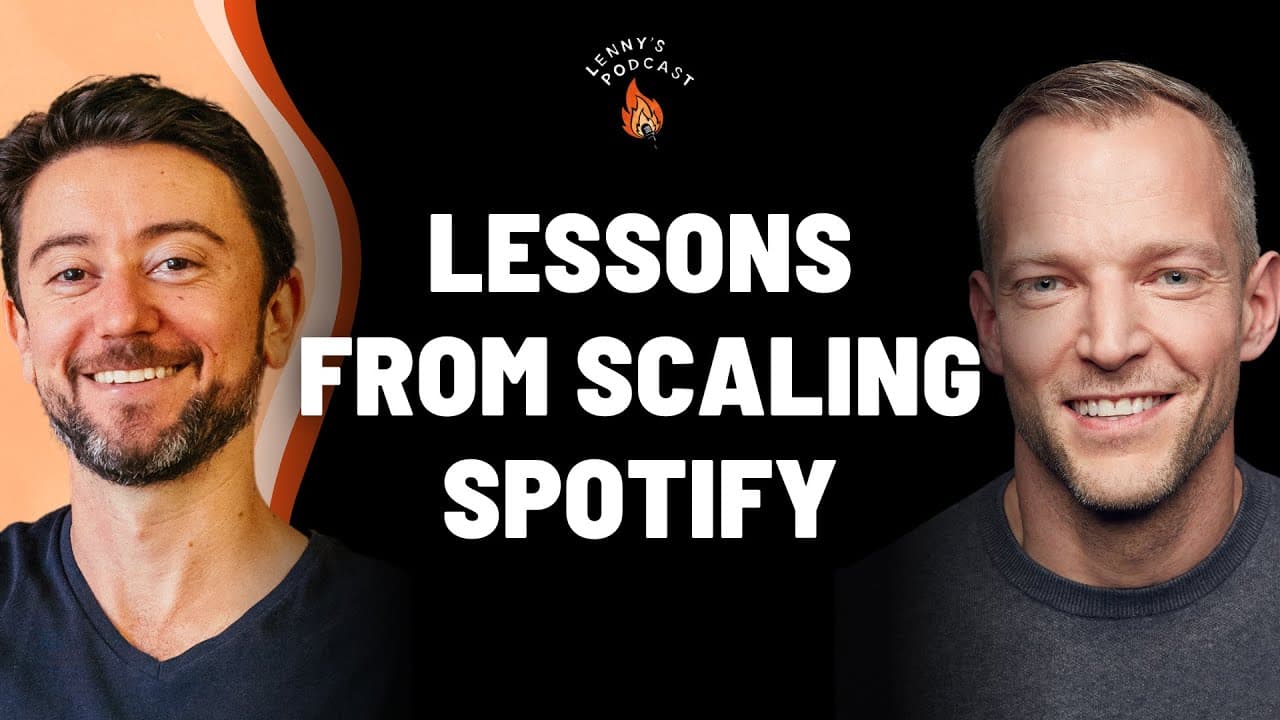
What is the impact of AI on Spotify's product design
TL;DR
AI is already changing how product teams work at Spotify, shifting focus from curation to recommendation to generation. Big bets drive restructuring of product and technology, and the future increasingly includes AI generated music. The discussion highlights architecture, culture, and the challenges of evolving user experiences.
Transcript
the internet sort of started with curation of the new circulations you you took something some good like people or books or music and you digitized it and you put it online and then you asked users to curate it and that was a Facebook Spotify and so forth and then after a while the world switched from curation to recommendation where instead of peo... Read More
Key Insights
- AI-driven shifts in product strategy are changing how teams operate at scale.
- The key to managing large bets is to rethink interfaces and user experiences as technology evolves.
- Spotify reorganized around product and technology leadership to empower freedom of thought across domains.
- Generation era requires new product designs, data models, and governance for AI features.
- AI impacts roles of PMs, engineers, and designers by changing workflows and collaboration patterns.
- Music generated by AI raises questions about artists, rights, and future workflows in content creation.
- Success in big bets depends on long term thinking and willingness to iterate through negative feedback.
- Culture and leadership approach influence how succession and organizational norms shape growth in tech companies.
- More videos from this channel:
- More from this channel: Lenny's Podcast
Install to Summarize YouTube Videos and Get Transcripts
Explore YouTube Video Summarizer or Get YouTube Transcript Extractor
Questions & Answers
Q: What is Gustav Soderstrom responsible for at Spotify today?
Gustav is the co president and chief product and technology officer at Spotify, responsible for global product and technology strategy. He oversees product design, data, and engineering teams, and guides how the company evolves its product portfolio, technology foundations, and strategic initiatives to support growth and scale.
Q: How did Spotify historically approach product organization and how has that changed?
Spotify historically operated with a heavy emphasis on squads and autonomy, but the company has evolved its structure as it grew. The shift described includes moving from smaller team constructs toward broader organizational alignment that supports large scale product and technology initiatives, allowing teams to move faster while maintaining coherence across platforms.
Q: What does the shift from curation to recommendation to generation mean for user experience?
The shift means moving from human powered curation to algorithmic recommendation and now to generation where AI creates or co creates content. This requires rethinking user interfaces, flows, and how users discover and interact with music, as well as how licensing, rights, and monetization are handled within AI driven features.
Q: Why did Gustav start a podcast and what did he learn from it?
Gustav started a podcast to explore storytelling, share strategic insights, and empathize with creators. He learned what it is like to be a creator, the challenges of producing high quality audio with music rights, and how internal culture and external storytelling can shape product strategy and leadership visibility.
Q: How is AI currently impacting Spotify PMs, engineers, and designers?
AI is changing workflows, collaboration, and decision making. It affects how PMs define problems, how engineers implement models and features, and how designers craft interfaces that accommodate AI generated or assisted content. Teams must address data needs, governance, and user experience implications of AI features.
Q: What does AI generated music imply for artists and rights within the platform?
AI generated music introduces new creative possibilities while raising questions about attribution, licensing, and compensation for artists. It requires clear policies and frameworks to manage rights, ensure fair use, and integrate AI generated work with existing catalogues and revenue streams on the platform.
Q: What future product challenges did Gustav mention for Spotify?
Future challenges include designing for the generation era, scaling AI features responsibly, and maintaining a seamless user experience across devices. There is also a need to rethink business models, user interfaces, and how to balance innovation with rights management and artist relationships as AI capabilities mature.
Q: How does Spotify view the role of magic in great products?
The discussion alludes to the idea that great products pull some kind of magic, meaning a compelling, almost magical user experience that feels effortless. Achieving this requires thoughtful product strategy, talented teams, and the right combination of technology, design, and storytelling to delight users.
Summary & Key Takeaways
-
The episode explains how Spotify moved from curation to recommendation and now to generation, signaling a major shift in user experience design and product strategy.
-
Gustav describes his responsibilities at Spotify, detailing how the company structures product and technology leadership to enable independent thinking.
-
The conversation covers AI’s current impact on product teams, implications for music creation, and lessons from making big bets that may not always pay off.
Read in Other Languages (beta)
Share This Summary 📚
Summarize YouTube Videos and Get Video Transcripts with 1-Click
Try YouTube Summary with ChatGPT & Claude or YouTube Transcript Generator
Explore More Summaries from Lenny's Podcast 📚





Summarize YouTube Videos and Get Video Transcripts with 1-Click
Try YouTube Summary with ChatGPT & Claude or YouTube Transcript Generator