How to Lead a Successful ERP Implementation
TL;DR
Successful ERP implementations put business needs, executive leadership, and objective risk assessment ahead of technology or schedule pressure. Strong sponsors make timely decisions, preserve efficient existing processes, approve strategic customization when necessary, and delay go-live when unresolved testing issues threaten operations, even if the project team is eager to finish.
Transcript
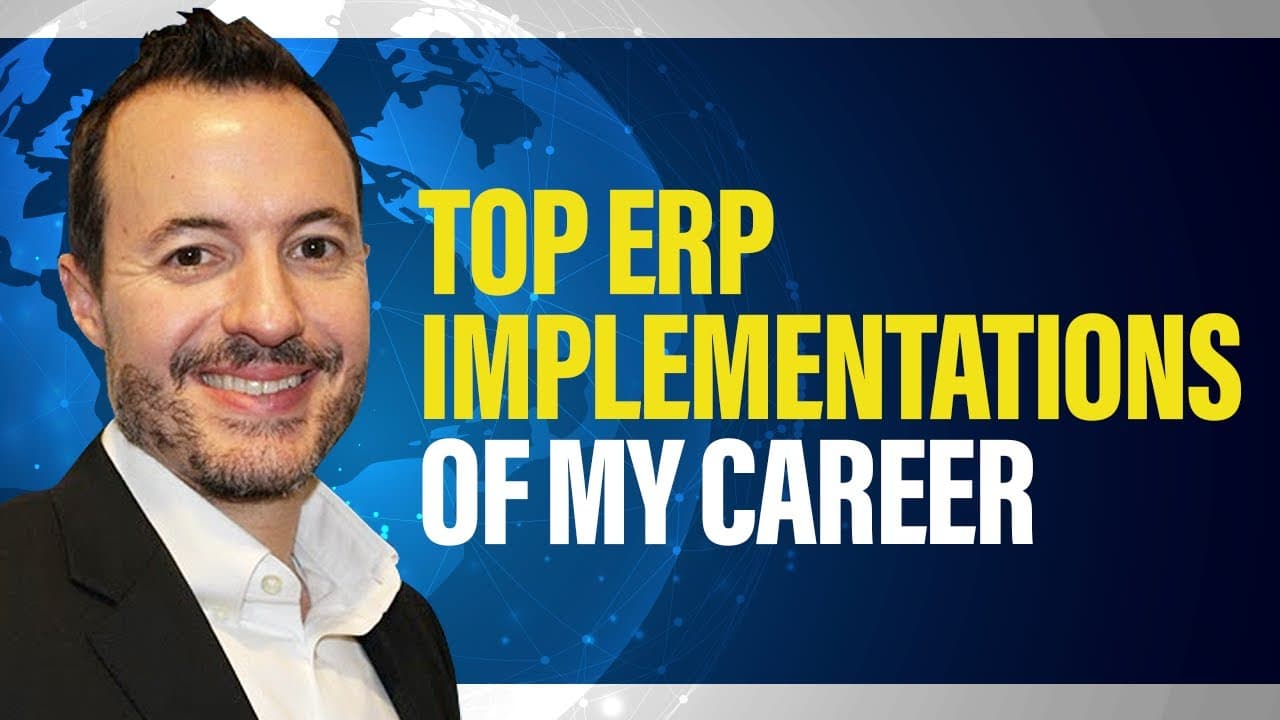
it's over the last 22 or so years that have been in the ERP and digital transformation consulting industry I've had the good fortune of being involved in a number of different transformation in a variety of industries variety of technologies that were deployed a variety of personalities that I've been involved with and there are three in particular... Read More
Key Insights
- Business-oriented executive sponsorship is a major contributor to ERP success because operational knowledge helps leaders evaluate process design, customization, deployment scope, employee involvement, and project priorities according to business outcomes rather than technical preferences.
- Technology is not automatically an improvement when an existing manual process or spreadsheet is efficient and well tuned. An ERP program should preserve working practices when replacing them would add disruption without delivering a meaningful operational benefit.
- Strategic customization is appropriate when standard ERP functionality cannot support a critical business capability. The consumer services organization invested selectively in custom mobile technology because field service was central to its operations and the selected system did not adequately support that work.
- Effective ERP leadership combines technological understanding with detailed knowledge of the operating model. This combination helps executives distinguish between outdated practices that should change and valuable business requirements that the future system must continue to support.
- Active CEO involvement is valuable when major process decisions exceed the project team's authority. A CEO can define the future-state vision, resolve executive-level questions, mobilize employees, and keep implementation work moving when decisions might otherwise remain stalled.
- An aggressive implementation schedule can improve focus, but schedule adherence should not override evidence from testing. Decisiveness becomes dangerous when leaders treat another delay as a personal failure instead of evaluating whether unresolved issues could interrupt essential operations.
- The Hail Mary go-live approach is a high-risk decision to launch despite known readiness gaps and unresolved problems. Although no implementation will be completely risk-free, avoidable operational threats should be mitigated before the new system becomes responsible for critical transactions.
- Go-live readiness is an objective business-risk decision rather than a technology milestone alone. Leaders should consider testing results, unfinished customization, operational continuity, and potential customer consequences before approving deployment, especially when the system affects order fulfillment or shipping.
Install to Summarize YouTube Videos and Get Transcripts
Explore YouTube Video Summarizer or Get YouTube Transcript Extractor
Questions & Answers
Q: How can executive sponsorship improve an ERP implementation?
Executive sponsorship improves an ERP implementation when the sponsor understands business operations, establishes a clear future-state vision, and makes difficult decisions promptly. The sponsor should evaluate process changes, customization, deployment timing, and employee involvement according to business value. Active leadership also prevents major questions from being delegated to project members who lack the authority to resolve them.
Q: Why should an ERP project use a business-first approach?
A business-first approach ensures that technology choices support operational improvement instead of becoming goals by themselves. Every proposed feature, process change, or customization should be tested against a practical business need. If an existing manual process or spreadsheet already works efficiently, keeping it may be wiser than replacing it merely to expand the ERP system's scope.
Q: When should a company customize its ERP software?
A company should consider customization when standard ERP functionality cannot support a business capability that is critical to operations or competitive value. Customization should be selective and strategic, not automatic. The consumer services organization chose custom mobile technology because field service was essential and the selected ERP platform did not adequately support the work required in that area.
Q: What qualities make an effective ERP executive sponsor?
An effective ERP executive sponsor understands how the organization operates, can connect technology decisions to business outcomes, and has enough authority to resolve major issues. The sponsor must set direction, define the desired operating model, involve the right people, and act quickly when decisions are needed. Technical knowledge helps, but it should be paired with strong business understanding.
Q: Why is active CEO involvement important in ERP projects?
Active CEO involvement is important when implementation choices affect the organization's operating model and require executive authority. The CEO can establish the vision, resolve significant process questions, maintain organizational focus, and help employees transition from current practices to future ones. In the manufacturing case, direct CEO participation helped the team sustain momentum and make important decisions quickly.
Q: What is a Hail Mary ERP go-live?
A Hail Mary ERP go-live is a decision to launch the new system despite known readiness gaps, unresolved testing problems, or unfinished work that creates avoidable operational risk. It differs from accepting ordinary implementation uncertainty because leaders proceed even when evidence supports additional preparation. The manufacturing case showed that this choice can disrupt shipping and cause customers to cancel orders.
Q: How should leaders decide whether an ERP system is ready for go-live?
Leaders should assess go-live readiness objectively by reviewing testing results, unresolved defects, customization stability, remaining work, and possible effects on essential operations. Complete certainty is unrealistic, but known risks must be distinguished from normal uncertainty. If additional preparation can materially reduce the chance of shipping, order, or customer disruption, postponement should remain a legitimate option.
Q: What ERP lesson came from the manufacturing implementation failure?
The central lesson was that an aggressive timeline should never outweigh credible evidence of operational danger. The project had unresolved testing and customization issues, and the consulting team recommended more preparation before launch. Management proceeded because it wanted to avoid another delay, but shipping stopped for several weeks and customer orders were lost rather than simply postponed.
Summary & Key Takeaways
-
A consumer services organization demonstrated the value of business-led sponsorship. Its operations-focused executive evaluated every technology decision by its contribution to the business. The team retained effective manual processes and spreadsheets where appropriate, while selectively customizing mobile technology to support field service activities that the chosen ERP system could not adequately handle.
-
A global industrial manufacturer benefited from leaders who understood both technology and operations. The CIO served as a strong internal project manager, while the CEO actively resolved business questions, established the future-state vision, and maintained momentum. Their leadership supported rapid decisions and an aggressive schedule, but schedule discipline eventually became excessive risk tolerance.
-
The manufacturer proceeded with go-live despite unresolved testing and customization issues and advice to allow more preparation time. Shipping was disrupted for several weeks, and customer orders were lost rather than merely delayed. The experience shows that decisive leadership must be balanced with objective readiness criteria and a willingness to postpone deployment when necessary.
Read in Other Languages (beta)
Share This Summary 📚
Summarize YouTube Videos and Get Video Transcripts with 1-Click
Try YouTube Summary with ChatGPT & Claude or YouTube Transcript Generator
Explore More Summaries from Digital Transformation with Eric Kimberling 📚

![What Are the Alternatives to Traditional ERP Systems? [Death of ERP Software, Part II] thumbnail](/_next/image?url=https%3A%2F%2Fi.ytimg.com%2Fvi%2FNTWK34u3pJE%2Fhqdefault.jpg&w=750&q=75)
Summarize YouTube Videos and Get Video Transcripts with 1-Click
Try YouTube Summary with ChatGPT & Claude or YouTube Transcript Generator