What Are Web Fonts and Their Evolution?
TL;DR
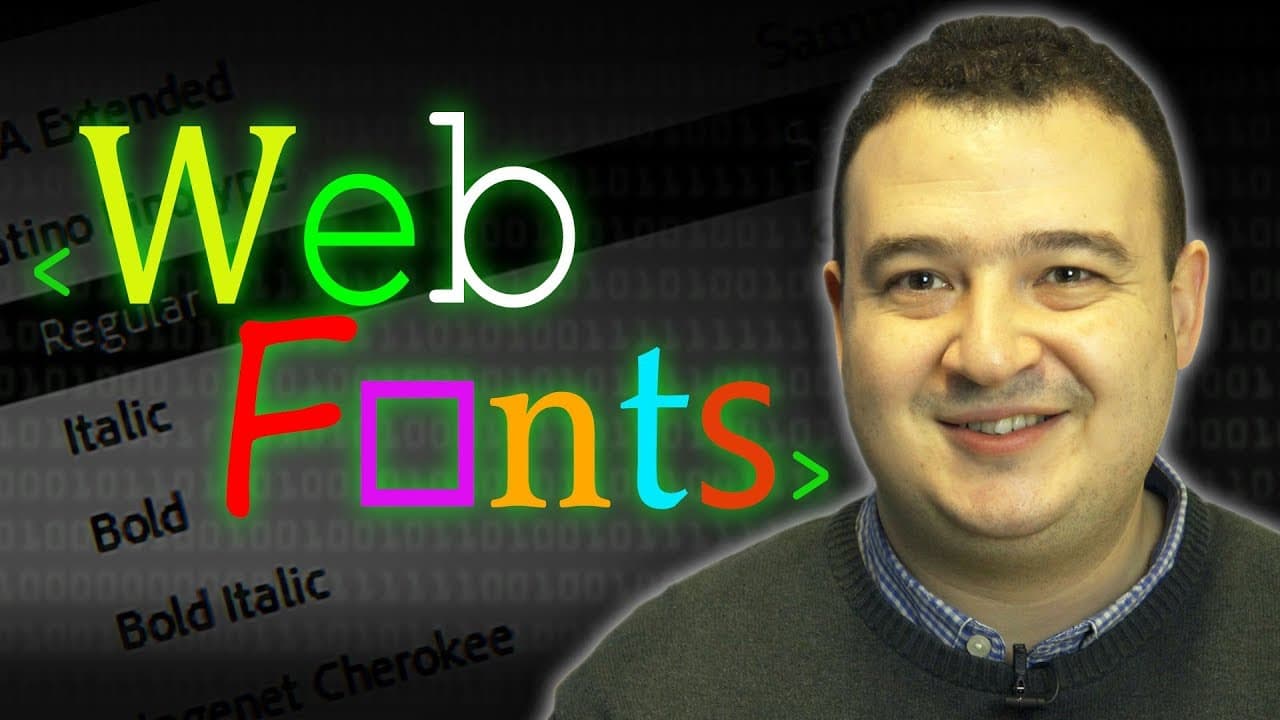
Web fonts allow for consistent typography across the internet, overcoming the limitations of installed fonts. Their evolution began in the mid-1990s, leading to formats like WOFF that optimize performance and licensing. Today, variable fonts offer unprecedented design flexibility, catering to diverse display needs.
Transcript
i'm going to talk a little bit about the history and development of web font technologies well the web was first invented it wasn't possible to specify fonts the idea was that the page language html would specify the the the structure of the content where the headings are where paragraphs are tables lists and it'll be up to the up to the browser up... Read More
Key Insights
- 🥺 The early web lacked standardized font usage, leading to inconsistencies across different systems.
- 💝 Microsoft's introduction of optimized web fonts in the late 1990s increased font availability on various systems.
- 🥳 Web fonts are typically served by third-party companies, and their usage is licensed per number of views.
- 🕸️ Copyright concerns and performance issues delayed the adoption of web fonts for a long time.
- 🕸️ The Web Open Font Format (WOFF) was developed as a solution to embed fonts in web pages without compromising performance or facing compatibility issues.
- 👶 Fonts can be updated to support new features, improve legibility, or accommodate non-Latin scripts.
- 👻 Variable fonts allow for continuous variation in parameters like boldness or width, providing more design flexibility.
Install to Summarize YouTube Videos and Get Transcripts
Explore YouTube Video Summarizer or Get YouTube Transcript Extractor
Questions & Answers
Q: Why does the choice of typeface matter for commercial websites?
The choice of typeface communicates the brand's image and contributes to the overall brand identity, making it an important design element for commercial websites.
Q: How are web fonts typically served and licensed?
Web fonts can be served by third-party companies like Google or Adobe Typekit, and their usage is often licensed based on the number of views. Commercial fonts were initially not allowed on the internet due to copyright concerns.
Q: What is the Web Open Font Format (WOFF)?
WOFF is a font format specifically designed for web use. It cannot be installed like traditional fonts and offers the benefit of compact file size. It allows for fonts to be served server-side, with some characters or features excluded to optimize performance.
Q: Why do fonts get updated over time?
Fonts are updated for various reasons, such as supporting non-Latin scripts, improving legibility for on-screen use, and incorporating changes like new symbols. Font foundries see web fonts as a business opportunity rather than a threat.
Summary & Key Takeaways
-
In the early days of the web, font usage was limited to the fonts installed on individual computers, leading to inconsistencies in typography across different systems.
-
Netscape introduced the font tag in 1995, allowing authors to have some control over font presentation, but it was still limited to installed fonts.
-
Microsoft's introduction of high-quality fonts optimized for web use in the late 1990s paved the way for standardized fonts like Vedana and Georgia.
Read in Other Languages (beta)
Share This Summary 📚
Summarize YouTube Videos and Get Video Transcripts with 1-Click
Try YouTube Summary with ChatGPT & Claude or YouTube Transcript Generator
Explore More Summaries from Computerphile 📚






Summarize YouTube Videos and Get Video Transcripts with 1-Click
Try YouTube Summary with ChatGPT & Claude or YouTube Transcript Generator