Can China Lead the Global Innovative Drug Market?
TL;DR
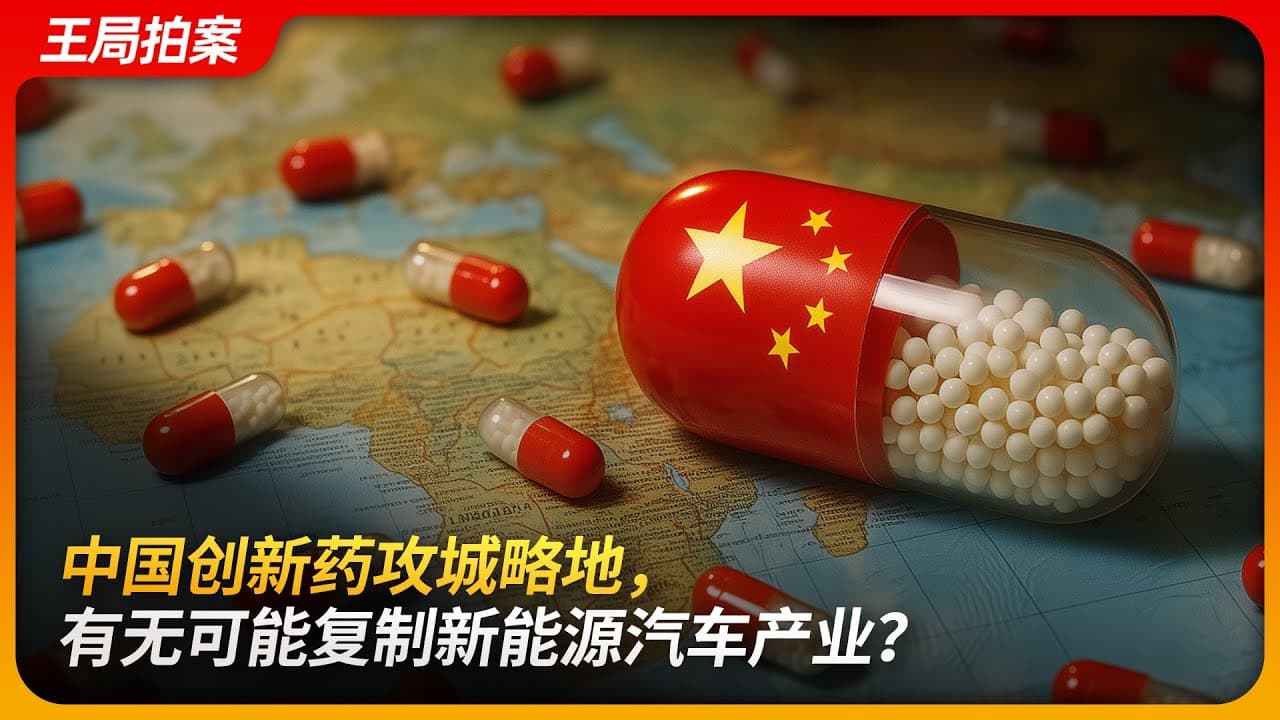
China’s innovative drug sector is moving beyond generics and ingredient manufacturing toward original medicines with international commercial value. Returning scientists, expanding domestic research, scarce laboratory animals, and major licensing agreements, including Pfizer’s $1.25 billion deal with 3S Bio, show how Chinese biotechnology companies are becoming more significant in global drug development.
Transcript
On November 26, 2024, in South Carolina, something unexpected happened. At a lab called Alpha Genesis, 43 monkeys escaped. The incident caused quite a stir among local residents. People started spreading rumors that the monkeys might be carrying some kind of virus. After all, they came from a research facility. The local police responded quickly. T... Read More
Key Insights
- Laboratory monkeys are essential to the drug-development process described in the transcript because candidate medicines undergo animal toxicology testing before human trials. Rats are tested first, but monkeys are also required before a medicine can advance into clinical testing.
- A single innovative drug typically requires at least 60 monkeys before entering clinical trials, including about 40 for toxicology testing and another 20 for metabolism studies. This demand makes monkey availability an important constraint on pharmaceutical research capacity.
- China supplied about 60% of the world’s laboratory monkeys before restricting exports to the United States. Chinese exports to the United States fell from more than 20,000 monkeys in 2019 to just over 3,000 the following year, creating a shortfall of roughly 17,000 animals.
- Laboratory-monkey supply cannot respond quickly to increased demand because breeding and preparing a qualified animal takes around five years. Prices in China consequently rose from roughly 20,000 to 30,000 RMB per monkey to more than 200,000 RMB amid expanding domestic drug research.
- Pfizer’s agreement with 3S Bio assigns significant value to a medicine that remains in clinical trials. Pfizer committed $1.25 billion for overseas commercial rights, agreed to invest another $100 million in 3S Bio shares, and could provide up to $600 million more under the deal.
- China’s pharmaceutical companies traditionally occupied lower-margin parts of the industry by producing patent-expired generic medicines and active pharmaceutical ingredients. They lacked a meaningful presence in original medicines and could not access the largest drug market without securing approval from the FDA.
- Returning Chinese scientists helped establish the foundations of domestic biotechnology innovation. Researchers trained in the United States and employed by major pharmaceutical companies brought scientific experience back to China as its research environment, commercial opportunities, and pharmaceutical market improved.
- Innovative drug development carries unusually high costs, long timelines, and substantial failure risk. The industry saying cited in the transcript describes the typical undertaking as requiring approximately $1 billion and 10 years, explaining why earlier Chinese companies generally avoided original-drug research.
Install to Summarize YouTube Videos and Get Transcripts
Explore YouTube Video Summarizer or Get YouTube Transcript Extractor
Questions & Answers
Q: Why did laboratory monkey prices rise so sharply?
Laboratory monkey prices rose because supply contracted while biomedical demand expanded. China previously supplied about 60% of the global market but stopped exporting monkeys to the United States in late 2019. Meanwhile, vaccine and innovative-drug research increased demand in both countries. Because producing a qualified laboratory monkey takes around five years, breeders could not quickly close the resulting supply gap.
Q: How are laboratory monkeys used in innovative drug development?
Laboratory monkeys are used after initial testing in less expensive animals such as rats and before a candidate medicine moves into human trials. According to the transcript, one innovative drug generally needs about 40 monkeys for toxicology studies and another 20 for metabolism studies. This means at least 60 monkeys may be required merely to prepare one drug for clinical testing.
Q: Why must laboratory monkeys meet strict health standards?
Laboratory monkeys must be free from viruses, bacteria, and other pathogens because hidden infections could distort experimental findings. Researchers need healthy, carefully prepared animals to obtain accurate and reliable evidence about a medicine’s toxicity and metabolism. Their genetic similarity to humans makes rhesus macaques and cynomolgus monkeys especially useful, but their scientific value depends on controlled health conditions.
Q: What does Pfizer’s agreement with 3S Bio include?
Pfizer agreed to pay $1.25 billion for overseas commercial rights to a 3S Bio bispecific antibody that was still undergoing clinical trials. It also committed another $100 million to purchase shares in 3S Bio. If the drug succeeds, 3S Bio could receive up to $600 million under the agreement and share revenue generated from sales outside China.
Q: Why is the Pfizer and 3S Bio deal significant?
The agreement suggests that a major international pharmaceutical company sees substantial commercial potential in a medicine developed by a relatively low-profile Chinese company. Pfizer committed $1.25 billion even though the bispecific antibody had not reached the market. The deal therefore indicates that Chinese biotechnology firms are gaining recognition as developers of valuable medicines, rather than only as low-cost manufacturers or suppliers.
Q: What did Chinese pharmaceutical companies traditionally produce?
Chinese pharmaceutical companies traditionally focused on generic medicines and active pharmaceutical ingredients. Generic manufacturers copied branded medicines after their patents expired, while ingredient producers supplied the core chemical materials used in finished drugs, including medicines sold in the United States. These activities created manufacturing scale but left Chinese firms concentrated in lower-margin segments rather than original drug discovery.
Q: How did returning scientists support China’s biotechnology sector?
Many Chinese researchers studied in the United States and later became important members of research teams at major international pharmaceutical companies. Beginning around 15 years before the account in the transcript, some returned to China as its scientific and business environment improved. They brought research experience, professional networks, and the ambition to establish companies focused on innovative medicines instead of generics.
Q: Can China’s innovative drug industry replicate its electric vehicle sector?
The transcript presents evidence of international progress but does not establish that pharmaceuticals will follow the same path as electric vehicles. Chinese companies are developing original medicines, attracting large foreign licensing payments, and expanding domestic research. However, drug development typically requires around $1 billion and 10 years, depends on scarce research resources, and carries the risk that clinical candidates will fail.
Summary & Key Takeaways
-
China’s pharmaceutical industry historically concentrated on generic medicines, traditional Chinese medicine, and active pharmaceutical ingredients. Although Chinese manufacturers supplied ingredients used in many American medicines, they had virtually no share of the original-drug market and could not sell medicines in the United States without approval from the FDA.
-
The environment began changing after 2000 as China’s economy opened, its pharmaceutical market expanded, and global companies intensified research into cancer and autoimmune diseases. Chinese scientists who had studied and worked abroad started returning, bringing research expertise and entrepreneurial ambitions into a domestic market increasingly prepared to support innovative drug development.
-
Recent developments illustrate the sector’s growing international relevance. Pfizer agreed to pay $1.25 billion for overseas commercial rights to a 3S Bio bispecific antibody still undergoing clinical trials, invest another $100 million in the company, and potentially provide up to $600 million more if the medicine succeeds under the agreement.
Read in Other Languages (beta)
Share This Summary 📚
Summarize YouTube Videos and Get Video Transcripts with 1-Click
Try YouTube Summary with ChatGPT & Claude or YouTube Transcript Generator
Explore More Summaries from 王志安 📚


Summarize YouTube Videos and Get Video Transcripts with 1-Click
Try YouTube Summary with ChatGPT & Claude or YouTube Transcript Generator