What Are The Limits Of Evolutionary Psychology
TL;DR
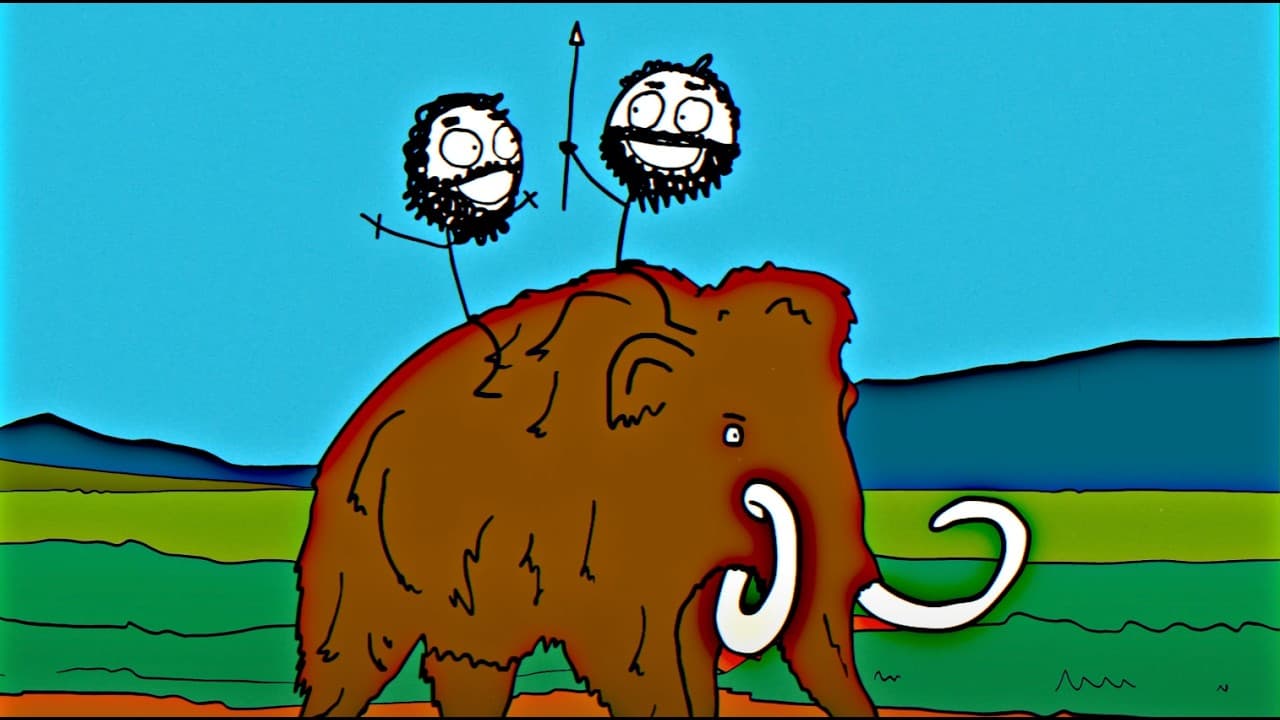
Evolutionary psychology struggles with unknown ancestral environments and cultural variation, which weaken universal claims. It also faces critiques about falsifiability, replication, and the idea of massive modularity. While it contributes valuable insights, its conclusions require cautious interpretation and acknowledgment of alternative explanations.
Transcript
Have you ever been at a family dinner and maybe your uncle just brings up something about how men are wired to be this way and women are wired to be that way and it has something to do with how we share most of our DNA with chimpanzees. This is a little bit of a gripe that I have as somebody in psychology that evolutionary psychology is often equip... Read More
Key Insights
- Evolutionary psychology relies on past selective pressures, but past environments are not uniform, making universal conclusions problematic.
- Cultural variation and social dynamics can dramatically alter human behavior beyond what biology alone would predict.
- Falsifiability is a central critique, as many claims about ancestral psychology cannot be directly tested or disproven.
- Replication crises have affected the field, highlighting p hacking and selective reporting as risks to robust conclusions.
- The concept of massive modularity is contested, with neuroscience emphasizing brain plasticity and flexible problem solving over fixed cognitive modules.
- Spandrels illustrate how some traits may co occur with adaptive traits without being directly adaptive themselves.
- Non adaptive traits and behaviors, such as suicidality or certain sexual behaviors, challenge simple fitness explanations.
- The field must integrate interdisciplinary evidence from anthropology, history, and neuroscience to build more nuanced theories.
Install to Summarize YouTube Videos and Get Transcripts
Explore YouTube Video Summarizer or Get YouTube Transcript Extractor
Questions & Answers
Q: How does the unknown nature of ancestral environments limit evolutionary psychology claims?
The central limitation is that we cannot observe the exact environments our ancestors faced, so imagined generic hunter gatherer scenarios may not reflect real selective pressures. This makes it hard to justify broad claims about human psychology that presume uniform ancient conditions, and it invites alternative explanations based on cultural or ecological variability.
Q: Why is cultural variation a problem for universal statements in evolutionary psychology?
Cultural variation can produce different social structures and behavioral norms even among closely related populations. This means that psychological traits attributed to genetics may instead reflect social learning, norms, and institutions, complicating attempts to attribute behavior to innate, evolutionarily shaped mechanisms alone.
Q: What is the issue of falsifiability in evolutionary psychology?
Many claims about past adaptations rely on indirect evidence and cannot be directly tested or falsified. Without clear falsifiable hypotheses or measurable predictions, establishing robust support for specific evolutionary explanations becomes difficult, leading to weaker scientific confidence.
Q: How does the replication crisis affect evolutionary psychology?
Replication failures and p hacking practices can undermine reported effects about mate preferences or other claims. When results are not replicable, it calls into question the reliability of proposed evolutionary explanations and highlights the need for rigorous methodology and transparent data.
Q: What is meant by massive modularity, and why is it controversial?
Massive modularity argues that the brain contains many specialized, evolved modules. Critics counter that neural plasticity shows broad, flexible problem solving beyond fixed modules, and that damage can be compensated by other brain regions, challenging the idea of strictly modular cognition.
Q: What are spandrels and why are they relevant to the debate?
Spandrels are traits that arise as byproducts of other adaptations rather than direct targets of selection. In evolutionary psychology, they help explain traits that seem non adaptive or incidental, reminding researchers to differentiate between what is directly selected for and what is a byproduct of correlated evolution.
Q: How do non adaptive traits challenge evolutionary explanations?
Traits like the chin or certain aspects of language or music might persist without clear fitness benefits, suggesting that not all human features are straightforwardly adaptive. This complicates claims that every trait is an optimized response to past selective pressures.
Q: What is the takeaway for evaluating evolutionary psychology claims?
Readers should consider the variability of ancestral environments, cultural influences, and the limitations of falsifiability and replication. A cautious approach, integrating anthropology and neuroscience, helps avoid over generalization and supports nuanced, testable hypotheses.
Summary & Key Takeaways
-
Evolutionary psychology seeks to identify adaptations shaped by past environments but must contend with diverse ancestral contexts and cultural differences that complicate broad generalizations.
-
The field is criticized for lacking falsifiability and for making testable predictions difficult, which invites competing theories and skepticism about what constitutes evidence.
-
There is ongoing debate about brain modularity versus plasticity, with critics arguing the brain is more flexible and capable of adapting beyond fixed modules.
Read in Other Languages (beta)
Share This Summary 📚
Summarize YouTube Videos and Get Video Transcripts with 1-Click
Try YouTube Summary with ChatGPT & Claude or YouTube Transcript Generator
Explore More Summaries from Sisyphus 55 📚
Summarize YouTube Videos and Get Video Transcripts with 1-Click
Try YouTube Summary with ChatGPT & Claude or YouTube Transcript Generator