What AI Launched This Week: Microsoft, OpenAI, Adobe & More
TL;DR
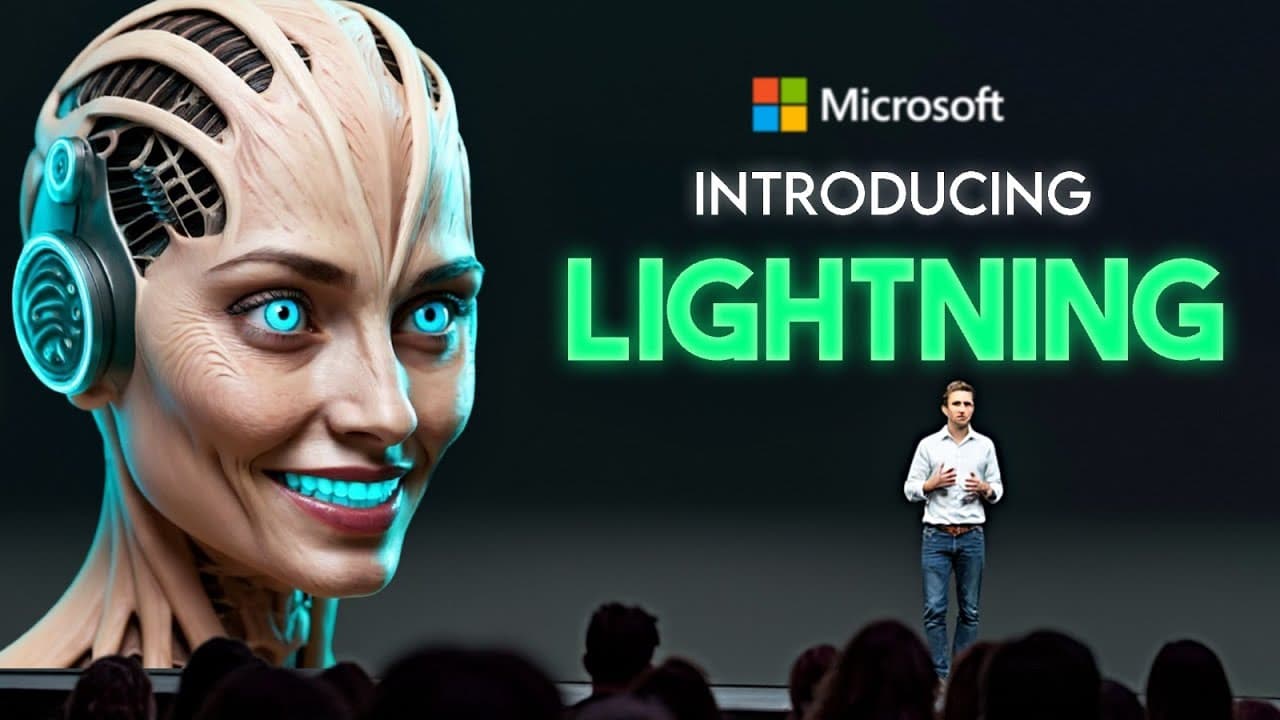
Microsoft released Agent Lightning, an open-source reinforcement learning framework that lets AI agents learn from their own real-world experiences without rebuilding the system. The same week brought OpenAI's safety-focused Safeguard models, Telegram's decentralized Cocoon AI network on the TON blockchain, Elon Musk's Grokipedia, Adobe's new creative tools, YouTube AI upscaling, and IBM's tiny Granite Nano models.
Transcript
So, Microsoft just dropped a whole new reinforcement learning framework. Open AI rolled out safety focused models. Telegram's Pavvel Durov announced a decentralized AI network on the Ton blockchain. Elon Musk launched something called Growipedia. Adobe went wild at Max with new creative tools. YouTube is quietly upgrading everyone's videos with AI.... Read More
Key Insights
- Agent Lightning is Microsoft's reinforcement learning framework that lets AI agents learn from experience without rebuilding the system. It watches what the agent does, which responses work or fail, and teaches it to improve over time.
- The framework works without changing your existing tools or apps. A lightning server handles training in the background while a lightning client stays near the AI, collecting real-world performance data to send back for refinement.
- Automatic intermediate rewarding is a feedback system inside Agent Lightning that gives the AI small hints along the way rather than only judging pass or fail at the end, which makes training smoother and faster.
- OpenAI's Safeguard models are open-weight rather than open-source. Developers can inspect the parameters and reasoning behind decisions but cannot alter the underlying code, giving transparency without security risks.
- Cocoon, unveiled by Telegram's Pavel Durov, is a decentralized AI network on the TON blockchain that connects GPU owners with developers needing compute, processing every task in encrypted form so providers cannot see the data.
- Grokipedia is Elon Musk's AI-powered encyclopedia built on xAI, designed to rival Wikipedia by having entries written and maintained by AI to minimize human editor bias rather than relying on community consensus.
- Adobe demoed experimental tools at Max 2025 including Project Frame Forward, which edits an entire video by modifying a single frame, and Project Clean Take, which edits speech directly from a transcript.
- YouTube began AI upscaling low-resolution uploads to HD and eventually 4K, shown as super resolution in the quality options, and IBM released Granite 4.0 Nano models small enough to run on laptops, phones, and browsers.
Install to Summarize YouTube Videos and Get Transcripts
Explore YouTube Video Summarizer or Get YouTube Transcript Extractor
Questions & Answers
Q: What is Microsoft Agent Lightning?
Agent Lightning is a reinforcement learning framework from Microsoft that lets AI agents learn from experience without rebuilding the system to train them. It watches what the AI does, which questions it gets, how it responds, and what works or fails, then teaches it to improve from those experiences. It runs quietly in the background using a lightning server and client, and it is open-source so developers can plug it into their own projects.
Q: How does Agent Lightning train an AI without disrupting existing tools?
Agent Lightning separates training from the running application. A lightning server handles training behind the scenes, while a lightning client stays close to where the AI lives and collects information about how it performs in the real world. Every time the agent gives an answer, uses a tool, or gets feedback, that data is sent back to the server to make it sharper next time. You keep using your browser, chatbot, or workflow as usual while it learns in the background.
Q: What is automatic intermediate rewarding in Agent Lightning?
Automatic intermediate rewarding is a smart feedback system built into Agent Lightning. Instead of only telling the AI at the end whether it passed or failed, it gives the AI small hints along the way. This is like guiding the model step by step rather than judging only the final result, which makes the training process smoother and faster and helps the agent improve more efficiently over the course of its work.
Q: How is OpenAI's Safeguard approach different from typical open-source models?
OpenAI released two Safeguard models built to detect harmful or fake online content, but they are open-weight rather than open-source. Developers can see the parameters and inspect how the system makes decisions, yet they cannot alter the underlying code, which gives researchers transparency without security risks. The models also explain why something was flagged, highlighting the reasoning process instead of simply labeling content as unsafe. They were built with Roost and tested with partners like Discord and Safety Kit.
Q: What is Telegram's Cocoon and how does it keep data private?
Cocoon, short for confidential compute open network, is a decentralized AI network from Telegram's Pavel Durov that runs on the TON blockchain. It connects GPU owners with developers who need compute power, with providers paid in Toncoin and developers paying in the same token. Its standout feature is privacy: every task is processed in encrypted form, so even the GPU providers cannot see the data they are working on. Telegram plans to be the first major customer, using it for tasks like message summarization and draft writing.
Q: What is Grokipedia and how does it differ from Wikipedia?
Grokipedia is an AI-powered encyclopedia launched by Elon Musk and built on his xAI model. Instead of volunteer editors, its entries are written and maintained by AI to minimize human bias, and it aims to update itself intelligently. The core difference is philosophical: Grokipedia trusts algorithmic objectivity, while Wikipedia relies on community consensus among human editors. Reactions have been mixed, with supporters calling it the future of factual accuracy and critics arguing AI cannot fully grasp nuance or context the way human editors can.
Q: What creative tools did Adobe show at Max 2025?
At Adobe Max 2025 in Los Angeles, Adobe's research team demoed experimental tools during its Sneaks event. Project Motion Map adds animations to static Illustrator designs using text prompts by separating detected layers. Project Clean Take edits speech directly from a transcript, letting you change tone or swap words while the voice updates naturally. Project Light Touch changes lighting in a photo after it is taken, and Project Frame Forward lets you edit a full video by modifying just one frame, with the AI applying changes to every other frame.
Q: What are IBM Granite 4.0 Nano models and where can they run?
Granite 4.0 Nano is IBM's family of tiny AI models designed to run directly on your own device, with no data centers or cloud bills. They were trained on the same massive token dataset as IBM's biggest models, so they retain strong capability despite their small size. Hybrid versions mix two AI designs to use far less memory without losing the smarts of a full transformer, letting them run on laptops, phones, or inside browsers through tools like vLLM, Llama.cpp, or MLX. They are open-source, certified, and cryptographically signed.
Summary & Key Takeaways
-
Microsoft launched Agent Lightning, an open-source reinforcement learning framework that lets AI agents learn from their own experiences without rebuilding the system. It uses a background server and a client to collect real-world performance data, plus an automatic intermediate rewarding system that gives hints during training.
-
Microsoft tested Agent Lightning across three areas: turning questions into database SQL queries, a retrieval system that digs through Wikipedia-style documents to summarize answers, and math problems connected to a calculator for step-by-step reasoning. In every case, the AI improved the more it trained.
-
OpenAI released open-weight Safeguard models to detect harmful or fake content, Telegram unveiled the privacy-focused Cocoon network on the TON blockchain, Musk launched Grokipedia, Adobe showed creative tools at Max 2025, YouTube began AI upscaling, and IBM released tiny Granite Nano models for on-device use.
Read in Other Languages (beta)
Share This Summary 📚
Summarize YouTube Videos and Get Video Transcripts with 1-Click
Try YouTube Summary with ChatGPT & Claude or YouTube Transcript Generator
Explore More Summaries from AI Revolution 📚

Summarize YouTube Videos and Get Video Transcripts with 1-Click
Try YouTube Summary with ChatGPT & Claude or YouTube Transcript Generator