How to Build a One-Person Business With Grok Bot
TL;DR
Start with a Chief of AI Staff that coordinates a small group of specialized Grok bots around clear business goals. Give each agent only the context, tools, and routines it needs, back up operational records daily in a private repository, monitor token usage, and require human approval before agents send outreach or spend money.
Transcript
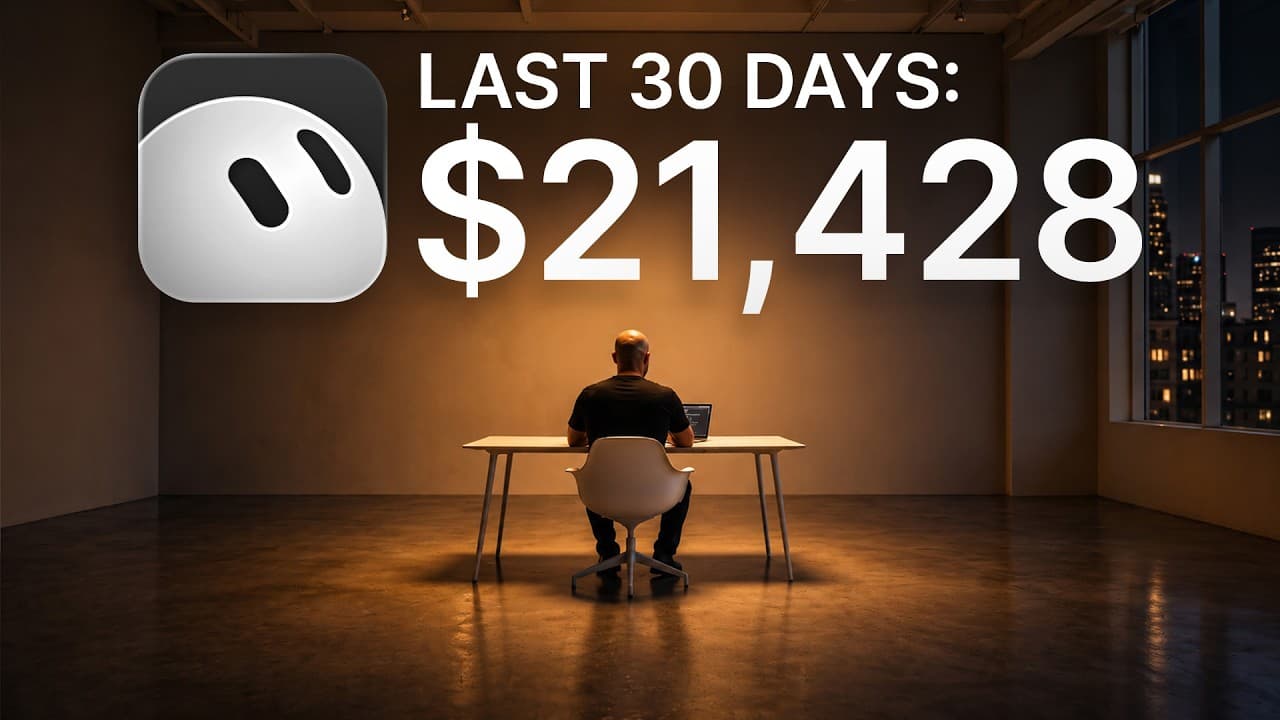
Most people still think running a business by yourself means doing everything yourself. That is simply not true anymore. 2026 is the year of the agents. Agents are now first-class citizens just as much as humans are. We had Open Claw and Hermes, which have literally gone viral, but there's just one agent that recently shipped that [music] has taken... Read More
Key Insights
- A Chief of AI Staff is the recommended first agent because it can coordinate specialized bots, delegate work, monitor routines, and keep the operation aligned with the owner’s business objectives.
- Grok bots have persistent computers equipped with a browser, file explorer, and terminal, allowing them to navigate websites, access sandbox files, run commands, and use installed command-line tools.
- The teach-a-task feature is designed for complex or legacy websites where an agent must follow a particular sequence of clicks. Demonstrating the workflow gives the bot a reusable process for later tasks.
- Routines automate repetitive work, but every scheduled action consumes tokens. Creating too many inbox checks, competitive analyses, and other recurring jobs can compound usage costs, so early deployments should prioritize only essential routines.
- Agent operations can be backed up by committing context and activity records, stored as Markdown files, to a private GitHub repository each day. This reduces dependence on Grok bot infrastructure and supports a future move to another agent fleet.
- A weekday briefing at 8:20 can summarize what agents have accomplished and identify their current goals. The briefing helps the owner confirm that token usage is producing outcomes such as saved time or increased revenue.
- Plugins and MCP servers connect agents with external tools, including multiple Gmail accounts. When a required plugin is unavailable, Grok bots can install CLI tools, although some npm installations may require a Bun and symlink workaround.
- Send and spend are the two central guardrails recommended for a new agent fleet. Agents should not independently send outreach or spend money until reliable feedback loops and sufficient evidence justify greater autonomy.
- More videos from this channel:
- More from this channel: Instantly
Install to Summarize YouTube Videos and Get Transcripts
Explore YouTube Video Summarizer or Get YouTube Transcript Extractor
Questions & Answers
Q: How do you start a one-person business with Grok Bot?
Begin by creating a Chief of AI Staff and defining its name, label, description, and business objective. Ask it which functions or positions are genuinely needed, then create a small number of focused specialist agents. Equip those agents with relevant plugins or CLI tools, establish only essential routines, and keep human approval over outbound messages and financial spending.
Q: Why should the Chief of AI Staff be the first Grok bot?
The Chief of AI Staff serves as the owner’s right-hand agent and provides a coordinating layer for the rest of the operation. Because responsibilities trickle down from this role, it can recommend appropriate business functions, delegate work according to each agent’s specialty, monitor recurring activity, and keep the fleet focused on the company’s stated objectives.
Q: What tools does each Grok bot have on its computer?
Each Grok bot has access to its own persistent computer environment with a browser, file explorer, and terminal. The browser can navigate familiar or complex websites, the file explorer exposes files installed in the sandbox, and the terminal can execute Bash commands and CLI tools. These capabilities let an agent perform both front-end and back-end work.
Q: How does Grok Bot learn a complex website workflow?
The teach-a-task feature lets the operator demonstrate a specific workflow by moving through the required steps and indicating what is being clicked. This is useful when a website is old, complex, or requires an unusual sequence of actions. The demonstrated process persists, allowing the agent to follow the same workflow during later assignments.
Q: How should routines be used without wasting tokens?
Routines should be reserved for repetitive activities that directly support a meaningful business outcome. Inbox monitoring, competitive analysis, and other scheduled jobs can quickly compound token usage when many are enabled at once. Start with a small set of core routines, monitor their costs closely, and use the Chief of AI Staff to review whether they remain useful.
Q: How can you back up a Grok Bot agent operation?
Create a private GitHub repository for agent operations and schedule a daily routine that commits each agent’s context and activity records as Markdown files. The backup should document what has happened across the fleet. Keeping this information outside Grok Bot infrastructure protects operational continuity and makes it easier to move the business to another agent fleet later.
Q: How can plugins and CLI tools extend Grok Bot?
Plugins, described in the transcript as MCP servers, connect agents to tools and accounts such as multiple Gmail inboxes. If the desired integration is unavailable as a plugin, a Grok bot can install a compatible CLI tool in its environment. When an npm installation fails, the demonstrated workaround uses Bun and a symlink to make the tool accessible.
Q: What guardrails should be placed on business AI agents?
The recommended guardrails are send and spend. New agents should not independently send outreach because their output first needs proven feedback loops and reinforcement from successful use. They should also be prevented from spending money without authorization. These boundaries let agents research, organize, and prepare actions while the owner retains control over consequential external decisions.
Summary & Key Takeaways
-
The recommended starting point is a Chief of AI Staff configured with a name, avatar, label, description, and clear objectives. This coordinating agent acts as the operator’s right hand, recommends useful business functions, delegates work to specialized agents, and keeps the wider system focused on measurable outcomes instead of unnecessary activity.
-
Each Grok bot receives a persistent working environment with a browser, file explorer, and terminal. Agents can navigate websites, execute command-line tools, and learn complicated workflows through the teach-a-task feature. Plugins, MCP servers, Gmail connections, and installed CLI tools can extend their context and operational capabilities.
-
A lean agent operation requires cost controls, reliable backups, and approval boundaries. The presenter recommends limiting routines because repeated jobs consume tokens, committing agent context to a private GitHub repository daily, reviewing a weekday progress brief, and preventing unproven agents from independently sending outreach or spending money.
Read in Other Languages (beta)
Share This Summary 📚
Summarize YouTube Videos and Get Video Transcripts with 1-Click
Try YouTube Summary with ChatGPT & Claude or YouTube Transcript Generator
Explore More Summaries from Instantly 📚

Summarize YouTube Videos and Get Video Transcripts with 1-Click
Try YouTube Summary with ChatGPT & Claude or YouTube Transcript Generator