How to Use Comments in Python Programming
TL;DR
Comments in Python are used to enhance code readability and assist in debugging. Single-line comments start with a hash symbol, while multi-line comments can be created using multiple hashes or triple quotes. Comments are ignored by the Python interpreter, making them useful for explaining code logic to others.
Transcript
foreign comments in Python so without any further delay let's get started the first topic of this presentation is Introduction to comments the second topic is single line comment the third topic is multi-line comment and the last topic the fourth topic is use of comments let's Now understand these topics in details let's start with the first topic ... Read More
Key Insights
- Comments improve code readability by explaining the logic behind code lines.
- Python ignores comments during code execution, focusing only on the actual code.
- Single-line comments begin with a hash symbol and end on the same line.
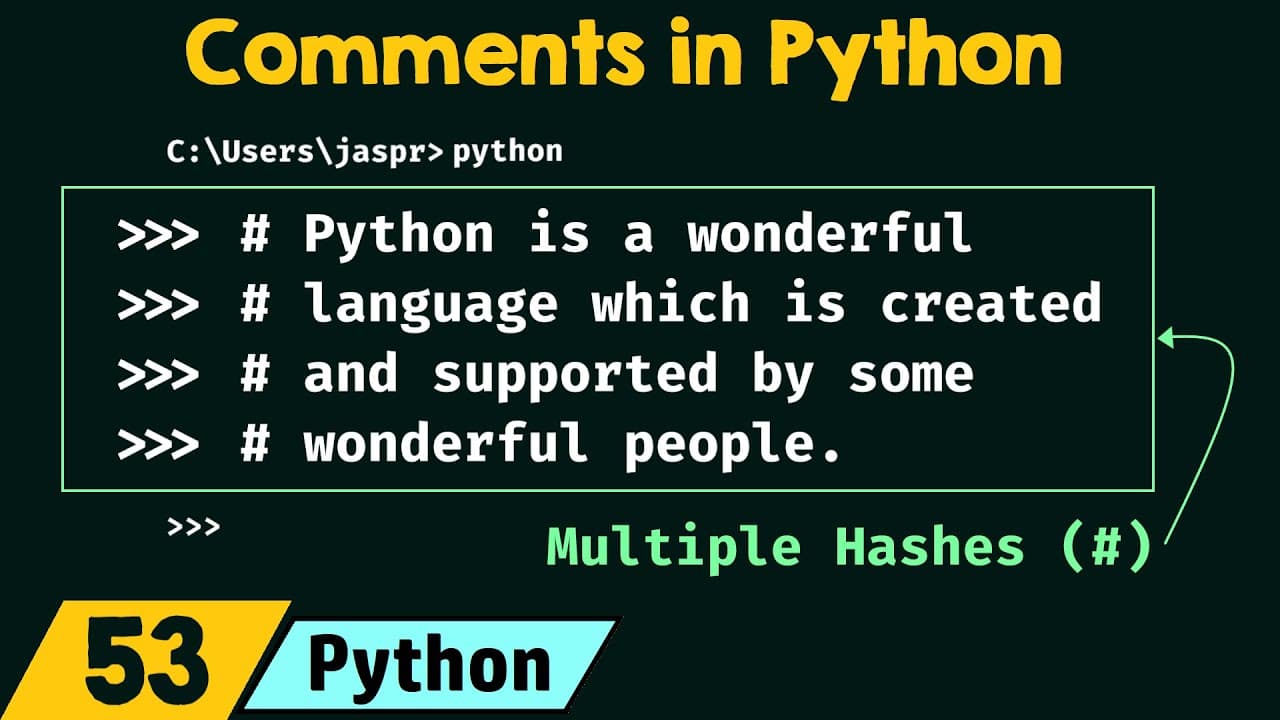
- Multi-line comments can be created using consecutive hash symbols for each line.
- Triple quotes, both single and double, can be used for multi-line comments.
- Comments assist in debugging by making it easier to identify and understand code errors.
- Including comments is a good practice to help others understand complex code.
- Comments do not appear in the output when running Python code in an IDE.
Install to Summarize YouTube Videos and Get Transcripts
Explore YouTube Video Summarizer or Get YouTube Transcript Extractor
Questions & Answers
Q: How to write a single-line comment in Python?
In Python, a single-line comment is written using the hash symbol (#). Everything following the hash symbol on that line is considered a comment and is ignored by the Python interpreter. This allows programmers to add brief explanations or notes about the code, enhancing its readability and maintainability.
Q: What is the purpose of comments in Python?
Comments in Python serve to improve the readability of the code by providing explanations and context. They help other programmers understand the logic and purpose of the code, making it easier to maintain and debug. Comments are ignored by the interpreter, so they do not affect the program's execution.
Q: How to create multi-line comments in Python?
Multi-line comments in Python can be created using two methods: by prefixing each line with a hash symbol (#) or by enclosing the comment text within triple quotes (''' or """). The former method treats each line as a separate single-line comment, while the latter allows for a block of text to be treated as a comment.
Q: Why are comments ignored by the Python interpreter?
Comments are ignored by the Python interpreter because their purpose is to provide explanations and context for human readers, not to affect the program's execution. This allows programmers to document their code without impacting its functionality, facilitating better understanding and collaboration among developers.
Q: How do comments help in debugging Python code?
Comments aid in debugging by providing insights into the code's logic and intent, making it easier to identify and understand errors. By documenting the purpose of code segments, comments help programmers quickly locate issues and understand how different parts of the code interact, streamlining the debugging process.
Q: Can triple quotes be used for both multi-line strings and comments in Python?
Yes, triple quotes can be used for both multi-line strings and comments in Python. When used as comments, the enclosed text is ignored by the interpreter, serving as a way to document code. In the case of multi-line strings, the text is treated as a string literal, which can be assigned to a variable or used directly in the code.
Q: What is the best practice for using comments in Python?
The best practice for using comments in Python is to ensure they are clear, concise, and relevant. Comments should explain the 'why' behind the code rather than the 'what,' as the code itself should be self-explanatory. Regularly updating comments to reflect code changes is also important to maintain accuracy and usefulness.
Q: When should comments be used in Python programming?
Comments should be used in Python programming when the code is complex or involves non-obvious logic that requires explanation. They are also beneficial when collaborating with others, as they provide context and understanding of the code's purpose. However, over-commenting should be avoided, as it can clutter the code and reduce readability.
Summary & Key Takeaways
-
Comments in Python are vital for improving the readability of code and making it easier for others to understand. Single-line comments start with a hash symbol, while multi-line comments can be written using multiple hashes or triple quotes. They are ignored by the Python interpreter, serving as a tool for programmers to document and explain code logic.
-
Single-line comments begin and end on the same line, while multi-line comments can be created using multiple hashes or triple quotes. This flexibility allows programmers to annotate their code effectively, enhancing both readability and maintainability.
-
Comments are particularly helpful in debugging, as they allow programmers to document the purpose and logic of specific code segments. This practice not only aids in error identification but also ensures that code is easily understandable by others, fostering better collaboration and knowledge sharing.
Read in Other Languages (beta)
Share This Summary 📚
Summarize YouTube Videos and Get Video Transcripts with 1-Click
Try YouTube Summary with ChatGPT & Claude or YouTube Transcript Generator
Explore More Summaries from Neso Academy 📚
Summarize YouTube Videos and Get Video Transcripts with 1-Click
Try YouTube Summary with ChatGPT & Claude or YouTube Transcript Generator