How to Manage Money Like the Wealthy
TL;DR
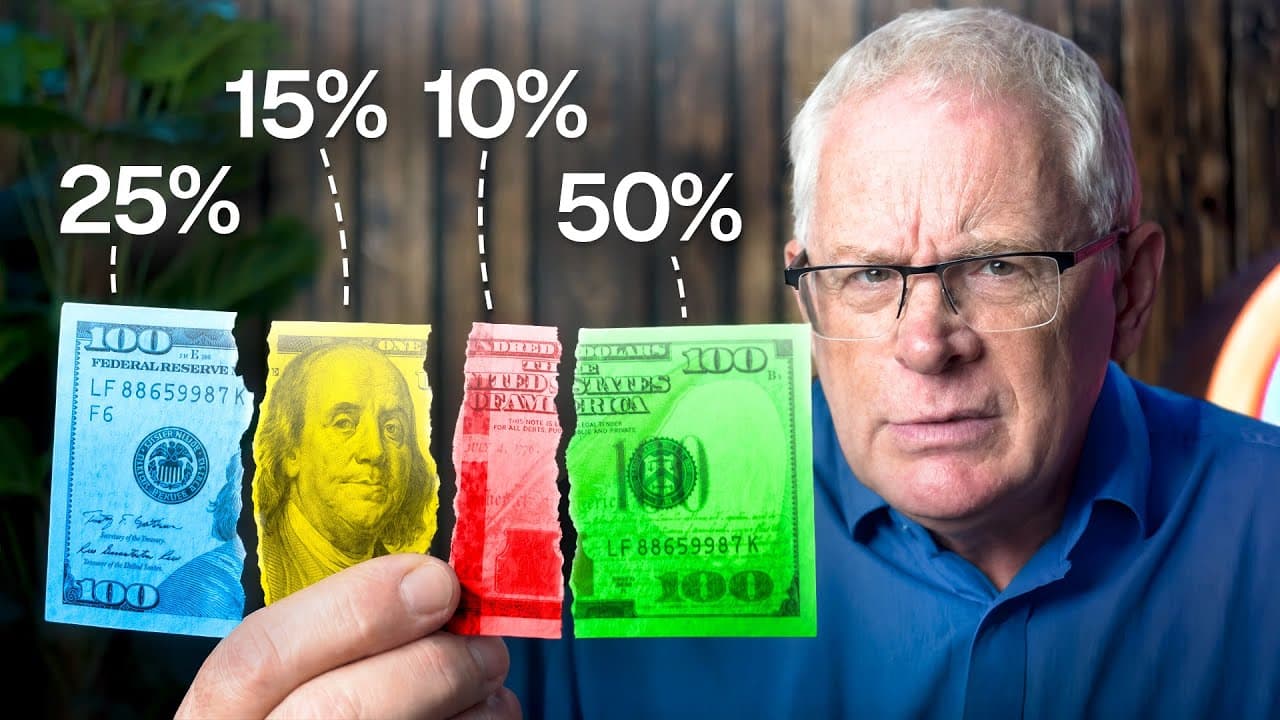
To manage your money like the 1%, apply the 25-15-50-10 rule: 25% for growth, 15% for stability, 50% for essentials, and 10% for rewards. Start investing early in assets like index funds, real estate, and skills. Use tax-advantaged accounts to maximize savings and automate investments to build wealth over time.
Transcript
- Let me tell you something that will change your life if you let it sink in. The richest people in the world are 75% entrepreneurs, 15% investors, 7% inheritors of wealth, 3% athletes, entertainers and artists, 0% employees who just earn a salary. So if you wanna know how to manage your money like the 1%, you have to understand what those first fo... Read More
Key Insights
- The 25-15-50-10 rule is a framework for money management: 25% for growth, 15% for stability, 50% for essentials, and 10% for rewards.
- Investing early in assets like index funds and real estate is crucial for wealth accumulation due to compound growth.
- Tax-advantaged accounts like Roth IRAs or ISAs can maximize savings by reducing tax liabilities on investment earnings.
- Automating investments ensures consistent contributions and reduces the temptation to spend money intended for growth.
- Building a stability fund with at least five months of core expenses is essential to handle unexpected financial emergencies.
- Cutting unnecessary expenses and focusing on true essentials can prevent lifestyle inflation and improve financial health.
- Allocating 10% of income for rewards helps maintain motivation and prevents burnout from intensive saving habits.
- Prioritizing experiences over material goods can enhance life satisfaction and provide lasting memories.
Install to Summarize YouTube Videos and Get Transcripts
Explore YouTube Video Summarizer or Get YouTube Transcript Extractor
Questions & Answers
Q: How to apply the 25-15-50-10 rule for money management?
The 25-15-50-10 rule allocates 25% of your income for growth investments, 15% for a stability fund, 50% for essential expenses, and 10% for personal rewards. This structure helps balance wealth accumulation with financial security and enjoyment. By focusing on growth and stability, you ensure a foundation for long-term financial health while maintaining motivation through rewards.
Q: What are the benefits of starting to invest early?
Starting to invest early leverages the power of compound growth, allowing your investments to grow exponentially over time. Early investments, even in small amounts, can result in significantly larger returns compared to starting later. This approach capitalizes on time in the market rather than timing the market, making it a critical strategy for wealth accumulation.
Q: Why are tax-advantaged accounts important for saving?
Tax-advantaged accounts like Roth IRAs or ISAs are crucial for saving because they reduce or eliminate taxes on investment earnings, allowing your money to grow more efficiently. These accounts can significantly increase your net returns over time by minimizing tax liabilities, making them an essential tool for long-term financial planning and wealth building.
Q: How can automating investments benefit your financial strategy?
Automating investments ensures consistent contributions to your investment portfolio, reducing the temptation to spend money intended for growth. It simplifies the investment process, making it easier to stick to your financial plan. Regular, automated contributions take advantage of dollar-cost averaging, potentially reducing the impact of market volatility and enhancing long-term returns.
Q: What is the purpose of a stability fund?
A stability fund, typically covering five months of core expenses, acts as a financial safety net for unexpected emergencies, such as job loss or medical expenses. It prevents the need to liquidate investments at unfavorable times, protecting your financial progress. Building a stability fund is essential for maintaining financial security and peace of mind.
Q: How can you reduce lifestyle inflation?
To reduce lifestyle inflation, focus on distinguishing between true essentials and luxuries. Limit spending on non-essential items and prioritize savings and investments. Regularly review expenses to identify areas for cost-cutting, and implement rules like the 50% cap on essentials to prevent unnecessary spending, ensuring financial growth aligns with income increases.
Q: Why allocate 10% of income for rewards?
Allocating 10% of income for rewards helps maintain motivation and prevents burnout from strict saving habits. It allows for guilt-free spending on experiences and small luxuries, which can enhance life satisfaction. This strategic allocation ensures financial discipline remains sustainable, making long-term wealth-building efforts more enjoyable and effective.
Q: What is the value of prioritizing experiences over material goods?
Prioritizing experiences over material goods enhances life satisfaction by providing lasting memories and personal growth. Experiences, such as travel and hobbies, offer emotional fulfillment and strengthen relationships, whereas material goods often provide only temporary satisfaction. Focusing on experiences can lead to a more meaningful and enriched life.
Summary & Key Takeaways
-
The 25-15-50-10 rule helps structure finances by allocating 25% for growth, 15% for stability, 50% for essentials, and 10% for rewards. This approach encourages early investment in assets like index funds and real estate, utilizing tax-advantaged accounts to maximize savings.
-
Automating investments and cutting unnecessary expenses are key to consistent financial growth. Building a stability fund for emergencies ensures protection against unexpected financial setbacks, while allocating 10% for rewards prevents saving fatigue.
-
Prioritizing experiences over material goods enhances life satisfaction and provides lasting memories. The approach emphasizes intentional spending and investing in skills that increase income potential, fostering long-term financial health and wealth accumulation.
Read in Other Languages (beta)
Share This Summary 📚
Summarize YouTube Videos and Get Video Transcripts with 1-Click
Try YouTube Summary with ChatGPT & Claude or YouTube Transcript Generator
Explore More Summaries from Mark Tilbury 📚






Summarize YouTube Videos and Get Video Transcripts with 1-Click
Try YouTube Summary with ChatGPT & Claude or YouTube Transcript Generator