Why Is Germany's Industrial Economy in Crisis?
TL;DR
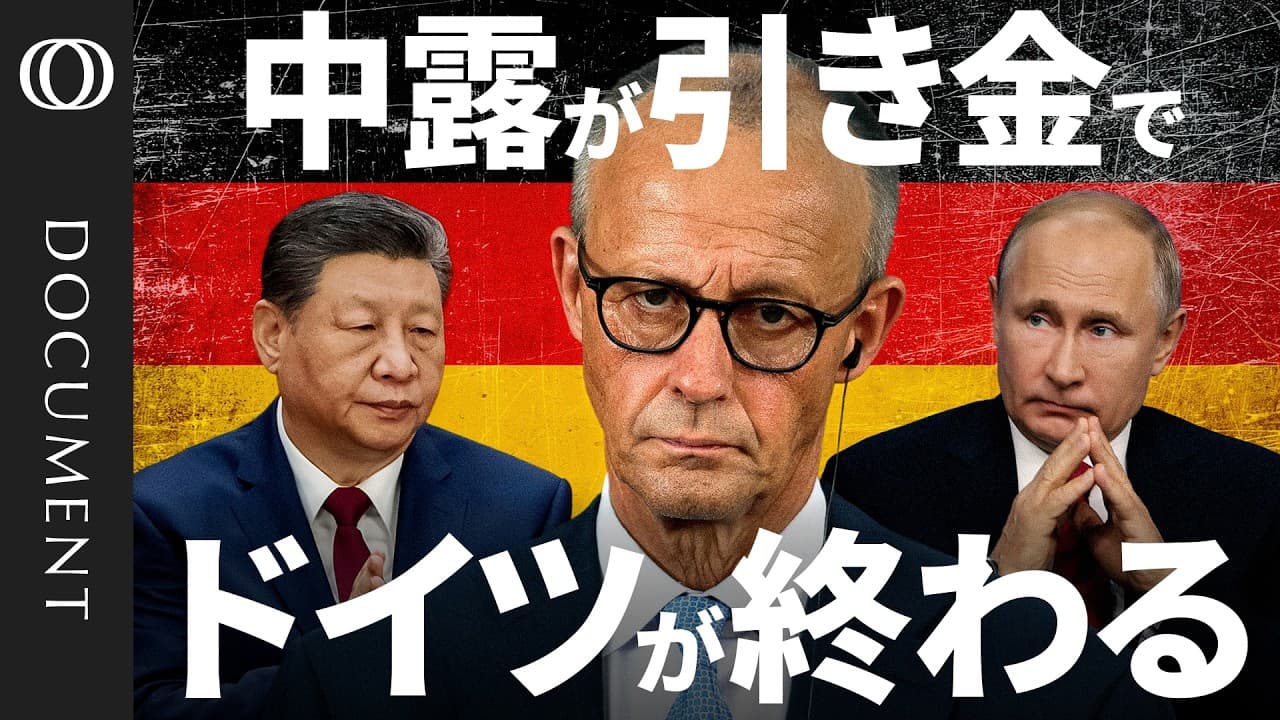
Germany's industrial model is faltering because cheap Russian gas disappeared, China became a direct competitor in high-value manufacturing, and global trade grew more protectionist. Recovery depends on reinventing an industry-heavy economy for higher energy costs, rapid technological change, an aging workforce, and geopolitical fragmentation, while preserving manufacturing excellence and strengthening areas such as industrial AI.
Transcript
Europe's biggest economy has a bit of a crisis on its hands. >> The economic model is not working anymore. >> Germany was the largest exporting nation on the planet. >> And now, it very much isn't. >> The companies announce restructuring programs, closing factories, closing plants, laying off workers. >> Now, historically, Germany's economic story ... Read More
Key Insights
- Germany's industrial sector accounts for roughly 20% of national value added, a higher share than in France, Spain, or Italy. Manufacturing also supports connected sectors such as business services, making industrial weakness a problem for the broader economy rather than factories alone.
- Germany's industrial output peaked in 2018 and has declined substantially since COVID. Its GDP performance over 20 years is 6–7% behind a weighted combination of Korea, Japan, Finland, Canada, and Sweden, suggesting a lasting loss of economic potential.
- Germany's former economic model rested on three pillars: cheap Russian gas, open rules-based global trade, and leadership in machinery, automobiles, engineering, and other high-value manufacturing. Each pillar developed structural problems in rapid succession, leaving the country exposed.
- Russian gas once supplied about half of Germany's natural gas demand. Its loss pushed German energy costs above those in the United States and China, particularly hurting chemical producers that require oil and gas both as energy sources and as molecular inputs.
- Europe's chemical industry experienced severe contraction after the energy shock, with nearly 10% of capacity earmarked for closure between 2022 and 2025. BASF's Ludwigshafen complex fell below 30,000 employees for the first time since the 1950s while the company built a major plant in China.
- China's second competitive shock targets the high-value industries that previously protected Germany from low-cost competition. German exports to China of selected machinery, electrical engineering, energy infrastructure, and industrial products fell about 10% in 2025 as imports of comparable Chinese products increased.
- Germany's automotive position weakened as vehicle exports to China fell by more than 30% in the previous year, while German consumers increasingly bought Chinese electric vehicles. German automakers were slow to take Chinese EV competition seriously and may struggle to catch up.
- Germany's industrial crisis can spread across Europe because regional manufacturing supply chains are tightly integrated with German factories. Continued stagnation could also reduce wages and tax revenue, strain social benefits, pensions, and health care, and intensify political fragmentation that makes reform harder.
Install to Summarize YouTube Videos and Get Transcripts
Explore YouTube Video Summarizer or Get YouTube Transcript Extractor
Questions & Answers
Q: Why is Germany's industrial economy in crisis?
Germany's industrial economy is struggling because the three pillars of its former success weakened almost simultaneously. Cheap Russian gas disappeared, rules-based global trade fragmented, and Chinese companies became competitors in machinery, automobiles, electrical engineering, and other advanced products. High energy costs, weak demand, fiscal constraints, an aging workforce, and slow reform have compounded the pressure on factories, employment, and investment.
Q: How did the loss of Russian gas affect German industry?
Russia previously supplied about half of Germany's natural gas demand, so the disruption following Russia's full-scale invasion of Ukraine raised energy costs well above those in countries such as the United States and China. Energy-intensive manufacturers were hit hardest. Chemical producers cannot quickly replace gas and oil because they need them both for energy and for the carbon molecules used in production.
Q: What is China shock 2.0 for Germany?
China shock 2.0 describes the export competition that accelerated around 2020 as Chinese manufacturers moved into higher-value products. Unlike the first shock, which primarily affected labor-intensive, low-technology industries, the newer wave directly challenges German strengths such as cars, machinery, electrical engineering, energy infrastructure, and industrial components. China changed from a major German customer into a competitor across Germany's core markets.
Q: Why is Germany's automotive industry losing ground in China?
German automakers were complacent about China's electric vehicle industry for a long period, while Chinese manufacturers rapidly improved and moved ahead of major global carmakers. Germany's vehicle exports to China fell by more than 30% in the previous year, even as German buyers increasingly purchased Chinese EVs. German companies have changed direction, but catching up may now be difficult.
Q: How is Germany's chemical industry affected by the energy crisis?
Germany's chemical industry faces expensive energy and feedstock costs because its plants rely on gas and oil for heat and for essential carbon molecules. Nearly 10% of European chemical capacity was earmarked for closure between 2022 and 2025. At BASF's Ludwigshafen complex, employment dropped below 30,000 for the first time since the 1950s, while the company invested billions of euros in a new Chinese plant.
Q: Why can Germany's industrial downturn affect the entire EU?
German industry sits at the center of Europe's manufacturing economy, and factories across many countries participate in tightly integrated supply chains linked to German producers. Because industry generates roughly 20% of Germany's value added and supports other sectors such as business services, prolonged weakness can reduce demand and investment beyond Germany. The wider European impact depends partly on whether Germany preserves manufacturing excellence.
Q: What political and social risks come from Germany's economic stagnation?
Continued stagnation can suppress wage growth in industries that are no longer as competitive, reduce corporate tax revenue, and weaken the government's ability to finance its extensive social system. The government is already cutting social benefits, pensions, and health care. Fear of decline can also increase support for political extremes, creating fragmentation that makes reform harder and reinforces the cycle of low growth and declining trust.
Q: How could Germany rebuild its industrial competitiveness?
Germany needs to transform its industry-heavy economy for higher energy costs, rapid technological change, and fragmented global trade while retaining manufacturing excellence. Infrastructure and defense spending enabled by loosening the debt brake may eventually support activity, although the effects will take time. German companies are also exploring industrial AI as a possible competitive advantage against models and industrial capabilities emerging from the United States and China.
Summary & Key Takeaways
-
Germany's industrial output peaked in 2018 and declined after COVID, revealing more than a temporary downturn. Its economy trails a weighted group of former peers by 6–7%, while industrial weakness threatens factories, jobs, wages, tax revenue, social programs, and the business services connected to manufacturing.
-
The former model rested on cheap Russian gas, open rules-based trade, and leadership in machinery, automobiles, and engineering. Russia's invasion of Ukraine disrupted gas supplies, while China advanced into Germany's core markets. Energy-intensive chemical producers and automakers now face particularly severe pressure at home and abroad.
-
Germany must modernize industry while managing expensive energy, weak demand, limited fiscal flexibility, workforce aging, and political fragmentation. Infrastructure and defense spending may help over time, and industrial AI offers a possible competitive opening. Failure would affect Europe because German manufacturing anchors deeply integrated regional supply chains.
Read in Other Languages (beta)
Share This Summary 📚
Summarize YouTube Videos and Get Video Transcripts with 1-Click
Try YouTube Summary with ChatGPT & Claude or YouTube Transcript Generator
Explore More Summaries from TBS CROSS DIG with Bloomberg 📚





Summarize YouTube Videos and Get Video Transcripts with 1-Click
Try YouTube Summary with ChatGPT & Claude or YouTube Transcript Generator