How Do Personality and IQ Predict Performance?
TL;DR
Psychometric intelligence is the strongest predictor of performance in complex, changing environments, while conscientiousness is the next strongest predictor and is especially relevant in school, the military, and conservative businesses. Performance prediction can improve hiring, placement, promotion, and career decisions, but selection systems must balance fair opportunity with the consequences of putting unsuitable people into demanding roles.
Transcript
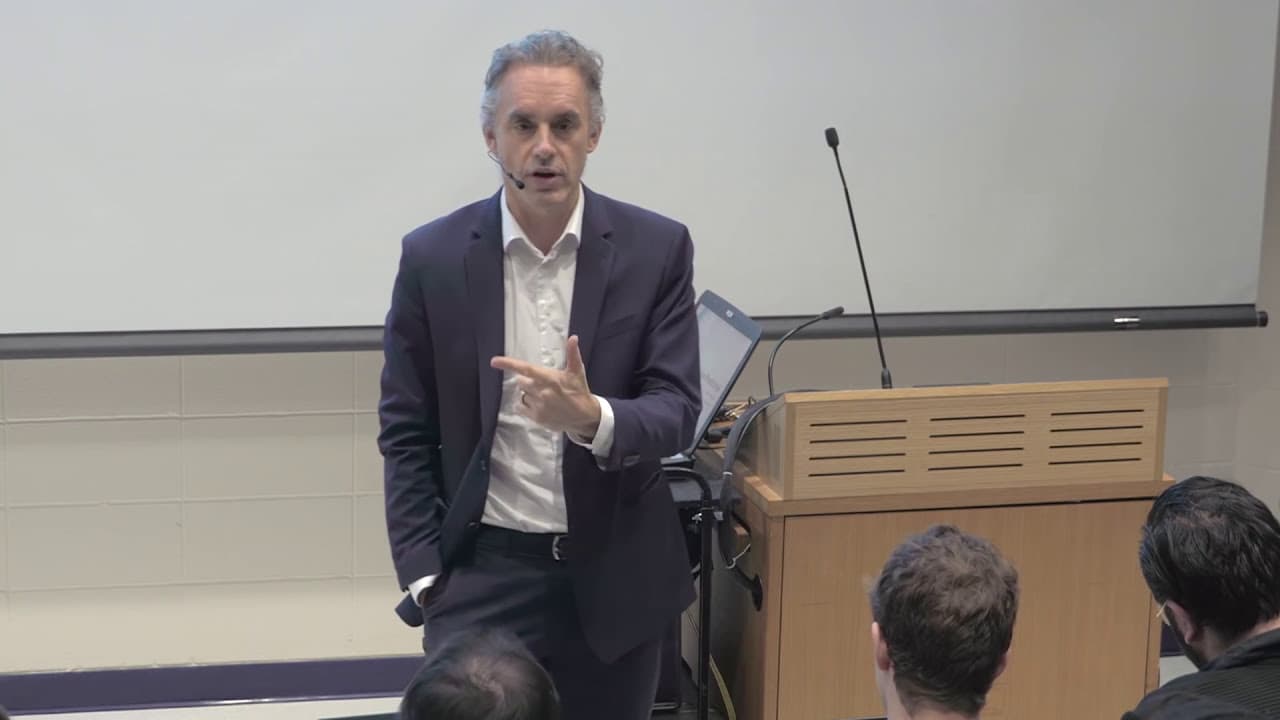
This is the most practical of all the things that we've discussed so far. Um, it's really-- You could consider it a component of industrial organizational psychology, but it's a component that has a strong emphasis on individual differences. And so, you could consider it, first, an exploration of the practical utility of psychological concepts in p... Read More
Key Insights
- Psychological constructs are partly validated by their ability to predict important outcomes outside the laboratory. Intelligence and Big Five personality traits become practically meaningful when they forecast differences in academic achievement, workplace success, creativity, entrepreneurship, or performance across jobs of differing complexity.
- Workplace performance is difficult to measure because success must be divided into relevant categories. Performance in simple jobs may differ from performance in complex jobs, so refining the outcome being measured can improve understanding and the accuracy of psychological prediction.
- Selection creates an ethical conflict between equal opportunity and suitable placement. Giving everyone access may be fair, but placing people into environments where failure is highly probable can impose substantial costs in time, resources, and personal distress.
- Managerial selection carries consequences beyond the selected individual. The lecture states that about sixty-five percent of managers add zero or negative net value, and an incompetent manager or executive can damage subordinates' careers or threaten an entire company.
- Unstructured interviews have low predictive validity and can favor candidates who are tall, assertive, attractive, or charming. The lecture estimates their validity at about 0.12, improving a fifty-fifty prediction to roughly fifty-six versus forty-four.
- Conscientiousness predicts workplace performance better than unstructured interviewing in the example presented. A standard conscientiousness measure is described as correlating about 0.25 with managerial productivity, compared with approximately 0.12 for an unstructured interview.
- The binomial effect size display translates correlations into intuitive selection odds. A predictor with a correlation of 0.20 changes chance-level odds from fifty-fifty to sixty-forty, while a correlation of 0.30 corresponds to sixty-five versus thirty-five.
- Career fit depends on matching work demands with temperament. Intelligence favors complex and changing environments, conscientiousness supports structured achievement, openness supports creative and entrepreneurial activity, extraversion supports social roles, introversion supports isolated work, and emotional stability supports stress tolerance.
- More videos from this channel:
- More from this channel: Jordan B Peterson
Install to Summarize YouTube Videos and Get Transcripts
Explore YouTube Video Summarizer or Get YouTube Transcript Extractor
Questions & Answers
Q: How do personality traits and IQ predict performance?
Psychometrically measured intelligence is presented as the best predictor of performance in complex, continually changing environments. Conscientiousness is identified as the next strongest predictor, particularly in school, the military, and conservative businesses. Other Big Five traits predict more specific forms of fit, including social performance, isolated work, creativity, caretaking, negotiation, discipline, and tolerance for stress.
Q: Why is predicting workplace performance ethically complicated?
Performance prediction creates two competing ethical responsibilities: giving each person a fair opportunity and placing the appropriate person in the appropriate role. Broad access can allow more people to try, but predictable failure may waste their time and resources. In high-responsibility jobs, poor selection can also harm employees, careers, organizations, and everyone affected by the selected person's decisions.
Q: Why can open university admission produce high failure rates?
An open admission policy gives many people an opportunity to attend university, but the lecture says it can also produce an extraordinarily high first-year failure rate. That failure may be accepted as the cost of equal opportunity, yet it can consume substantial time and resources and create an unpleasant experience for students who were unlikely to succeed in that particular setting.
Q: Why are unstructured job interviews weak predictors?
Unstructured interviews have low predictive validity because interview success can reflect qualities that do not necessarily predict performance in the actual position. Tall, assertive, attractive, and charming applicants may receive favorable judgments regardless of job suitability. The lecture gives an approximate validity of 0.12, which changes a fifty-fifty prediction to only about fifty-six versus forty-four.
Q: What is the binomial effect size display?
The binomial effect size display is a way to express the practical meaning of a correlation as a difference between success and failure odds. Chance selection is represented as fifty-fifty, whose difference is zero. A correlation of 0.20 becomes sixty-forty, and a correlation of 0.30 becomes sixty-five versus thirty-five, making statistical effect sizes easier to interpret.
Q: Which personality trait best predicts workplace performance?
Conscientiousness is described as the strongest personality predictor of performance after intelligence. It is particularly useful in the military, at school, and in conservative businesses. In the workplace example, a standard conscientiousness test is said to correlate about 0.25 with managerial productivity, outperforming the approximate 0.12 predictive validity attributed to unstructured interviews.
Q: How should personality influence career choice?
Career choice should emphasize matching occupational demands to a person's temperament instead of relying mainly on changing that temperament. Open people may fit artistic, creative, or entrepreneurial work; extraverts may perform well socially; introverts may work effectively in isolation; agreeable people may suit caretaking; and disagreeable people may be better suited to negotiation or discipline within reasonable limits.
Q: Why does accurate managerial selection matter?
Accurate managerial selection matters because the consequences of failure extend well beyond the manager. The lecture states that roughly sixty-five percent of managers add zero or negative net value. An incompetent manager can undermine the careers of supervised employees, while an ineffective executive in a large organization can contribute to failure across the entire company.
Summary & Key Takeaways
-
Psychological constructs gain practical validation when they predict meaningful outcomes beyond the laboratory. Academic success, workplace performance, creative achievement, and entrepreneurial achievement provide observable domains for testing whether intelligence and Big Five personality measures correspond to consequential differences in how people perform.
-
Performance prediction creates an ethical tension between giving everyone a fair chance and placing people where they are more likely to succeed. Open admission expands opportunity, but high failure rates can consume time and resources. Selection becomes especially consequential when ineffective managers can damage employees, careers, and entire organizations.
-
Intelligence best predicts performance in complex, changing settings, while conscientiousness is the next strongest general predictor. Other traits matter through occupational fit: agreeableness supports caretaking, disagreeableness supports negotiation and discipline, openness supports creativity and entrepreneurship, extraversion supports social work, introversion supports isolated work, and low neuroticism supports stress tolerance.
Read in Other Languages (beta)
Share This Summary 📚
Summarize YouTube Videos and Get Video Transcripts with 1-Click
Try YouTube Summary with ChatGPT & Claude or YouTube Transcript Generator
Explore More Summaries from Jordan B Peterson 📚

Summarize YouTube Videos and Get Video Transcripts with 1-Click
Try YouTube Summary with ChatGPT & Claude or YouTube Transcript Generator