Can AI Help Small Teams Build the Next $100M Companies? | Anthropic CPO Mike Krieger
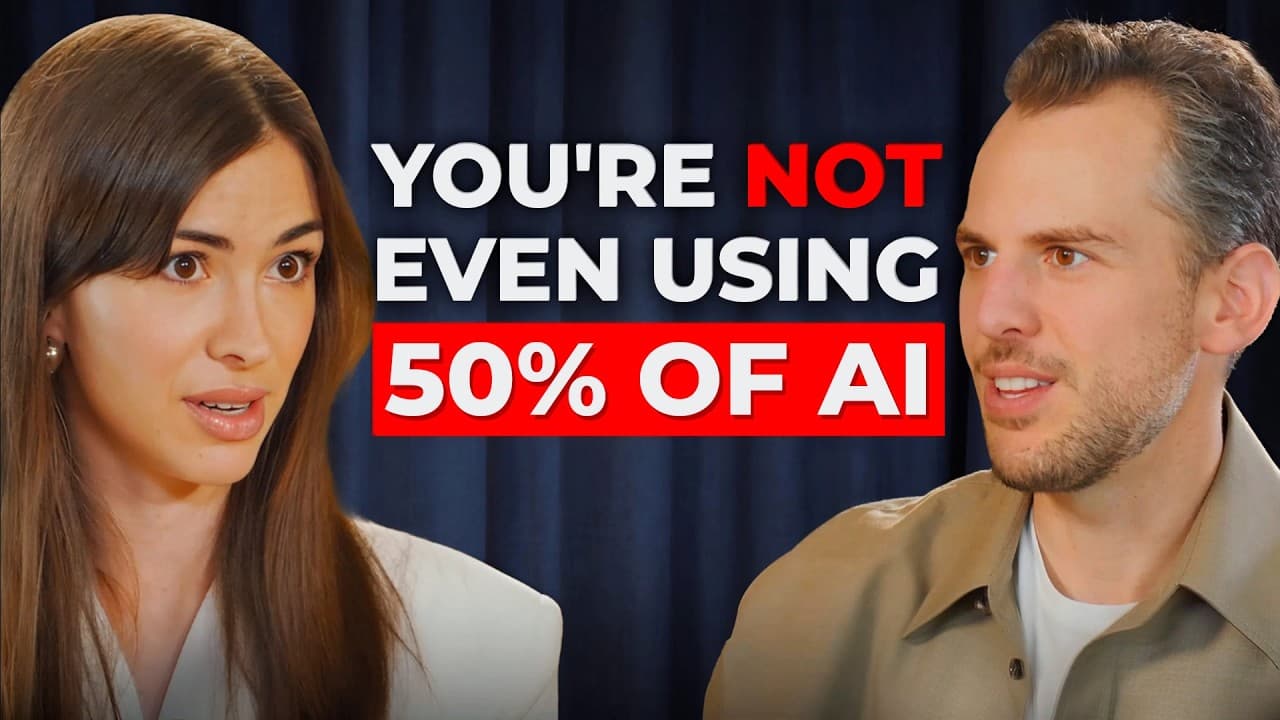
TL;DR
AI can help one-to-three-person teams build large companies by accelerating prototyping, expanding their capabilities, and delaying the need to hire specialists. Anthropic CPO and Instagram co-founder Mike Krieger says Claude Code can help nontechnical founders reach their first 10 users, though it may not carry them to one million. Read on for his advice on team size, product momentum, and when to pivot.
Transcript
In the AI age, anyone can become a hundred million dollar entrepreneur, build a company solo. Do you think it is possible now? I think it's very This is Mike Kger. A lot of you guys know him as co-founder of Instagram. He's also chief product officer at Anthropic, building Claude and shaping how we work and solve problems using AI. The next step th... Read More
Key Insights
- AI enables small founding teams to accomplish more work, move faster, and delay expanding their headcount. Krieger believes a one, two, or three-person team can scale its capabilities while keeping the company’s central ideas concentrated in very few minds.
- Two founders can provide a useful balance between focus and resilience. Krieger favors this structure because partners can support each other through difficult periods while avoiding much of the communication and alignment burden created by a large organization.
- Technical expertise is becoming less necessary for reaching an initial prototype. Tools such as Claude Code can help people without coding experience build an early version, test whether an idea has potential, and place it before a first group of users.
- AI tools do not guarantee that an initial product will scale from ten users to one million. Their immediate value is reducing the cost and difficulty of building something concrete enough to test with real people before making larger investments.
- Product momentum is visible when each round of feedback and iteration produces increasing engagement. Early Instagram showed this pattern when weekly changes led a private group of roughly 20 to 40 testers to try new filters and respond with growing enthusiasm.
- A pivot becomes appropriate when repeated additions and experiments fail to excite users. Krieger describes a practical signal: healthy products can appear to return ten units of output for one unit of input, while struggling products show the reverse pattern.
- Artifact was an AI-powered news recommendation product that learned nuanced interests and selected relevant articles. Krieger remained proud of the product, but its product-market fit and acceleration were not strong enough to justify continued investment.
- Claude can support lean business operations by acting as a specialized assistant for separate disciplines. One founder described maintaining distinct Claude projects for product management, contracts, and founder support, reducing the need to hire immediately for every function.
Install to Summarize YouTube Videos and Get Transcripts
Explore YouTube Video Summarizer or Get YouTube Transcript Extractor
Questions & Answers
Q: Can AI help a solo founder build a $100 million company?
Mike Krieger believes it is very possible for AI to help a solo founder or very small team build a large company. He says one-to-three-person teams can accomplish more, move faster, and preserve conceptual integrity, though he considers two founders ideal because they can support each other through the ups and downs.
Q: Why does Mike Krieger prefer two founders over one?
Krieger says a partner provides valuable support during the emotional and operational difficulties of entrepreneurship. Two people can also retain the focus and energy of a small team without taking on the coordination burden of a much larger organization.
Q: Do founders need technical skills to build an AI-era startup?
Technical skills are becoming less necessary for creating and testing an initial product. Krieger says nontechnical people can use Claude and Claude Code to reach a prototype or initial version and put it before their first 10 users.
Q: Can Claude Code scale a startup from 10 users to one million?
Krieger does not claim that current tools will necessarily handle every challenge involved in scaling from the first 10 users to the first million. Their immediate value is helping founders create a prototype or initial product that real people can test.
Q: How should founders test a new product idea?
Founders should build an initial version, share it with a small group, collect feedback, and release focused improvements. Instagram used a private group of roughly 20 to 40 testers, and the team watched whether each iteration produced growing enthusiasm.
Q: How can founders tell whether a product is gaining momentum?
Momentum appears when feedback, iteration, and usage reinforce one another like a snowball. Krieger describes a healthy pattern as one unit of input producing 10 units of output, with users becoming increasingly engaged as improvements arrive.
Q: When should a startup pivot or stop pursuing an idea?
Founders should reconsider an idea when repeated experiments and added features still produce little excitement or meaningful adoption. Krieger contrasts strong momentum with a struggling pattern in which 10 units of input generate only one unit of output.
Q: Why did Mike Krieger stop investing in Artifact?
Artifact was an AI-powered news recommendation product that learned nuanced interests and selected relevant articles and stories. Krieger was proud of it, but it did not achieve enough product-market fit or acceleration to justify continued investment.
Summary & Key Takeaways
-
Mike Krieger argues that AI makes highly capable one, two, or three-person companies increasingly possible. Small teams can move quickly, preserve conceptual integrity, and avoid the coordination costs that accompany growth. He considers two founders especially practical because a partner can provide support through the emotional and operational difficulties of entrepreneurship.
-
AI coding tools can help nontechnical founders turn an idea into a prototype and place it before their first users. They may not automatically scale a product from ten users to one million, but they remove an early barrier that previously killed promising ideas when founders could not find engineers to build them.
-
Founders should evaluate whether product iterations create a snowball effect. Early Instagram releases generated visible enthusiasm among a private group of roughly 20 to 40 testers, while Artifact never achieved sufficient product-market fit or acceleration. Krieger suggests pivoting when substantial effort repeatedly produces weak excitement or little meaningful adoption.
Read in Other Languages (beta)
Share This Summary 📚
Summarize YouTube Videos and Get Video Transcripts with 1-Click
Try YouTube Summary with ChatGPT & Claude or YouTube Transcript Generator
Explore More Summaries from Silicon Valley Girl 📚






Summarize YouTube Videos and Get Video Transcripts with 1-Click
Try YouTube Summary with ChatGPT & Claude or YouTube Transcript Generator