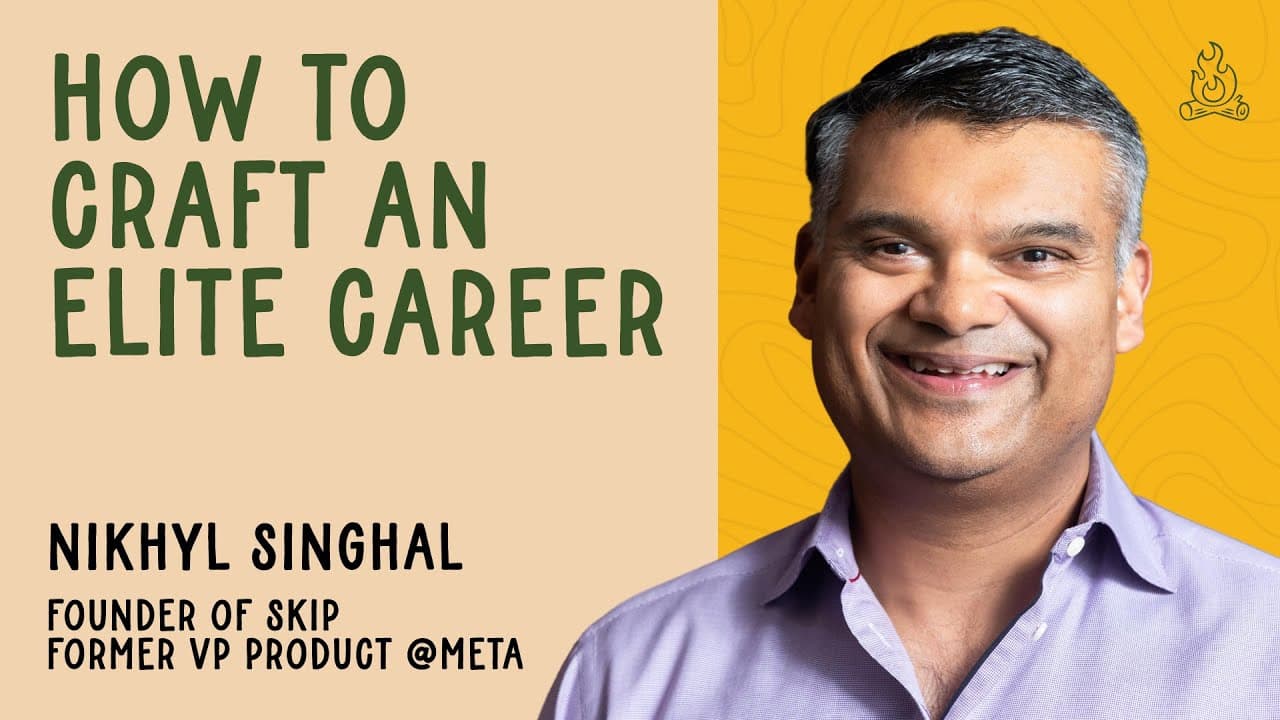
How to Build an Elite and Sustainable Tech Career
TL;DR
Build a strong career by choosing roles that create better stories, deepen a valuable superpower, and prepare you for the next opportunity. Evaluate stagnation by asking what story you will tell in 12 or 18 months, cultivate a reputation through consistent values and relationships, and prevent burnout by setting boundaries before overinvestment turns into resentment.
Transcript
thank you Jayy that's like the first time Bill Bill's kind of a a mentor of mine and it's so um humbling to be compared to him um I I'm here to talk about your career I think your career is the most important product that any of you work on um but if you're like the hundreds of executives and leaders that I've spent time with over the past 10 years... Read More
Key Insights
- A career is the most important product a professional builds, and it should be managed intentionally rather than treated as a sequence of isolated jobs. Each position should develop useful capabilities, produce evidence of judgment, and create access to a stronger next opportunity.
- A long working life can include dozens of jobs because modern tech roles may last 2 to 3 years rather than 5 to 10 years. These jobs do not necessarily require different employers, since people can move between several positions inside one company.
- The foundation years are for discovering a superpower while diversifying strengths and experiences. This phase creates the range of stories, skills, and perspectives that can later support larger roles with greater responsibility and impact during the power years.
- The power years are for leveraging an established superpower rather than continuing to broaden without focus. The priorities become obtaining the largest impactful role available and paying closer attention to compensation, which may equal multiple years of earnings from early career stages.
- A useful job story consists of the product, challenge, opinion, and outcome associated with a role. Strong stories show what was built, which constraints appeared, what judgment guided the response, whether the approach succeeded, and what was learned when it failed.
- Career stagnation is present when the story someone expects to tell in 12 months is essentially unchanged from today’s story. A role can still advance a career despite company uncertainty when it provides substantial shipping opportunities, new challenges, and meaningful learning.
- A bend-the-curve role is a position that significantly changes the trajectory of a career. Although such roles can appear to result from luck, the opportunities are often enabled by a professional brand that grew from an established reputation and trusted relationships.
- Burnout and resentment can result from repeatedly investing more in work than the employment relationship can return. Sustainable performance requires recognizing this imbalance, enforcing boundaries, and holding back the portion of effort that would otherwise create expectations the organization cannot satisfy.
Install to Summarize YouTube Videos and Get Transcripts
Explore YouTube Video Summarizer or Get YouTube Transcript Extractor
Questions & Answers
Q: How should I plan a long-term career in technology?
Plan the career as a sequence of connected phases rather than isolated jobs. Use the foundation years to identify a superpower and develop varied strengths and experiences. During the power years, apply that superpower in the largest impactful roles available. In a later second career, consider pursuing joy, a problem worth addressing for a decade, or a different working pace. Every job should help create the next one.
Q: How can I tell whether my career has become stagnant?
Ask what story you expect to tell about your work in 12 months, then compare it with the story you can tell today. If the product, challenges, decisions, constraints, outcomes, and learning will remain roughly the same, the role may represent career stagnation. If you expect to ship many products, encounter new problems, and learn substantially, the role can still advance your career even when the company’s future is uncertain.
Q: What makes a compelling career story?
A compelling career story contains four elements: product, challenge, opinion, and outcome. State what you were building, identify the difficult problem or constraint, describe the judgment or position you used to address it, and explain whether that approach succeeded. If it failed, specify what you learned. These stories become reusable evidence that you can solve similar problems when future employers or leaders evaluate you for a role.
Q: How should I choose between two different job opportunities?
Compare the stories you are likely to tell after spending 18 months in each role. Consider what you would build, which problems you would face, what decisions you could own, and what outcomes or learning you might produce. This method can clarify choices such as an individual-contributor position at a hot company versus a management position elsewhere. The stronger option is the one that creates the more valuable future story and better prepares the following move.
Q: What is a bend-the-curve role in a career?
A bend-the-curve role is the position that clearly changes a professional’s career trajectory. Nikhyl Singhal identifies his work after Google acquired his third startup, when he joined the Google+ team and became associated with Hangouts and photos, as his own example. The experience changed how he viewed his career. Professionals should actively seek a comparable peak role that expands their future possibilities and lets them use their strengths at a higher level.
Q: How can I build a professional brand without starting a podcast?
Build tomorrow’s brand by strengthening today’s reputation. Choose values you want colleagues to associate with you, such as being hands-on, gritty, opinionated while remaining willing to revise your view, and committed to the team rather than personal advancement alone. Spend a 13-minute meeting each week connecting with respected people. Ensure they understand your work, principles, and career stories, because they may carry that reputation into future organizations and opportunities.
Q: Why can overinvesting in work lead to burnout?
Overinvestment creates an imbalance when a person gives work more energy, priority, or sacrifice than the employment relationship can return through recognition, promotion, compensation, or scope. Repeating this pattern can produce disappointment and resentment even when performance reviews remain positive. The response is to recognize personal responsibility for the imbalance, establish boundaries, and retain the 10 to 15 percent of effort that the organization is unlikely to repay.
Q: What should professionals prioritize during different career phases?
During the foundation years, professionals should search for a distinctive superpower while building diverse experiences and complementary strengths. During the power years, they should focus on applying that superpower, obtaining large and impactful roles, and treating compensation as more important than it was early in the career. In the penthouse phase, or second career, priorities can shift toward joy, a long-term problem, personal interests, or a different pace of work.
Summary & Key Takeaways
-
A long working life may contain dozens of jobs, including multiple positions within the same employer. Career planning therefore requires a framework: build diverse strengths during the foundation years, apply a developed superpower for maximum impact during the power years, then pursue joy, sustained problems, or a different pace in a second career.
-
Every role should produce a useful career story built from four elements: the product being created, the challenge being faced, the opinion used to address it, and the resulting outcome or lesson. Comparing today’s story with the story expected in 12 or 18 months reveals whether a role supports growth or stagnation.
-
A trajectory-changing role often appears lucky, but access to such opportunities depends on professional reputation. Consistently demonstrate chosen values, maintain relationships with respected colleagues, and ensure they understand your work and judgment. Sustainable success also requires boundaries, because repeatedly giving work more than it can return can create burnout and resentment.
Read in Other Languages (beta)
Share This Summary 📚
Summarize YouTube Videos and Get Video Transcripts with 1-Click
Try YouTube Summary with ChatGPT & Claude or YouTube Transcript Generator
Explore More Summaries from Lenny's Podcast 📚


Summarize YouTube Videos and Get Video Transcripts with 1-Click
Try YouTube Summary with ChatGPT & Claude or YouTube Transcript Generator