What Does Microsoft Exec Jay Periq Say About OpenAI, the AI Bubble, Data Centers, and AI Safety?
TL;DR
Microsoft’s core AI strategy combines developer tools, its Foundry agent platform, flexible cloud-and-edge deployment, and security built in from the start. Jay Periq explains that the team was created in January and introduced its product vision at Microsoft Build in May, while addressing data-center power and GPU constraints, OpenAI collaboration, and changing engineering roles. Read on to understand how these pieces shape Microsoft’s AI infrastructure.
Transcript
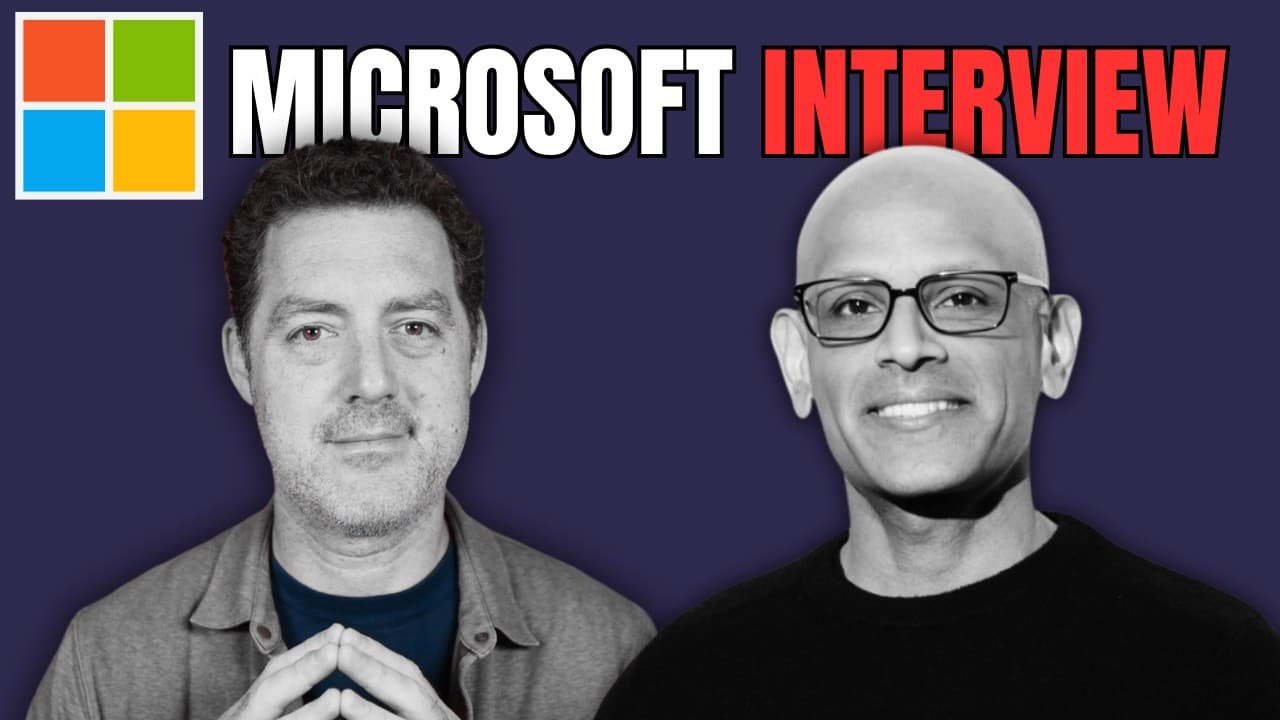
Here's my interview with Jay Periq, the executive vice president of core AI at Microsoft. In this interview, we talk about AI infrastructure, whether there are any dark GPUs, whether energy is a limiter, of course, given his experience in security. We talk about AI hacking and AI security in general, and why his team is returning to office fulltime... Read More
Key Insights
- Microsoft's core AI team aims to support developers by reimagining software tools in the AI era.
- Security and trust are essential in AI applications, requiring integration from the start.
- Flexible deployment strategies for AI are needed, with applications running in both cloud and edge environments.
- In-person collaboration is crucial for learning and adapting to rapidly changing AI technologies.
- AI is blurring traditional roles in engineering, allowing more cross-functional collaboration.
- Data centers face constraints such as power and GPU availability, impacting AI scalability.
- Model efficiency is key in managing data center resources and optimizing AI performance.
- Enterprises benefit from using a range of models, tailored to specific tasks and optimized with enterprise data.
Install to Summarize YouTube Videos and Get Transcripts
Explore YouTube Video Summarizer or Get YouTube Transcript Extractor
Questions & Answers
Q: How does Microsoft’s core AI team support developers and enterprises?
The team is reimagining the tools needed to build software in the AI era and organizing them around Foundry, which Jay Periq calls Microsoft’s agent factory. Foundry is intended for building, deploying, and observing agents and AI applications, while the broader strategy also includes security, trust, and flexible deployment.
Q: Why must AI security and trust be built in from the start?
AI agents can think, plan, reason, call tools, and access different data, making their behavior less deterministic than traditional software. Because they can perform more complex enterprise tasks, Periq says security and trustworthy AI cannot be treated as a later compliance checklist.
Q: What are the main constraints on scaling AI infrastructure?
Power and GPU availability are key constraints for data centers supporting AI workloads. The discussion also emphasizes model efficiency and the need to optimize hardware and software resources as AI demand grows.
Q: How does Microsoft collaborate with OpenAI?
Microsoft integrates OpenAI’s research and intellectual property into its products. The collaboration spans infrastructure, algorithm research, safety, and trust, while Microsoft also develops its own models.
Q: Why does Microsoft need a flexible AI deployment strategy?
Many AI applications currently run in the cloud, but some agentic applications will need to operate at the edge or on edge devices. Microsoft therefore wants its programming model to support different sectors, geographic areas, and deployment environments.
Q: Why is Jay Periq’s team returning to full-time in-person work?
Periq believes in-person work improves collaboration, creation, mentoring, coaching, and shared learning. Because AI tools change quickly, team members can more easily demonstrate useful Copilot techniques, spread discoveries, and jointly plan more complex experiments.
Q: How is AI changing traditional developer and engineering roles?
Microsoft increasingly describes its target users as “builders” because the notion of a developer is changing. AI tools enable people across product management, design, and engineering to contribute beyond traditional role boundaries, supporting more cross-functional collaboration.
Q: Why do enterprises benefit from using different AI models?
Different models can be selected and optimized for specific tasks, workflows, and enterprise needs. Microsoft supports both open- and closed-source options, with the choice depending on an organization’s goals and how its enterprise data will be used.
Summary & Key Takeaways
-
Jay Periq discusses Microsoft's approach to integrating AI into its core infrastructure, focusing on security and trust. The AI team aims to support developers by reimagining software tools and providing flexible deployment strategies. In-person collaboration is emphasized as essential for adapting to AI advancements.
-
The conversation highlights the challenges of scaling AI, including power and GPU constraints in data centers. Model efficiency and the use of a range of models tailored to specific tasks are crucial for optimizing AI performance and managing resources effectively.
-
AI is transforming traditional engineering roles, enabling more cross-functional collaboration. Microsoft encourages the use of both open and closed-source models, depending on enterprise needs, and emphasizes the importance of bringing enterprise data to enhance AI capabilities.
Read in Other Languages (beta)
Share This Summary 📚
Summarize YouTube Videos and Get Video Transcripts with 1-Click
Try YouTube Summary with ChatGPT & Claude or YouTube Transcript Generator
Explore More Summaries from Matthew Berman 📚






Summarize YouTube Videos and Get Video Transcripts with 1-Click
Try YouTube Summary with ChatGPT & Claude or YouTube Transcript Generator