How to Express Feelings Naturally in English
TL;DR
Describe emotions naturally by pairing “I feel” with words such as happy, tired, focused, nervous, relieved, discouraged, or inspired. Use specific vocabulary for the situation, acknowledge difficult emotions without shame, and explain how your feelings change after taking action, receiving support, remembering your goals, spending time in nature, listening to music, eating, or resting.
Transcript
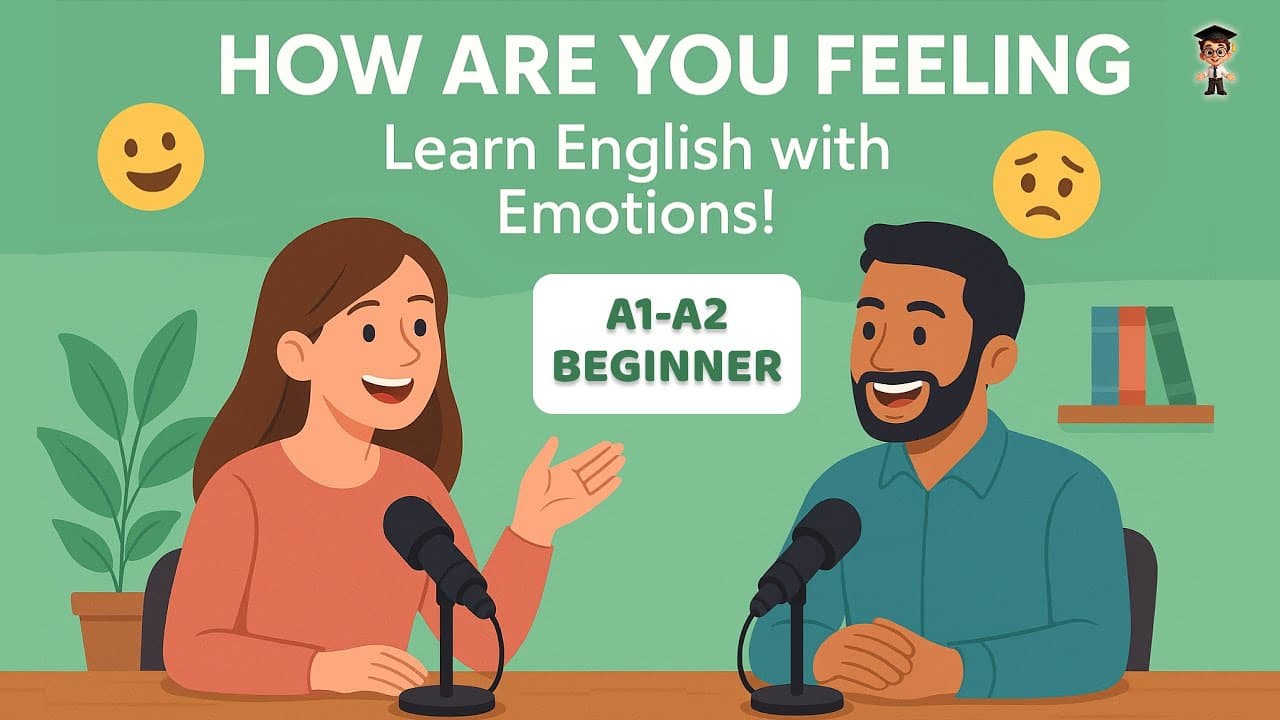
Hello everyone and welcome back to Mr. English channel where learning English is easy and fun. I'm Emily >> and hello everyone. I'm Paul. It's so good to be here with you all today. How are you Emily? >> Hi Paul. I'm doing great, thank you. And I'm also feeling very excited about our topic today. How we are feeling. It's a fun one. >> Yes, it is. T... Read More
Key Insights
- Emotional vocabulary becomes easier to remember when each word is connected to a familiar situation. The conversation links sleepiness with Monday mornings, focus with important work, nervousness with meeting people, impatience with waiting, peacefulness with nature, and exhaustion with the end of a long day.
- Feelings can change after simple actions. Coffee may help a sleepy person feel awake, a shower can create a refreshed feeling, questions can replace confusion with clarity, a friendly conversation can bring relaxation, and eating can turn hunger-related irritability into satisfaction and contentment.
- Completing an important task can produce relief, pride, and a sense of accomplishment. Stress is described as potentially useful when it encourages focused effort, while finishing the work provides a rewarding emotional contrast and reinforces the value of persistence.
- Mistakes can cause temporary embarrassment, but they are also presented as part of learning. Asking questions or looking up unfamiliar information helps resolve confusion, while remembering that errors support progress can help learners feel stronger and more confident.
- Discouragement is a normal response when progress feels slow or a challenge becomes overwhelming. The suggested response is to acknowledge the feeling, avoid remaining stuck in it, remember the original goal, and imagine meaningful rewards such as travel, conversations, and watching movies without subtitles.
- Faith and social support can provide strength during difficult moments. Emily describes asking Jesus for help, trusting his plan, and feeling calmer and more hopeful, while both speakers emphasize encouragement from family, friends, listeners, and other people who believe in them.
- Nature, music, beauty, surprises, and helping others can create distinct emotional responses. Nature brings peace and gratitude, music can inspire joy, melancholy, reflection, or nostalgia, beauty creates wonder and admiration, good surprises produce excitement, and helping someone feels useful and rewarding.
- Precise emotion words communicate more than broad labels such as good or bad. The conversation models nuanced terms including refreshed, accomplished, embarrassed, eager, overwhelmed, compassionate, nostalgic, thrilled, amused, irritable, content, drained, reflective, moved, and fulfilled.
Install to Summarize YouTube Videos and Get Transcripts
Explore YouTube Video Summarizer or Get YouTube Transcript Extractor
Questions & Answers
Q: How can I express my feelings naturally in English?
Use “I feel” followed by a specific emotion word, then add the situation or reason when helpful. Examples modeled in the conversation include feeling sleepy on Monday morning, focused while doing important work, relieved after finishing a task, nervous when meeting new people, peaceful in nature, and exhausted after a long day. Specific words make the description clearer and more natural.
Q: What English words describe feelings while working or learning?
Useful words include focused, stressed, relieved, proud, accomplished, happy, excited, confident, confused, and embarrassed. Someone may feel focused while concentrating, stressed when there is a lot to do, and relieved or accomplished after finishing. Learning a new word can create excitement and confidence, while not understanding something may cause confusion and making a mistake may briefly feel embarrassing.
Q: How can I talk about feeling nervous when meeting new people?
You can say, “I feel a little nervous at first,” and then describe how the emotion changes. Emily and Paul explain that friendly conversation can make a person feel more comfortable and relaxed. A pleasant interaction may also create happiness and hope about a new friendship. This pattern clearly communicates both the initial emotion and the later emotional shift.
Q: What can I say when I am waiting for something important?
When waiting for a trip, good news, Christmas, or another positive event, you can say that you feel impatient, hopeful, excited, or eager. The conversation also describes this as anticipation. “Impatient” communicates wanting the event to happen immediately, while “hopeful,” “excited,” and “eager” express positive expectations about what is coming.
Q: How can I respond when I feel discouraged about learning English?
First, acknowledge that feeling discouraged, frustrated, disappointed, lost, or overwhelmed is a normal part of learning. Then remember why you started and think about the benefits you hope to gain, such as traveling, meeting new people, speaking fluently, or watching movies without subtitles. The speakers also recommend noticing every small step as a victory and relying on supportive people.
Q: How does faith help when someone feels anxious or discouraged?
Emily says that when she feels unable to continue, she asks Jesus for strength and remembers that she does not have to carry every burden alone. Trusting in his plan gives her courage, peace, comfort, calm, and hope. Paul describes this faith as believing in something bigger than yourself and feeling supported and loved during doubt or despair.
Q: How can music, nature, and beauty affect emotions?
Nature can make someone feel peaceful, calm, relaxed, grateful, playful, or struck by its beauty. Music can quickly change a mood, creating joy, melancholy, reflection, nostalgia, or inspiration. A sunset or piece of art may produce wonder, admiration, gratitude, happiness, positive energy, or a feeling of being deeply moved and emotionally full.
Q: What words describe hunger and extreme tiredness in English?
Hunger can make someone feel grumpy or irritable, and the conversation uses “hangry” for a mixture of hungry and angry. After eating, the person may feel satisfied and content. At the end of a long day, useful words include exhausted, sleepy, and drained. A tired person may also describe their body as heavy and their brain as foggy.
Summary & Key Takeaways
-
Emily and Paul demonstrate everyday ways to describe emotions in English. Their conversation connects words such as sleepy, energetic, focused, stressed, relieved, confident, nervous, and relaxed with familiar situations, including Monday mornings, important work, language learning, meeting people, waiting for news, spending time outdoors, and finishing a demanding day.
-
The conversation shows that emotions often change after a response or action. Coffee can help someone feel awake, a shower can feel refreshing, asking questions can replace confusion with clarity, friendly conversation can reduce nervousness, food can turn irritability into satisfaction, and sleep can restore someone who feels exhausted or drained.
-
Difficult feelings are presented as normal but temporary experiences. When Emily and Paul feel discouraged, frustrated, overwhelmed, or anxious, they remember their goals, imagine the benefits of fluent English, seek strength through faith, and think about supportive family, friends, and listeners. Small learning steps are treated as meaningful victories.
Read in Other Languages (beta)
Share This Summary 📚
Summarize YouTube Videos and Get Video Transcripts with 1-Click
Try YouTube Summary with ChatGPT & Claude or YouTube Transcript Generator
Explore More Summaries from Mr. English Channel 📚






Summarize YouTube Videos and Get Video Transcripts with 1-Click
Try YouTube Summary with ChatGPT & Claude or YouTube Transcript Generator