How Does Tokenization Make Onchain Assets Useful?
TL;DR
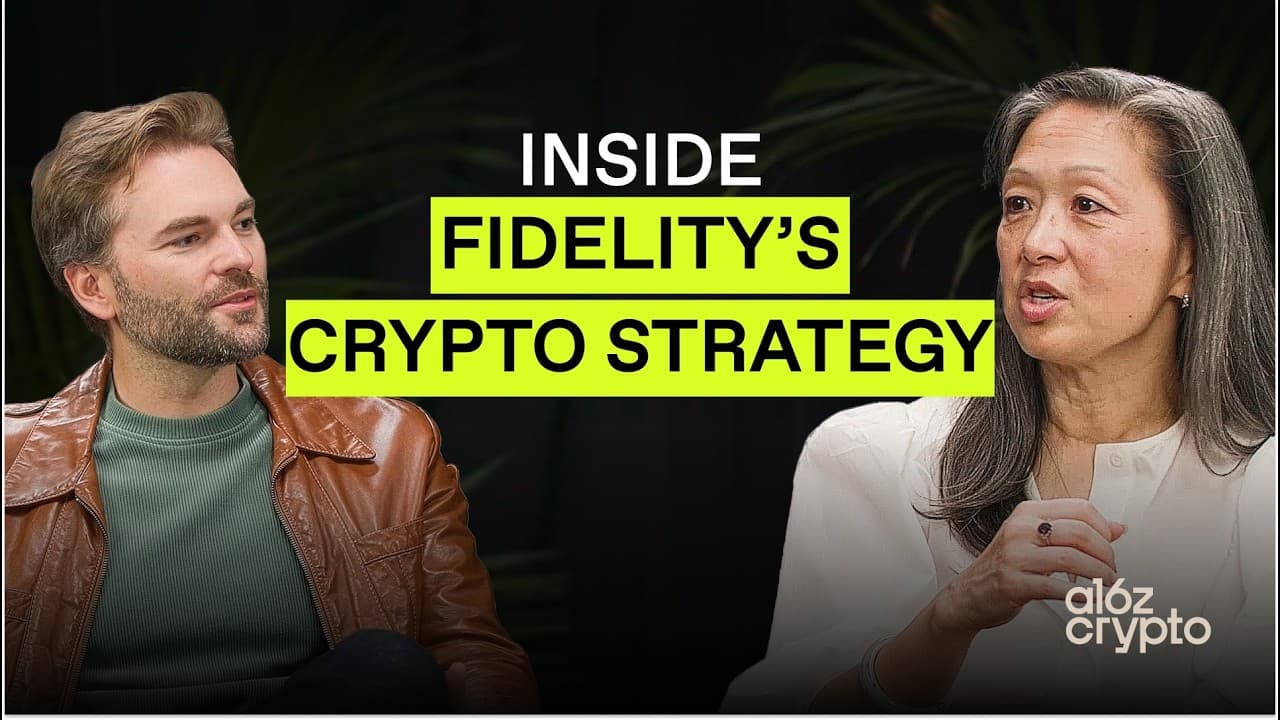
Tokenization matters when an asset gains useful onchain capabilities, such as mobility, collateral use, easier trading, portfolio customization, or access to yield. Fidelity frames digital-market adoption in three phases: helping investors hold onchain assets through familiar wrappers, enabling practical onchain use, and building personalized portfolios that combine tokenized traditional assets with native onchain assets.
Transcript
We like to think about our product roadmap and really the strategy for how we continue to build this business through the lens of what does the pathway to the adoption of digital markets look like. The next phase of adoption we see as being able to use these assets on chain making these tokenized assets useful to investors. >> What is the advantage... Read More
Key Insights
- Fidelity defines digital-market adoption through three phases: Hold, Use, and Build. Hold provides exposure through familiar products, Use adds practical onchain functions, and Build supports personalized portfolios containing both tokenized traditional assets and assets that originate onchain.
- Tokenization is valuable only when bringing an asset onchain creates meaningful utility for a defined user. The essential questions concern what the asset can do onchain that it cannot do today, who needs that capability, and how that person will use it.
- Onchain asset utility includes mobility, collateral use, access to capital, easier trading, and greater portfolio customization. These functions distinguish a useful tokenized asset from a digital representation that merely records ownership on a blockchain without changing the investor experience.
- ETPs place exposure to onchain assets inside off-chain wrappers and use established distribution infrastructure. Fidelity views these products as part of the Hold phase because they let traditional investors trade and retain crypto exposure in existing portfolios without requiring fully onchain distribution.
- Native onchain yield through staking differs from traditional sources of yield. Packaging staking yield inside a familiar wrapper such as an ETP can make it deliverable to traditional investors while introducing them to the utility of onchain assets and markets.
- Tokenized money market funds can bridge payments and yield by supporting interest-bearing capital that remains onchain. The model reflects the familiar brokerage practice of sweeping cash into interest-bearing products instead of leaving funds idle while users manage payments, liquidity, saving, or investing.
- Institutional DeFi adoption requires protocols to support regulated products and institutional operating requirements. Fidelity has found that some lending protocols and DeFi projects understand how to work with institutions and are willing to evolve their technology to incorporate AML and KYC controls.
- Token issuance is not the hardest or most time-consuming part of building a useful tokenized product. Fidelity devoted substantial effort to relationships and ecosystem development around its tokenized money market fund because infrastructure and counterparties determine whether investors can actually use the token onchain.
Install to Summarize YouTube Videos and Get Transcripts
Explore YouTube Video Summarizer or Get YouTube Transcript Extractor
Questions & Answers
Q: Why should an asset be tokenized and brought onchain?
An asset should be tokenized when moving it onchain gives a specific user meaningful capabilities that are unavailable in its current form. Those capabilities can include moving the asset between onchain applications, depositing it as collateral to access capital, trading it more easily, customizing a portfolio, or generating yield. Token creation alone is insufficient if investors cannot use the resulting asset.
Q: What are the three phases of digital asset adoption?
Fidelity describes the three phases as Hold, Use, and Build. Hold helps investors gain exposure to onchain assets through familiar products such as ETPs. Use makes assets functional onchain through collateral, trading, mobility, capital access, or yield. Build introduces onchain assets inside onchain wrappers and supports personalized portfolios combining tokenized traditional assets with native onchain assets.
Q: How do ETPs support the adoption of onchain assets?
ETPs give traditional investors exposure to onchain assets through existing financial infrastructure. Fidelity characterizes them as onchain assets held within an off-chain wrapper, distributed through established channels and retained in conventional portfolios. This supports the Hold phase of adoption by making access and trading familiar before investors begin using assets directly within onchain markets.
Q: What can investors do with useful tokenized assets onchain?
Useful tokenized assets can become mobile across onchain applications, serve as collateral for obtaining capital, trade more easily, and support portfolios tailored to an investor’s needs. They may also connect investors with onchain sources of yield. These capabilities provide the practical justification for tokenization because they change what investors can do with an asset, rather than merely changing its format.
Q: How can tokenized money market funds connect payments and yield?
Tokenized money market funds can allow assets used within payment systems to remain connected to interest-bearing products. Fidelity compares this need with brokerage cash sweeps, where uninvested cash typically earns interest rather than remaining idle. Onchain money market products can therefore support payments, short-term liquidity, saving, longer-term investing, and reserve assets without requiring repeated transfers among separate accounts.
Q: Why is token issuance only one part of successful tokenization?
Issuing a token does not automatically make the underlying asset useful. Fidelity says it spent substantial time building the infrastructure needed to issue its tokenized money market fund, but likely spent even more time developing relationships and the surrounding ecosystem. Investors need platforms, counterparties, distribution, capital access, and compatible services before a token can perform valuable functions onchain.
Q: What does institutional DeFi infrastructure require?
Institutional participation requires DeFi platforms and lending protocols to accommodate regulated products and established compliance responsibilities. Fidelity specifically identifies AML and KYC capabilities as technology requirements for opening these platforms to more regulated assets. It evaluates projects by examining what they are building, their broader ecosystem vision, and their willingness to collaborate with institutions on necessary infrastructure.
Q: Why did tokenized treasury and money market products grow rapidly?
The transcript connects their growth to the regional bank crisis, the depegging of USDC, and a broader reassessment of banking access, capital flows, and payment infrastructure. Tokenized money market funds emerged as a way to bridge payments and yield. The Genius Act also opened the market for non-bank issuers considering easier payments and onchain reserve assets for stablecoin issuers and users.
Summary & Key Takeaways
-
Fidelity approaches digital-market adoption through three phases called Hold, Use, and Build. Hold gives traditional investors exposure to onchain assets through established products such as ETPs. Use makes tokenized assets functional onchain. Build combines tokenized traditional assets and native onchain assets into highly personalized portfolios constructed within onchain wrappers.
-
The central test for tokenization is whether moving an asset onchain creates capabilities unavailable in its current form. Potential benefits include moving assets between applications, depositing them as collateral to access capital, trading them more easily, customizing portfolios, and receiving native onchain yield through mechanisms such as staking.
-
Tokenized money market funds can connect payments with interest-bearing assets, allowing capital to remain onchain while supporting liquidity and yield. Fidelity says issuance technology is only one part of the challenge. Relationships, ecosystem development, regulated infrastructure, AML, KYC, and institutional collaboration are also necessary to make tokens practically usable.
Read in Other Languages (beta)
Share This Summary 📚
Summarize YouTube Videos and Get Video Transcripts with 1-Click
Try YouTube Summary with ChatGPT & Claude or YouTube Transcript Generator
Explore More Summaries from a16z crypto 📚


Summarize YouTube Videos and Get Video Transcripts with 1-Click
Try YouTube Summary with ChatGPT & Claude or YouTube Transcript Generator