Is Guidde the Best Tool for Creating How-To Videos and Documentation?
TL;DR
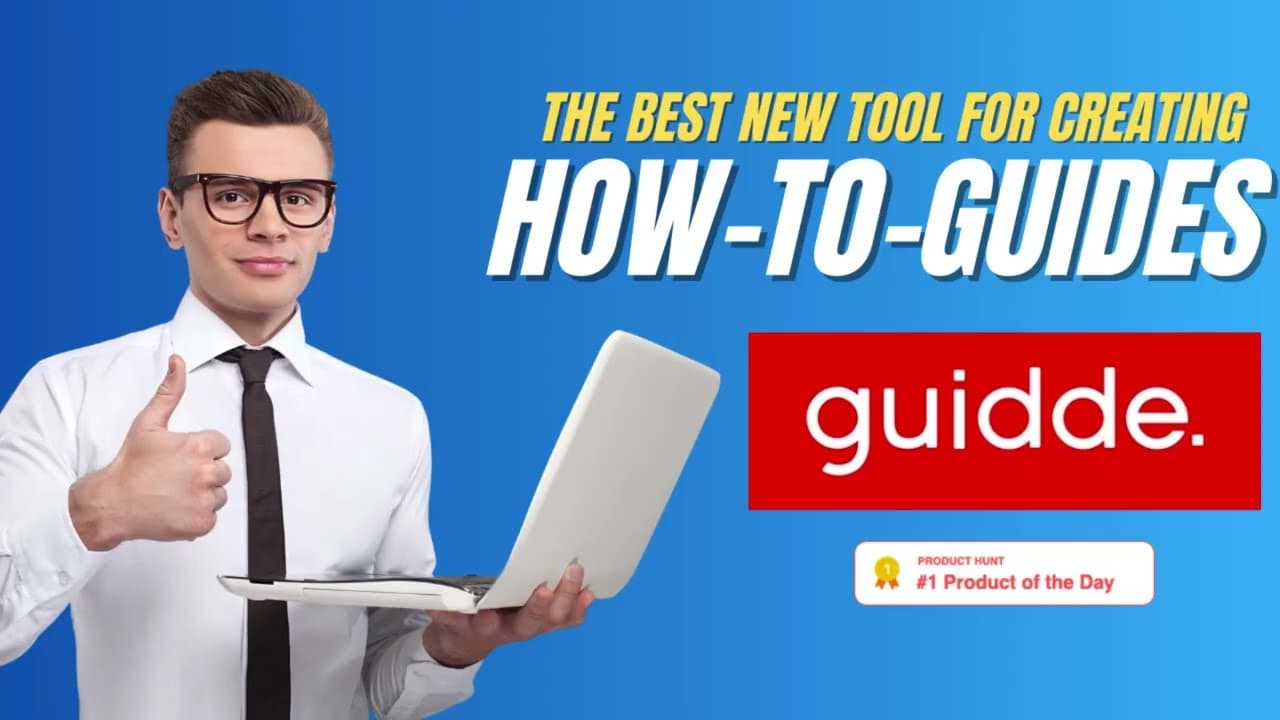
Guidde turns a recorded browser process into customizable, step-by-step how-to videos and documentation that can be shared in several formats. Using its free Chrome extension, the presenter captures a Canva website workflow, edits the resulting slides, adds narration, and exports the same tutorial as a link, GIF, embedded HTML, MP4 video, or PDF. Read on to see the complete creation and sharing workflow.
Transcript
so in this video I want to show you an edtech tool that is becoming my go-to for creating tutorials for teachers step-by-step directions that sort of thing and it is called guide you can sign up at guide.com and once you sign up you can install the free Chrome extension once you install the Chrome extension this is what your dashboard will look lik... Read More
Key Insights
- Capture converts actions into steps: Guidde records the browser workflow after the user selects capture. When recording stops, it organizes the captured actions into a movie made of separate steps or slides. This allows the presenter to begin with an actual task demonstration rather than manually constructing every instructional screen from the beginning.
- Mouse clicks become visual cues: Each place clicked with the mouse is highlighted in the generated tutorial. The highlight connects an instruction to the exact area of the interface where the action occurred. During editing, the presenter checks both the wording and the highlight on every slide to ensure that the automatically created directions make sense.
- The demonstration uses Canva: The sample procedure is not an abstract walkthrough. The presenter records the creation of a website inside Canva, selects a design, and applies all six pages. This concrete workflow shows how Guidde handles a sequence of actions performed in another browser-based tool and converts them into documented instructions.
- Generated text remains editable: Guidde's automatic output does not lock users into its original descriptions. The presenter reviews the slides and changes one instruction that initially says the action opens in a new tab. Editing that wording makes the guide more specific to the demonstrated process and shows why reviewing generated steps is part of the workflow.
- Branding can be incorporated: The opening slide is adjusted because its original colors do not match the desired brand. The presenter changes the background color, inserts a Canva logo, and enlarges the image. These controls allow the resulting documentation to reflect the subject or organization instead of remaining visually identical to the raw generated guide.
- Additional steps can be created: Users are not limited to the steps recorded during capture. The presenter selects Add Step, creates another title-style slide, adds the words "Have fun creating," and places the Canva logo in the center. An unwanted final step is then deleted, demonstrating that the captured sequence can be expanded and trimmed.
- Voiceovers offer two approaches: Users who want personal narration can record their own voices directly. Those who do not want to speak can type the directions, select a voice, and generate a natural-sounding voiceover through text to voice. Both approaches add spoken explanation to a guide that would otherwise play as a primarily visual sequence.
- Playback timing is adjustable: The completed guide automatically plays after the changes are saved. If a step moves too quickly, its duration can be extended from the same editing window used for customization. This control lets creators give viewers more time on steps that contain important text, visual details, or actions that require closer attention.
- Navigation synchronizes with content: The interface includes a step list beside the main tutorial view. As the presenter clicks from one step to another, the page scrolls to show the corresponding material. Viewers can therefore follow the automatic playback or move deliberately through the procedure one step at a time.
- A link creates an interactive guide: Selecting Share generates a link that can be sent to anyone who needs the directions. The linked version appears almost like a website and closely resembles the creator's view. Recipients can click through the steps themselves, making the guide useful when viewers need control over the pace.
- GIF sharing fits inside email: The Copy GIF button prepares a version that can be pasted into an email. In the demonstration, one copy and one paste automatically embed the GIF in the email body. The coworker can then view the directions within the message rather than first opening a separate document or recreating the workflow.
- One capture supports multiple formats: The same tutorial can be distributed as a website-style link, an embedded GIF, HTML placed inside a website, an MP4 video, or a PDF. The PDF contains each recorded step. This range directly addresses the presenter's earlier problem of creating a video and then separately rebuilding step-by-step written directions.
Install to Summarize YouTube Videos and Get Transcripts
Explore YouTube Video Summarizer or Get YouTube Transcript Extractor
Questions & Answers
Q: How do you create how-to videos and documentation with Guidde?
Install Guidde's free Chrome extension after signing up, open the dashboard, and select the capture button. Perform the browser-based procedure while Guidde records each action and mouse click. Stop the capture to generate a movie organized into individual instructional steps or slides. Review and edit those steps before sharing the tutorial in the format needed by the audience.
Q: What does Guidde create from a recorded browser workflow?
Guidde creates a movie containing step-by-step directions from the recorded actions. Each individual step appears as its own slide, and the places clicked with the mouse are highlighted. The creator can review the text and highlighted target on every slide. This structure makes the original process easier to inspect and follow one action at a time.
Q: Can Guidde tutorials be customized after capture?
Yes, the presenter changes the tutorial title, slide text, background color, and images after recording. The demonstration adds and resizes a Canva logo to customize the opening slide. It also adds a title-style step, inserts text, and deletes an unnecessary final step. These edits refine both the instructional sequence and its visual presentation before publication.
Q: How do voiceovers work in Guidde?
Guidde lets creators record narration with their own voice by selecting the record control. It also provides text to voice for users who prefer not to speak. With that option, the creator types the directions and chooses a voice, then Guidde generates a natural-sounding voiceover. Both methods add verbal guidance to the visual step sequence.
Q: Can the duration of each Guidde step be changed?
Yes, the creator can change the timing so each step remains visible for longer. The adjustment is available in the same editing window used to customize the guide. After the edits are saved, the tutorial plays automatically with the chosen timing. Longer display periods can give viewers more time to examine a particular instruction or highlighted action.
Q: How can a Guidde tutorial be shared by link or email?
Selecting Share generates a link that can be sent to anyone who needs the directions. The linked tutorial appears like a website and allows recipients to click from step to step. For email, Copy GIF creates a GIF that can be pasted directly into the message body. In the demonstration, embedding it requires one copy and one paste.
Q: What export and embedding options does Guidde provide?
Smart Copy provides HTML that can be embedded in a website or another displayed platform. The export menu allows the guide to be downloaded as an MP4 video, a GIF file, or a PDF. The PDF lays out each of the captured steps. A single recorded tutorial can therefore support web, video, animated, and document-based distribution.
Q: Why does the presenter prefer Guidde for teacher tutorials?
The presenter describes Guidde as a go-to edtech tool for tutorials and step-by-step directions for teachers. In about a minute, the demonstrated workflow produces directions that can be distributed in several forms. The same tutorial becomes a video, GIF, website-style guide, embedded resource, or PDF. This avoids creating a video first and then rebuilding separate written instructions afterward.
Summary & Key Takeaways
-
Starting with the Chrome extension: The presenter introduces Guidde as an edtech tool for creating tutorials and step-by-step directions for teachers. After signing up at Guidde's website, users can install its free Chrome extension and access the dashboard. To demonstrate the workflow, the presenter selects the capture button and begins recording a procedure for creating a website in Canva. Guidde then tracks the sequence of actions taken in the browser.
-
Capturing a Canva website workflow: The presenter creates a new Canva website, chooses a design, and applies all six pages. After completing roughly five or six actions, the presenter stops the capture through the control at the bottom of the page. Guidde converts the recorded workflow into a movie containing individual instructional steps or slides. Every location clicked with the mouse is highlighted, helping viewers identify the relevant control during each stage of the demonstrated procedure.
-
Customizing the generated tutorial: The presenter opens the editor, renames the tutorial "How to create a website in Canva," changes background colors, and inserts a Canva logo. Each generated slide is reviewed so its text and highlighted area accurately reflect the intended action. One automatic instruction is replaced with more useful wording. The presenter also creates a new title-style step saying "Have fun creating," adds the Canva logo, and removes an unnecessary final step.
-
Adding narration and adjusting playback: Guidde supports two voiceover methods. Users can click record to narrate with their own voice, or type directions, choose a voice, and use text to voice to generate natural-sounding narration. After saving the edits, the completed tutorial plays automatically. The presenter explains that the timing can be changed in the same editing window so individual steps remain visible longer. A side panel also scrolls to the corresponding content as the viewer moves between steps.
-
Sharing one tutorial many ways: Guidde can generate a link that presents the tutorial like a website and lets viewers click through its steps. Copy GIF places an automatically embedded GIF into an email with one copy and paste. Smart Copy supplies HTML for embedding the guide in a website or another displayed platform. Export options include an MP4 video, a GIF file, and a PDF containing every step, eliminating the need to recreate written directions after producing a video.
Read in Other Languages (beta)
Share This Summary 📚
Summarize YouTube Videos and Get Video Transcripts with 1-Click
Try YouTube Summary with ChatGPT & Claude or YouTube Transcript Generator
Explore More Summaries from EdTech Hustle 📚


Summarize YouTube Videos and Get Video Transcripts with 1-Click
Try YouTube Summary with ChatGPT & Claude or YouTube Transcript Generator