How to flip apps fast for $500k in profits
TL;DR
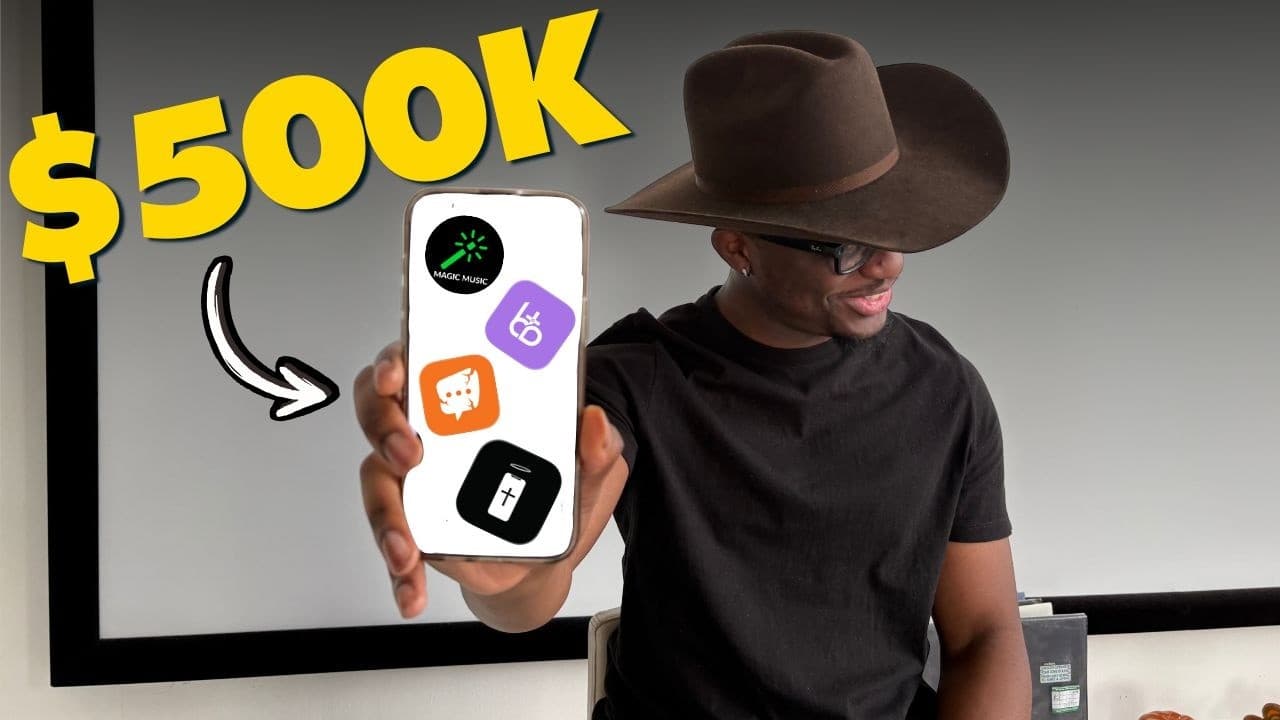
Lots builds apps to sell rather than to scale, flipping four apps since 2022 for over $500k. He emphasizes spotting trends, making single player apps, and selling quickly to close deals fast. The playbook includes idea discovery, fast development, and strategic buyer selection to maximize cash flow.
Transcript
I build apps and flip them. I've done this four times and made over $500,000. This is Lots, a Londonbased founder who treats apps like real estate. He builds them fast, grows them to about 20K a month, and then flips them for all cash deals. My philosophy is to stack cash and achieve financial freedom. Since 2022, he's done this four times and made... Read More
Key Insights
- Lotts is a four-time app flipper who has earned over $500k in total sales since 2022.
- The main idea is to build to sell, not to scale, prioritizing fast cash returns over long-term growth.
- The market is seen as highly liquid for consumer apps, making acquisitions easier for buyers.
- A clean, simple app with strong margins is preferred over complex, multi-feature projects.
- The sales approach targets the third highest bidder to close quickly and reduce deal fall-throughs.
- Trend spotting in app stores helps identify hot niches with revenue potential.
- Focusing on a single-player app reduces marketing complexity and speeds up ROI.
- Closing speed and clarity in the sale process are critical to securing deposits and transfers.
Install to Summarize YouTube Videos and Get Transcripts
Explore YouTube Video Summarizer or Get YouTube Transcript Extractor
Questions & Answers
Q: A real search query question about the video (e.g. 'How to...', 'What is...', 'Why does...', 'When should...'). Question 1
What is Lotts' core strategy for turning an idea into a quickly sellable app, and how does this lead to higher cash returns? The strategy begins with identifying market trends in the app store, then selecting a niche with proven revenue potential. Next, focus on a single-player experience to simplify development and valuation. Finally, target decisive buyers who can close fast, avoiding prolonged negotiations that risk loss of the deal.
Q: Question 2
How does Lotts decide which app ideas to pursue and when to stop iterating on a concept? He asks whether the project will be a legacy or just cash flow, prioritizing cash flow to enable quicker exits. He avoids overcomplicating the product operations and looks for ideas that can be quickly monetized, then tests and pivots toward a fast profitable exit.
Q: Question 3
Why does Lotts emphasize building a single-player app rather than adding social features, and how does that affect buyer interest? A single-player app is easier to develop, test, and acquire because it delivers immediate value without coordinating multiple users. This simplicity makes the business easier to transfer and scale for a buyer, increasing the likelihood of a fast, clean sale.
Q: Question 4
What is the reasoning behind selling to the third highest bidder rather than the highest bidder, and how does that affect deal certainty? By using a slightly less competitive bidder who can close quickly, he reduces the risk of the deal falling through while still achieving a strong price. This approach prioritizes speed and reliability over the absolute top bid.
Q: Question 5
How does Lotts spot trends in the app market, and what tools or methods does he use to estimate potential revenue? He monitors the top categories in the app store and looks for other high performers in the same niche. He uses Sensor Tower to gauge revenue levels, confirming whether there is significant monthly recurring revenue potential before committing to a build.
Q: Question 6
What is Lotts' approach to cost management and margins when building an app for flipping? He emphasizes staying lean, moving from WhatsApp to own infrastructure to control costs, and ensuring the app can be acquired cleanly with transparent operations. Clean processes reduce buyer questions and accelerate the sale, improving margins by avoiding unnecessary expenditures.
Q: Question 7
How does Lotts evaluate whether an idea should become a cash flow project or a legacy project, and what decision criteria guide this choice? The evaluation hinges on potential cash flow and the buyer’s interest in the asset. If the product can generate quick, repeatable revenue and be sold within months, he treats it as cash flow and accelerates development to a sale, otherwise it becomes a longer-term play.
Q: Question 8
What lessons does Lotts share about building to sell rather than building to scale, and how can a new founder apply them? The main lessons are to keep operations simple, focus on rapid prototyping, and aim for fast monetization. Founders should validate niches with achievable revenue targets, prepare clean acquisition-ready assets, and structure deals to close quickly with reliable buyers.
Summary & Key Takeaways
-
Lotts flips apps for profit and speed, not long term scaling, achieving over a half million dollars in sales since 2022.
-
His process centers on market trends, a simple single player product, and a quick, clean build to attract fast, reliable buyers.
-
The strategy favors cashing out quickly with disciplined buyer choice and a focus on recurring cash flow rather than dream scale.
Read in Other Languages (beta)
Share This Summary 📚
Summarize YouTube Videos and Get Video Transcripts with 1-Click
Try YouTube Summary with ChatGPT & Claude or YouTube Transcript Generator
Explore More Summaries from Starter Story 📚





Summarize YouTube Videos and Get Video Transcripts with 1-Click
Try YouTube Summary with ChatGPT & Claude or YouTube Transcript Generator