How to Control Stepper Motors with a Versatile Panel
TL;DR
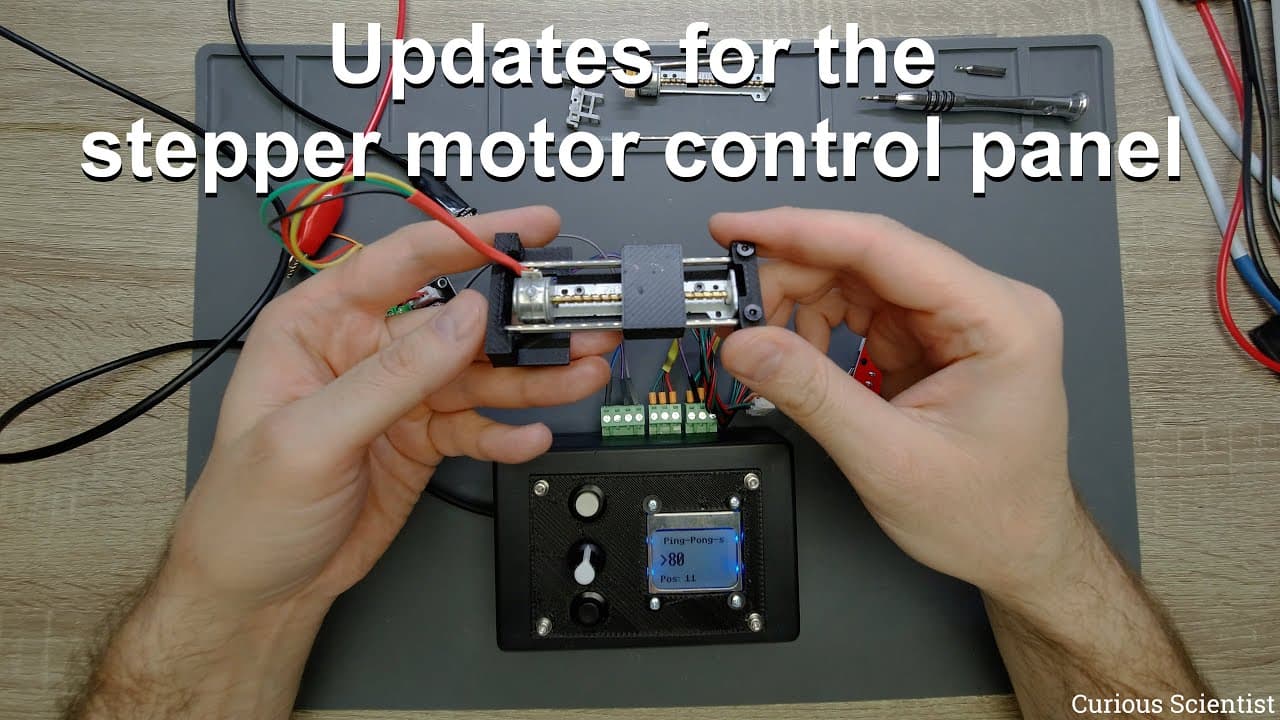
The control panel for stepper motors simplifies automation by incorporating limit switches for safety and two oscillation control modes: step-based and limit switch-based. This design, which also showcases a linear actuator built from salvaged DVD drive parts, allows for flexible, efficient motor control while minimizing energy consumption.
Transcript
welcome everyone in this video i'm going to talk about stepper motors and stepper motor controlling again so if you have been following my channel you can see that i've been working on a control panel for stepper motors for quite a while and i always added some functions and improved it and so on and so on and then that control panel is now in this... Read More
Key Insights
- 🧑🦼 The control panel provides a universal interface for managing various stepper motor drivers, making it flexible for different projects.
- 🧑🦼 Incorporating limit switches enhances safety and accuracy, preventing motor damage during operation.
- 📀 Using salvaged components from discarded items like DVD drives promotes sustainability and creativity in engineering.
- 😄 The newly added oscillation modes facilitate ease of use for automation tasks by simplifying motor control logic.
- 😘 Stepper motors are highlighted for their low power requirement, which is beneficial for energy-efficient designs.
- 👤 Overall, the project demonstrates how DIY electronics can blend functionality with user-centric design, appealing to hobbyists and engineers alike.
- 👤 The creator emphasizes the importance of user feedback, which drives the continuous improvement of the control system.
Install to Summarize YouTube Videos and Get Transcripts
Explore YouTube Video Summarizer or Get YouTube Transcript Extractor
Questions & Answers
Q: What are limit switches, and why are they important in stepper motor applications?
Limit switches are mechanical devices that detect the presence or absence of an object, serving crucial safety functions in stepper motor systems. They prevent the motor from overextending its range, allowing for safe stopping at end positions. In this setup, they enable homing features and emergency stops, ensuring the motor halts operation if a defined limit is reached, enhancing overall system reliability.
Q: Can the control panel be used with different stepper motor drivers?
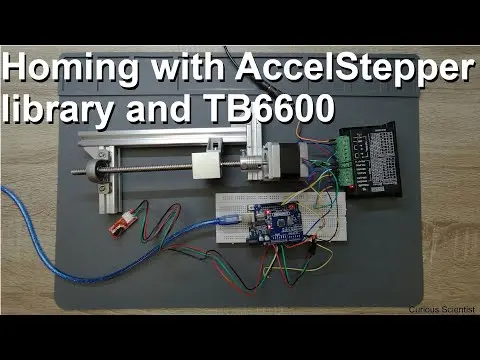
Yes, the control panel is designed to be versatile, allowing compatibility with various stepper motor drivers like DRV8825, EasyDriver, and TB6600. They all operate on the same step-and-direction principle, making it convenient for users to switch drivers based on their needs without rewriting the code.
Q: How does the oscillation functionality work in this control system?
The control system features two oscillation modes—step-based and limit switch-based. In the step-based mode, the user defines how many steps the motor should move from its current position and then return. The limit switch-based mode relies on physical switches to dictate movement, flipping directions upon activation of the switches, providing a straightforward alternative for continuous back-and-forth motion.
Q: What components are used to build the small linear actuator showcased in the video?
The linear actuator showcased is made from salvaged parts of a DVD drive, utilizing components like a small stepper motor, guiding rods, and a threaded drive mechanism. This repurposing not only demonstrates cost-effectiveness but also creativity in engineering applications, showing viewers how to create functional devices from discarded materials.
Q: How is microstepping managed in the system?
Microstepping is controlled using tiny switches on the stepper driver breakout board. These switches configure the amount of microstepping for smoother and more precise movements, enabling greater control over the motor's performance, which is especially useful in applications requiring high precision.
Q: What future projects are hinted at in the video regarding the control panel?
The creator hints at developing projects that utilize the control panel for moving small objects with high precision, such as creating an X-Y table for microphotography. This setup will allow for accurate adjustments of objects during photography, emphasizing the versatility and practicality of the control panel in different applications.
Summary & Key Takeaways
-
The video demonstrates the functionalities of a control panel designed for stepper motors, showcasing features such as limit switches for safety and automatic stopping.
-
It includes insights into building a linear actuator using salvaged DVD drive parts, highlighting the importance of low-power stepper motors.
-
New updates include two modes of oscillation control—step-based and limit switch-based—providing users flexibility in automation tasks.
Read in Other Languages (beta)
Share This Summary 📚
Summarize YouTube Videos and Get Video Transcripts with 1-Click
Try YouTube Summary with ChatGPT & Claude or YouTube Transcript Generator
Explore More Summaries from Curious Scientist 📚
Summarize YouTube Videos and Get Video Transcripts with 1-Click
Try YouTube Summary with ChatGPT & Claude or YouTube Transcript Generator