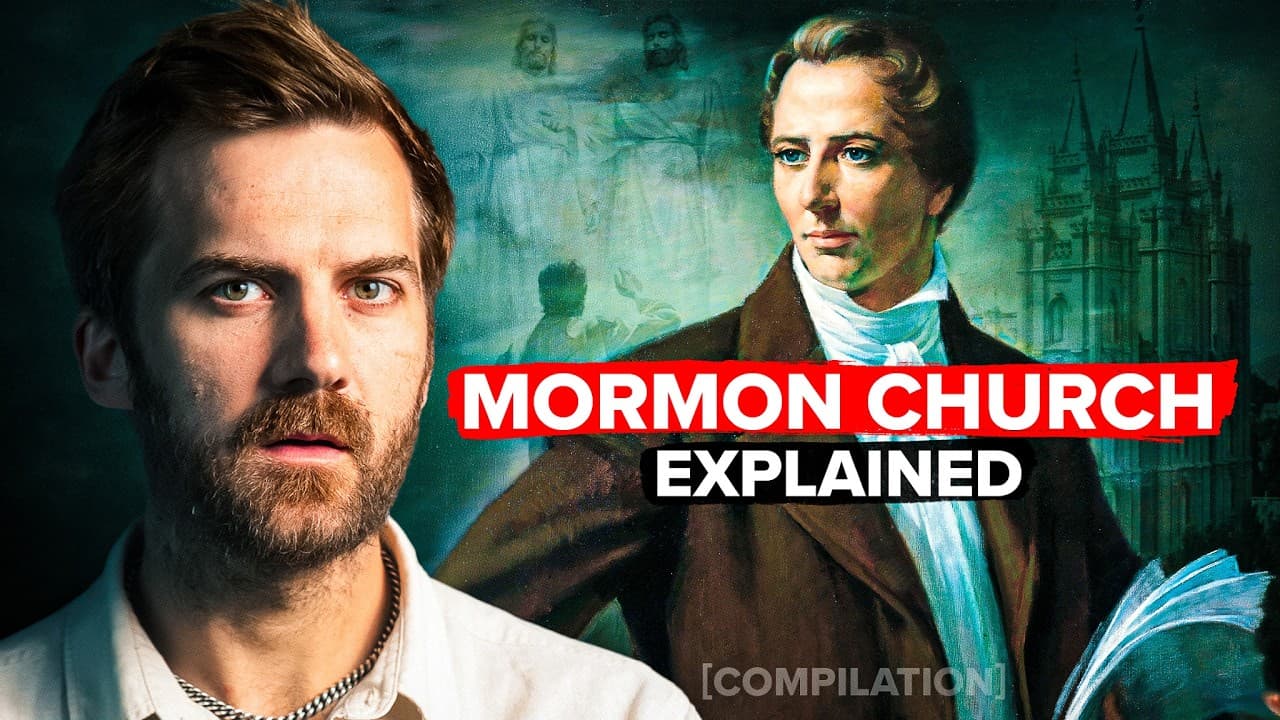
How Did Joseph Smith Build the Mormon Church?
TL;DR
Joseph Smith built a new religious movement by combining the revivalist Christianity, millennial expectations, folk magic, and treasure-hunting culture of early 1800s upstate New York. His reported visions and rapid dictation of the Book of Mormon established his prophetic authority, while followers preserved his mission of creating a celestial society that would prepare the world for Jesus Christ’s Second Coming.
Transcript
(relaxed music) - [Johnny] Joseph Smith. He's someone I know well. He's the author of a worldview that I held for most of my life. I taught it to hundreds of people when I was a missionary. What are we even doing out here? It's a religion and a gospel that I deeply believed in, one full of hope and meaning and community and unique stories, stories ... Read More
Key Insights
- Upstate New York was a center of religious experimentation in the early 1800s, when charismatic preachers promoted emotional and personal alternatives to older churches. Only 10% of white Americans regularly attended church, creating fertile conditions for new restorationist movements and claims of renewed divine revelation.
- Millennial expectations shaped Joseph Smith’s religious environment because many people interpreted revolution, science, technology, and rapid social change as signs that the world was nearing its end. Emerging churches often presented themselves as God’s chosen institutions for preparing humanity for Jesus Christ’s Second Coming.
- Folk magic was part of the culture surrounding Smith’s youth, including treasure searches conducted with seer stones, crystals, rods, and dreams. Although the presented research found no document showing that Smith discovered treasure, he persuaded people around him that he possessed unusual treasure-seeking abilities.
- The First Vision is the LDS Church’s founding story, based on Smith’s account that God the Father and Jesus Christ appeared to him in a grove in 1820. He said Jesus rejected the existing churches and called him to restore the true church before the Second Coming.
- Moroni’s reported appearance linked Smith’s prophetic mission to a buried record on golden plates. Smith said the angel identified the record as the history of Jews who left Jerusalem in 600 BC and traveled to the Americas, while also promising that translation instruments would accompany the plates.
- The Book of Mormon was dictated through methods connected to Smith’s earlier folk practices. He reportedly used interpreters to read engravings and sometimes placed his chocolate-colored, egg-shaped seer stone inside a hat, looked into it, and dictated words that scribes recorded.
- Smith completed a substantial manuscript despite having little schooling, dictating 588 pages during a particularly productive 90-day period at age 24. The resulting Bible-like text, including biblical material, religious teachings, and complex histories, became an important early validator of his prophetic claims.
- Smith’s movement sought to build a new utopian society governed by celestial laws and prepared for Christ’s return. Its followers maintained that mission despite being driven from multiple towns, sometimes violently, and the church eventually became a global institution described as an almost $300 billion empire.
- More videos from this channel:
- More from this channel: Johnny Harris
Install to Summarize YouTube Videos and Get Transcripts
Explore YouTube Video Summarizer or Get YouTube Transcript Extractor
Questions & Answers
Q: How did the religious culture of upstate New York influence Joseph Smith?
Upstate New York exposed Joseph Smith to an unusually active mixture of religious revivalism, personal revelation, millennial expectation, folk magic, and treasure hunting. Charismatic preachers were creating emotional alternatives to older churches, while many people expected Christ’s return. Smith’s later movement combined these influences by joining restorationist Christianity and apocalyptic preparation with visions, seer stones, buried artifacts, and claims of divine translation.
Q: What was Joseph Smith’s First Vision?
Joseph Smith said that, as a 14-year-old in the spring of 1820, he entered a grove and prayed to know which church was true. After an encounter with the Devil, he reportedly saw a pillar of light containing God the Father and Jesus Christ. He said Jesus told him that existing churches were untrue and called him to restore the true church before the Second Coming.
Q: Who was Moroni in Joseph Smith’s account?
Moroni was the angel whom Joseph Smith said appeared in his family’s cabin in 1823. According to Smith, Moroni confirmed that Christ’s Second Coming was near and that Smith had been called to prepare the world. The angel also revealed that a record engraved on golden plates was buried near Smith’s home and that the necessary translation instruments were stored with it.
Q: What did Joseph Smith say was written on the golden plates?
Joseph Smith said the golden plates contained an important record about a group of Jews who left Jerusalem in 600 BC and traveled to the Americas. He reported retrieving the plates from the Hill Cumorah when he was 21, after waiting until he was old enough. He later said he returned them to Moroni after completing the manuscript that became the Book of Mormon.
Q: How did Joseph Smith translate the Book of Mormon?
Joseph Smith described more than one translation method. In one version, he sat behind a curtain, looked through stones at Egyptian engravings on the golden plates, and dictated English words to a scribe. At other times, the plates were not present. He placed his personal seer stone inside a hat, buried his face in it, and said illuminated words appeared for him to dictate.
Q: How quickly did Joseph Smith produce the Book of Mormon?
Joseph Smith completed the text after several changes of scribes and a particularly productive 90-day period. At age 24, despite having little schooling and only limited reading and writing ability, he finished dictating 588 pages. He then said he returned the plates to Moroni and took the manuscript to a printer, producing the book that became foundational to the LDS faith.
Q: Why did early followers accept Joseph Smith’s prophetic claims?
Smith’s claims emerged from a culture where mystical visions, seer stones, treasure hunting, and searches for Native American artifacts were not considered entirely fringe. He had practiced treasure-seeking methods for about a decade, and his family and supporters trusted his abilities. The rapid creation of a lengthy, Bible-like book by a minimally educated young man then served as a major validation for early believers.
Q: What mission did Joseph Smith give the Mormon movement?
Joseph Smith’s movement aimed to restore the true church, prepare the world for Jesus Christ’s Second Coming, and build a utopian society founded on celestial laws. Followers retained this vision even as they were forced from town to town, sometimes through violence. According to the description, their history later included creating Utah and developing the church into an almost $300 billion global institution.
Summary & Key Takeaways
-
Early 1800s upstate New York combined religious revivalism, millennial anxiety, folk magic, and treasure hunting. Joseph Smith grew up amid these overlapping influences with little formal education. His family was religiously divided, while his reported skill with seer stones and mystical treasure-seeking methods helped prepare the cultural foundation for his later prophetic claims.
-
Smith said that God the Father and Jesus Christ appeared to him in 1820 and declared existing churches untrue. He later reported that the angel Moroni revealed a buried record written on golden plates. These experiences became the foundation of his calling to restore the true church before Christ’s anticipated Second Coming.
-
Smith dictated the Book of Mormon to scribes using interpreters and, at times, a seer stone placed inside a hat. After a productive 90-day period, he completed 588 pages at age 24. The resulting book validated his authority among early followers and became a foundational scripture for the global church that followed.
Read in Other Languages (beta)
Share This Summary 📚
Summarize YouTube Videos and Get Video Transcripts with 1-Click
Try YouTube Summary with ChatGPT & Claude or YouTube Transcript Generator
Explore More Summaries from Johnny Harris 📚






Summarize YouTube Videos and Get Video Transcripts with 1-Click
Try YouTube Summary with ChatGPT & Claude or YouTube Transcript Generator