What Is Promissory Fraud and How Can It Be Proven?
TL;DR
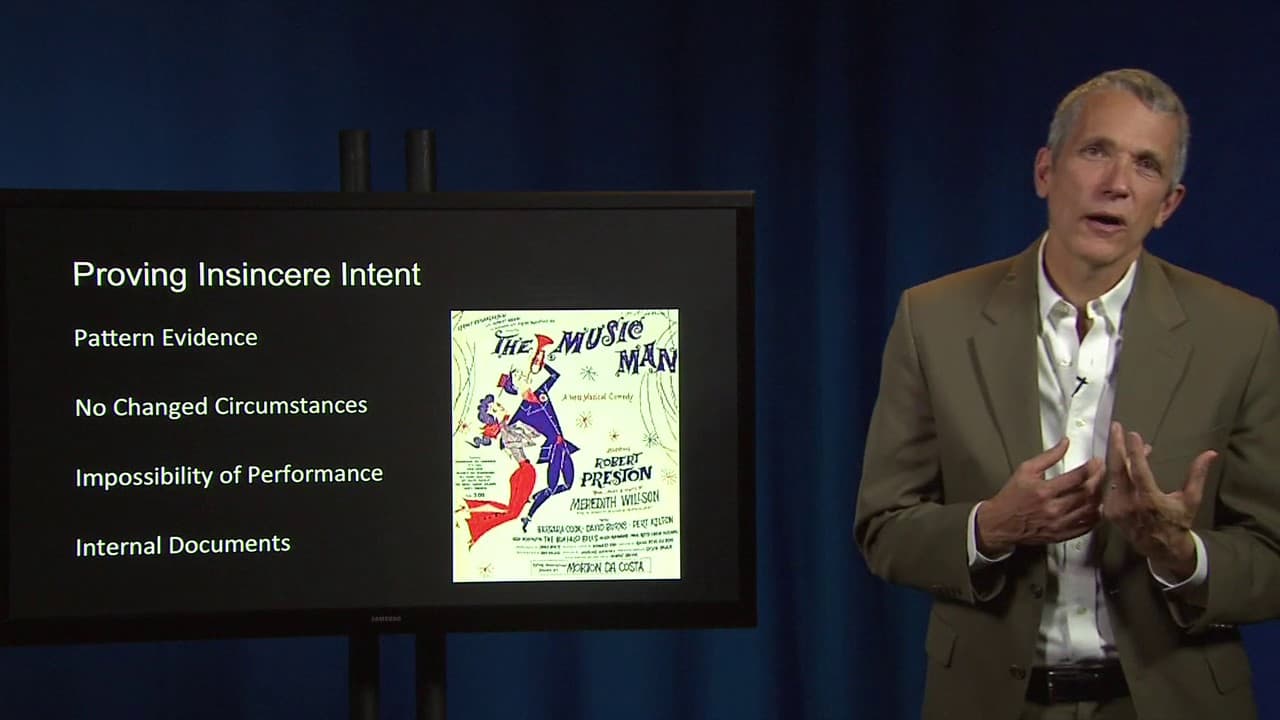
Promissory fraud occurs when someone makes a promise without any intention of fulfilling it, potentially leading to punitive damages. To prove this, evidence such as a pattern of repeated breaches, lack of changed circumstances, impossibility of performance, and internal documents showing intent may be used.
Transcript
justice Oliver Wendell Holmes once famously said that the duty to keep a contract at common law means the prediction that you must pay damages if you do not keep it and nothing else imagine you sign a contract stating that you will perform renovations at another person's apartment in return for $500 payment upfront and $3,000 total Holmes's quote s... Read More
Key Insights
- 👻 Promissory fraud is a claim that a promise was made without the intent to perform it, allowing for punitive damages in addition to breach of contract compensation.
- 🙈 Evidence of a pattern of repeated breaches can strengthen a promissory fraud claim, as seen in the case of "The Music Man."
- 🖤 Lack of change circumstances, where the promisor's situation remains the same despite breaching the promise, can indicate fraudulent intent.
- 🛟 Impossibility of performance, demonstrated by the promisor's inability to fulfill the promise, can serve as evidence of promissory fraud.
- 💌 Internal documents, such as emails indicating a different location during the promised performance time, can support a claim of fraudulent intent.
- 👮 Promissory fraud law has been historically misused, as seen in labor laws during the Jim Crow era targeting African Americans.
Install to Summarize YouTube Videos and Get Transcripts
Explore YouTube Video Summarizer or Get YouTube Transcript Extractor
Questions & Answers
Q: What is promissory fraud?
Promissory fraud occurs when a promise is made without any intention of fulfilling it, leading to possible punitive damages.
Q: How can promissory fraud be proven?
Proving promissory fraud necessitates substantial evidence, such as a pattern of repeated breaches, lack of change circumstances, impossibility of performance, or internal documents showing no intent to fulfill the promise.
Q: What are the implications of promissory fraud?
If proven, promissory fraud can result in punitive damages in addition to the value of the breached contract, aiming to punish and deter the promisor from making similar misrepresentations.
Q: Can non-performance alone prove promissory fraud?
No, non-performance does not necessarily prove intent. The burden is on the promisee to demonstrate that the promisor never intended to fulfill their promise.
Summary & Key Takeaways
-
Promissory fraud is a claim that a party made a promise without the intention of keeping it, allowing for punitive damages to be imposed.
-
Proving promissory fraud can be challenging, as non-performance alone does not necessarily prove intent.
-
Evidence such as a pattern of repeated breaches, lack of change circumstances, impossibility of performance, and internal documents can be used to support a claim of promissory fraud.
Read in Other Languages (beta)
Share This Summary 📚
Summarize YouTube Videos and Get Video Transcripts with 1-Click
Try YouTube Summary with ChatGPT & Claude or YouTube Transcript Generator
Explore More Summaries from YaleCourses 📚





Summarize YouTube Videos and Get Video Transcripts with 1-Click
Try YouTube Summary with ChatGPT & Claude or YouTube Transcript Generator