Which to Choose: Data Lake vs Lakehouse vs Warehouse
TL;DR
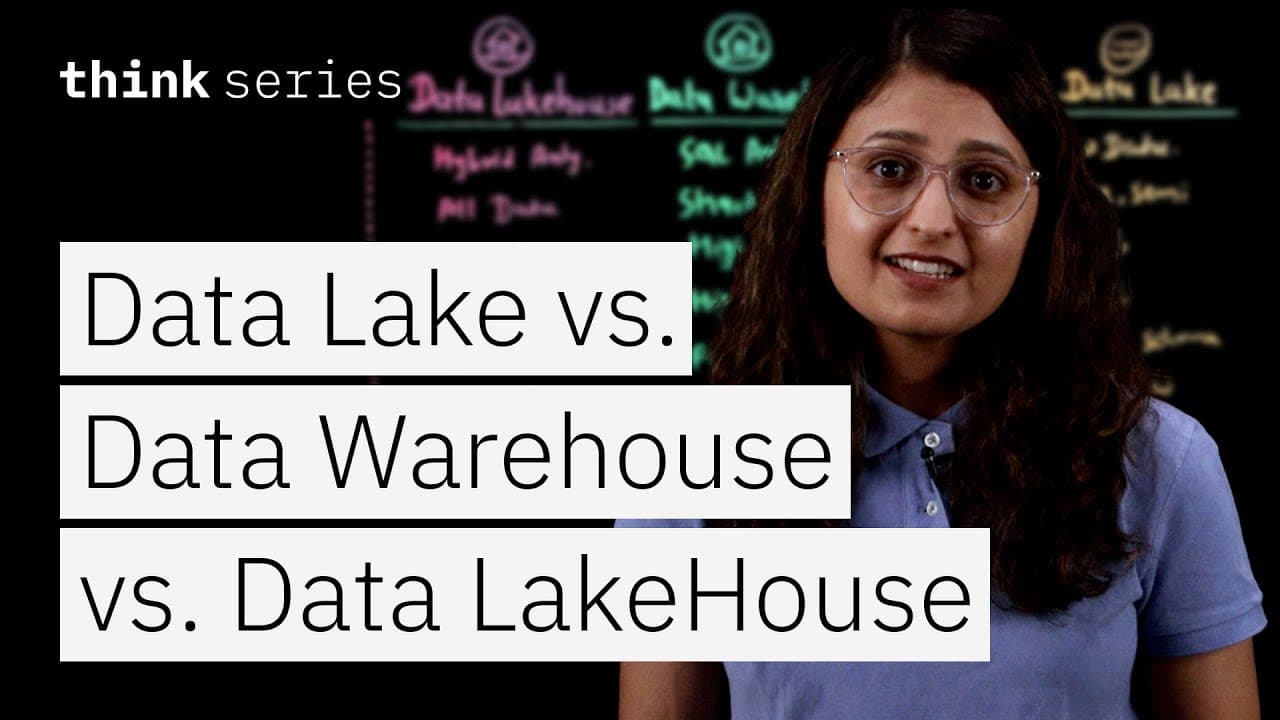
Data warehouses optimize SQL analytics with structured data, data lakes store raw data in flexible formats, and data lakehouses blend the two for hybrid analytics. The choice depends on data structure, cost, and performance needs. Data lakehouses offer flexible schema and scalable storage while enabling governance similar to warehouses, supporting diverse analytics use cases.
Transcript
All organizations generate massive amount of data from various data sources like databases, application, social media. For developers and engineers, understanding how to efficiently store, manage and process this data is critical. Concepts like data warehouse, data lake and data lakehouse are essential tools for modern data management workflows. To... Read More
Key Insights
- Data warehouse is designed for optimized SQL analytics using structured data.
- Data lake stores raw data in its original format for flexibility and AI/ML use cases.
- Data lakehouse merges data lake flexibility with data warehouse governance and SQL tooling.
- ETL is common in data warehouses, ELT is common in data lakes, and lakehouses support hybrid processing.
- Storage cost is generally higher in data warehouses due to data structuring, while lakes and lakehouses use cheaper object storage.
- Data schema handling differs: schema on write in warehouses, schema on read in lakes, hybrid in lakehouses.
- Performance is highest in warehouses, lower in lakes, and high in lakehouses approaching warehouse levels.
- Flexibility is fixed schema in warehouses, flexible schema in lakes, both supported by lakehouses.
Install to Summarize YouTube Videos and Get Transcripts
Explore YouTube Video Summarizer or Get YouTube Transcript Extractor
Questions & Answers
Q: What is a data warehouse best used for?
A data warehouse is best used for optimized SQL analytics on structured data. It aggregates data from multiple sources into a central repository, applying ETL to extract, transform, and load data so end users can perform fast, reliable reporting and analytics. The architecture emphasizes governance and preorganized data to support consistent insights.
Q: What type of data does a data lake handle best?
A data lake handles raw data in its original format, including structured, unstructured, and semi-structured data. It ingests data directly without heavy upfront processing, using ELT to load data first and transform later as needed for analytics and AI ML workflows, enabling flexible experimentation and discovery.
Q: How does a data lakehouse differ from a lake and a warehouse?
A data lakehouse combines the flexibility of a data lake with the governance and SQL tooling of a data warehouse. It accepts all data types, adds a metadata layer for structure and schema, and supports hybrid analytics. This aims to provide scalable, cost effective storage with robust data management and analytics capabilities.
Q: What is ETL and ELT in this context?
ETL stands for extract, transform, load and is common in data warehouses where data is prepared before loading to ensure analytics readiness. ELT stands for extract, load, transform and is typical for data lakes and lakehouses, where data is loaded first and transformed later based on specific analytical needs or AI ML use cases.
Q: Why might storage cost be higher in a data warehouse?
Storage cost in a data warehouse tends to be higher because data is organized and structured before storing, requiring more processing, schema definitions, and governance. This upfront preparation increases the cost but improves query performance and governance for consistent analytics across the enterprise.
Q: Which system supports schema on write and schema on read?
Data warehouses typically use schema on write, meaning the data schema is defined before storage. Data lakes use schema on read, meaning the schema is applied when data is queried rather than when stored. Lakehouses can support both, offering flexible schema management to accommodate diverse workflows.
Q: How do data lakehouses achieve performance close to warehouses?
Data lakehouses strive for high performance by integrating governance, metadata management, and SQL tooling onto a lake platform while leveraging scalable object storage. This combination seeks to deliver near warehouse level query performance while maintaining the flexibility and cost advantages of a lake.
Q: What should engineers consider when choosing among the three options?
Engineers should consider data structure needs, expected analytics workloads, and cost constraints. If fast structured analytics and strict governance are priorities, a warehouse is suitable. If raw data storage for AI ML experimentation is key, a data lake is preferable. If hybrid analytics with flexible data handling and governance is desired, a lakehouse offers the best compromise.
Summary & Key Takeaways
-
Data warehouses are optimized for SQL analytics and structured data, providing fast access after preorganization. The lake emphasizes raw, untransformed data in flexible formats to support AI and ML workflows. A lakehouse combines lake flexibility with warehouse governance to enable hybrid analytics across data types.
-
Data from multiple sources is ingested into each system with different processing patterns: ETL for warehouses, ELT for lakes, and hybrid workflows in lakehouses. Storage costs tend to be higher for warehouses due to upfront structuring, while lakes and lakehouses leverage cheaper object storage. Governance and metadata layers are key features in lakehouses.
-
Performance varies by design: warehouses offer high performance due to schema on write, lakes trade speed for raw access, and lakehouses aim for warehouse-like performance with lake flexibility.
Read in Other Languages (beta)
Share This Summary 📚
Summarize YouTube Videos and Get Video Transcripts with 1-Click
Try YouTube Summary with ChatGPT & Claude or YouTube Transcript Generator
Explore More Summaries from IBM Technology 📚






Summarize YouTube Videos and Get Video Transcripts with 1-Click
Try YouTube Summary with ChatGPT & Claude or YouTube Transcript Generator