What does God being real mean for science and faith?
TL;DR
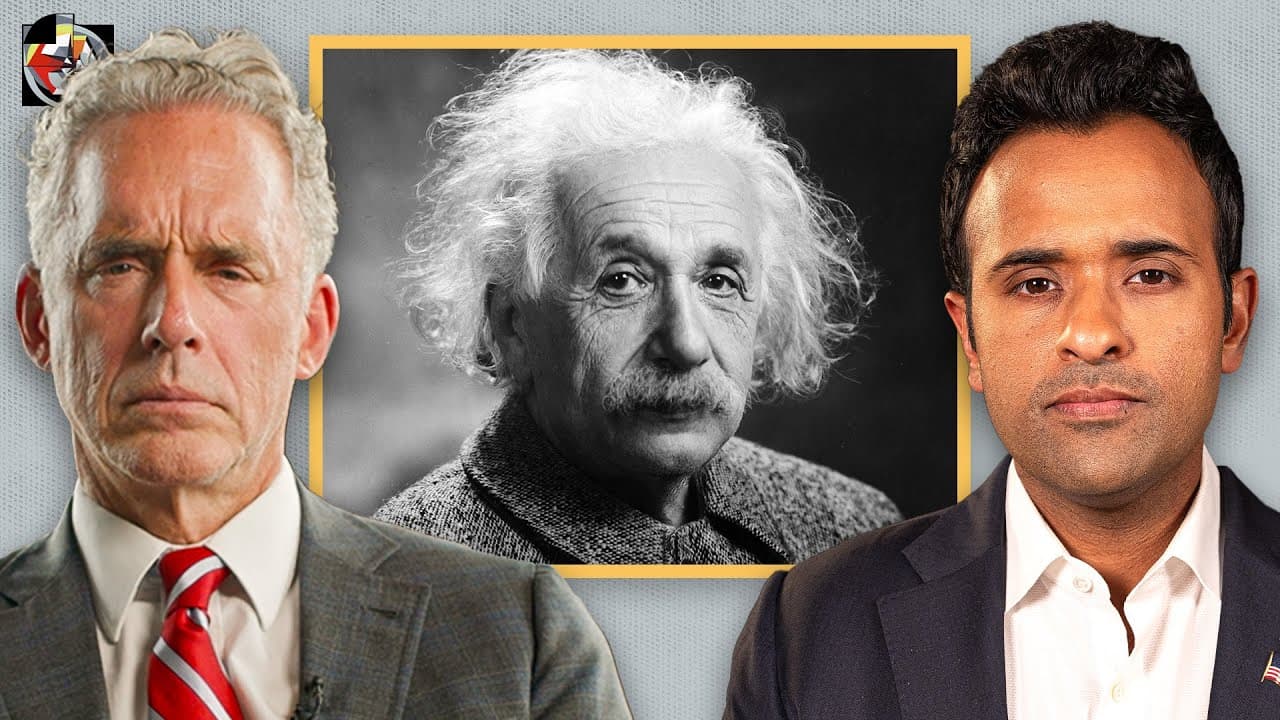
God being real is presented as a necessary premise that connects science, religion, and political ethics. The speakers argue that science presupposes a transcendent unity beyond human concepts and that belief in God can provide ethical constraints for governance, while also acknowledging non Christian and Hindu perspectives within a universal framework.
Transcript
I'm curious about why you found it necessary and desirable to open your argument with this proposition that God is real what do you mean by that yeah well I found it necessary because I think it's the most important of all I found it desirable in part because I was able to bring a dimension to this that is maybe complimentary to the one that it sou... Read More
Key Insights
- God is real is framed as a necessary premise that ties science, religion, and governance together.
- Science presupposes a transcendent unity, a reality beyond current human concepts that is intelligible and accessible through inquiry.
- Even great scientists historically believed in a higher power, challenging a strict science versus religion dichotomy.
- Religious belief can provide ethical constraints that help sustain political sovereignty and accountability.
- Nondual Hindu perspectives illustrate that unity of the Supreme Being with humanity can coexist with scientific inquiry.
- The discussion argues that limiting truth to empirical knowledge ignores other valid pathways to understanding, such as contemplation or theoretical deduction.
- Utility of religion is acknowledged in shaping moral behavior and societal norms, not solely as metaphysical truth.
- The dialogue emphasizes making these ideas accessible to ordinary Americans, connecting philosophy, science, and everyday life.
Install to Summarize YouTube Videos and Get Transcripts
Explore YouTube Video Summarizer or Get YouTube Transcript Extractor
Questions & Answers
Q: What is the central claim about God that the speakers agree on?
The central claim is that God is real and that this reality provides a necessary, transcendent framework for understanding the world. This framework is said to support scientific inquiry by positing an intelligible unity beyond human perception, and it also underpins ethical governance by anchoring moral expectations that rulers and societies should honor.
Q: How do the speakers link science to a transcendent unity?
They argue that formal science assumes there is a reality beyond current theories that is ultimately intelligible. This presupposition implies a transcendent unity that science tests against the world. By acknowledging a reality beyond human constructs, science can progress while remaining anchored to a broader metaphysical order.
Q: What role does Hinduism or nondualism play in their argument?
Nondualism is presented as a worldview where there is unity between the individual and the Supreme Being, suggesting that religious traditions can share a common thread that aligns with scientific curiosity. This perspective supports the idea that truth across traditions can converge, enriching the dialogue about knowledge and reality.
Q: Do they present religion as merely useful for governance?
Religion is discussed as providing ethical constraints that sovereign power should follow, beyond mere utility. The argument is that rulers are subject to an ethical framework transcending their own will, which helps prevent tyranny. This framing positions belief as a stabilizing influence on political authority and public life.
Q: What examples are used to illustrate the link between science and belief?
The speakers reference historical figures in science who believed in a single true God, suggesting that belief and scientific progress have coexisted and even complemented each other. They also note how scientific progress historically emerged from a religious monastic context, arguing this history undermines the science versus religion dichotomy.
Q: How is truth treated beyond empirical validation?
Truth is depicted as having multiple pathways, not solely empirical testing. The discussion cites meditation or deep reflection as a meaningful route to understanding, which can later be validated or enriched by empirical methods. This broadens the epistemic landscape beyond strict empiricism.
Q: What is said about Dawkins or secular perspectives?
The dialogue acknowledges secular or atheistic viewpoints by highlighting that even some atheists recognize the social or utilitarian benefits of religious upbringing. The argument reframes belief as potentially advantageous for moral development and social cohesion, even if one does not adopt a theistic metaphysical claim.
Q: What is the intended audience for these ideas?
The goal is to make these arguments accessible to ordinary Americans, explaining complex ideas in relatable terms. The speakers aim to bridge philosophy, science, and religion so that a broad audience can engage with questions about God, truth, and the structure of society without relying on technical jargon.
Summary & Key Takeaways
-
The clip argues that belief in God underpins the scientific endeavor by positing a transcendent unity that makes inquiry meaningful. It links religious worldview to the moral structures that sustain political authority and societal norms.
-
It notes that many great scientists reportedly held theistic beliefs, suggesting compatibility between scientific progress and religious insight. The discussion reframes the religion-science relationship beyond conflict.
-
The conversation expands to Hindu and nondual perspectives, arguing that unity of truth, beauty, and reality transcends religious labels and supports interdisciplinary dialogue about truth and knowledge.
Read in Other Languages (beta)
Share This Summary 📚
Summarize YouTube Videos and Get Video Transcripts with 1-Click
Try YouTube Summary with ChatGPT & Claude or YouTube Transcript Generator
Explore More Summaries from Jordan B Peterson 📚

Summarize YouTube Videos and Get Video Transcripts with 1-Click
Try YouTube Summary with ChatGPT & Claude or YouTube Transcript Generator