What Does the Pentagon Know About UAP Materials?
TL;DR
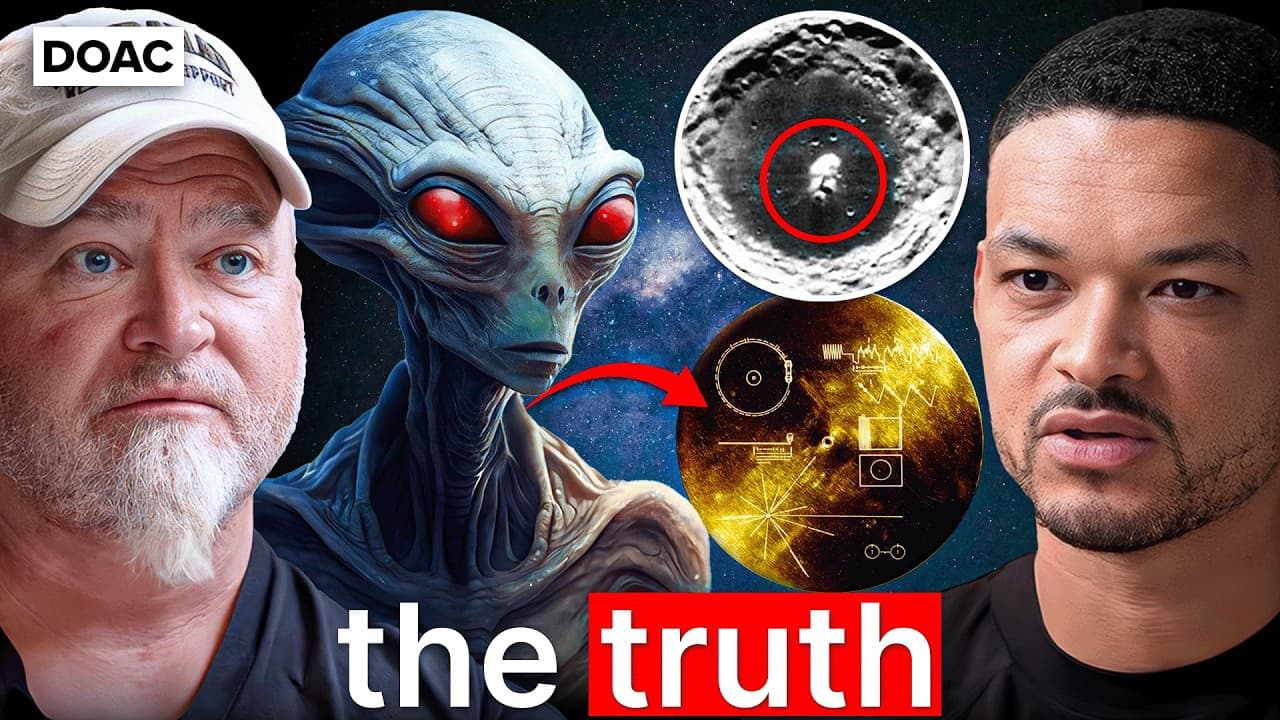
Luis Elizondo says the US government possesses exotic material that does not appear to be human-made, but his statements are limited by security obligations and an approved book review. He argues that inconsistent presidential briefings, resistance to disclosure, and severe risks for insiders show why protected, lawful whistleblowing is necessary to investigate UAP programs without compromising national security.
Transcript
to your knowledge, has there ever been recovered um UAP or UFO materials? What I can say is what I've been allowed to say, which is yes. Up until recently, I wasn't even allowed to say that. When did that change? When that book got reviewed. Up until that point, I had signed documentation from the government saying I will never discuss that ever. W... Read More
Key Insights
- Elizondo's central claim is that the US government possesses exotic recovered material that does not appear to have been made by humans. He says he may discuss this only because the government reviewed his book and authorized its contents, not because he independently declassified the information.
- Security obligations are the main boundary on Elizondo's public statements. He says unauthorized discussion could result in jail, so he carefully approaches the legal limit without crossing it, violating his oath, or compromising national security in pursuit of faster disclosure.
- Whistleblower safety is presented as essential to meaningful UAP disclosure. Elizondo says some people have faced extreme disciplinary measures and potentially worse, which is why Congress is pursuing protections intended to let informed witnesses speak without fearing retaliation.
- Elizondo's personal risk assessment is serious but does not stop his advocacy. He says his life has been threatened many times, that he lives cautiously in Wyoming, and that he relies on lawful authorization rather than leaking classified information.
- Presidential UAP briefings are allegedly inconsistent and controlled by people outside the elected office. Elizondo says Carter and George Bush senior received information, while Bill Clinton wanted a briefing but did not receive one, raising questions about who decides access.
- Trump's reported resistance to releasing UFO files is treated as evidence of a deeper authority problem. Elizondo argues that resistance faced by a president would indicate that unelected institutions or program stakeholders can exert substantial influence over disclosure decisions.
- The military-industrial complex is identified as a possible source of resistance because contractors may participate in secret government programs. Elizondo says some secrecy may protect technology and capabilities from adversaries, giving certain restrictions legitimate national security rationales even when he disagrees with them.
- The legacy program is described as a decades-long collaborative government effort to study UAP. Elizondo distinguishes it from individual initiatives such as ATIP, OAP, and Blue Book, characterizing the older effort as broader, more robust, and sustained across multiple groups and periods.
Install to Summarize YouTube Videos and Get Transcripts
Explore YouTube Video Summarizer or Get YouTube Transcript Extractor
Questions & Answers
Q: Has the US government recovered unusual UAP materials?
Luis Elizondo says yes, the US government possesses exotic recovered material that does not appear to have been made by humans. He presents this as a statement he was specifically permitted to make after government reviewers examined his book. He does not provide physical evidence in the excerpt and repeatedly says he cannot discuss details beyond the approved material.
Q: Why can Luis Elizondo discuss recovered UAP material now?
Elizondo says the change occurred when his book completed a government review process. Before that review, he had signed documentation requiring him never to discuss the subject. Because the book's contents were reviewed, he says he can now discuss what appears in it, while remaining prohibited from expanding beyond those authorized statements or revealing protected national security information.
Q: What risks do UAP whistleblowers allegedly face?
Elizondo says people connected to sensitive information have faced extreme disciplinary actions and potentially worse consequences. He does not identify specific individuals or fully describe the alleged incidents because related efforts are still occurring. He argues that these fears explain why congressional whistleblower protections are important, since potential witnesses may otherwise feel unsafe speaking about government UAP activities.
Q: How does Elizondo balance UAP disclosure with national security?
Elizondo says he follows the legal limits established by his security oath and the government review of his book. He describes his publication as authorized discussion rather than a leak. His approach is to move the conversation forward without disclosing protected capabilities, breaking the law, threatening individuals, or forcing insiders to lose their jobs or face imprisonment.
Q: Which US presidents were briefed about UAP programs?
Elizondo says Jimmy Carter was briefed and claims to know a living person who helped Carter obtain information, although he withholds that person's identity. He also says George Bush senior knew about the subject while serving as CIA director. By contrast, he says Bill Clinton wanted to receive a briefing but was not given one.
Q: Why might some presidents not receive UAP briefings?
Elizondo says some officials view presidents and politicians as temporary hires who may leave after four years. If a president lacks military or intelligence experience, those officials may consider a sensitive briefing an unnecessary risk. Elizondo rejects this reasoning and argues that no unidentified authority should decide whether an elected president can access information of this importance.
Q: Why might the military-industrial complex resist UAP disclosure?
Elizondo suggests that organizations connected to secret government programs may resist disclosure because acknowledging the files could expose their participation, technology, or capabilities. He describes the military-industrial complex as enormously influential. He also concedes that some secrecy can have legitimate purposes, particularly when releasing technical information might reveal sensitive capabilities to adversaries, even though he may oppose broader concealment.
Q: What is the alleged UAP legacy program?
Elizondo describes the legacy program as a traditional, long-running collaborative effort by individuals studying UAP for and within the US government across several decades. He says ATIP was not the only relevant program and also mentions OAP and Blue Book. In his account, the legacy effort performed similar work but operated with broader and more robust capabilities.
Summary & Key Takeaways
-
Luis Elizondo says a government review of his book authorized him to acknowledge that the United States possesses recovered exotic material that does not appear to have been made by humans. He stresses that he cannot go beyond the approved content because unauthorized disclosure could violate his security oath and lead to imprisonment.
-
Elizondo describes UAP disclosure as a conflict between public accountability and national security. He says insiders have faced extreme disciplinary action and potentially worse, while he has personally received threats. He supports congressional whistleblower protections and argues that disclosure should proceed lawfully, carefully, and without endangering people, employment, or legitimate capabilities.
-
Presidential access to UAP information has allegedly been inconsistent. Elizondo says Carter and George Bush senior were briefed, while Bill Clinton wanted information but was not briefed. He cites resistance reported by Trump and attributes some secrecy to military-industrial influence, classified technology, adversary concerns, and longstanding government programs studying UAP.
-
Key Insights_key_placeholder
Read in Other Languages (beta)
Share This Summary 📚
Summarize YouTube Videos and Get Video Transcripts with 1-Click
Try YouTube Summary with ChatGPT & Claude or YouTube Transcript Generator
Explore More Summaries from The Diary Of A CEO Clips 📚






Summarize YouTube Videos and Get Video Transcripts with 1-Click
Try YouTube Summary with ChatGPT & Claude or YouTube Transcript Generator