How AI Is Reshaping Product Teams and Codex
TL;DR
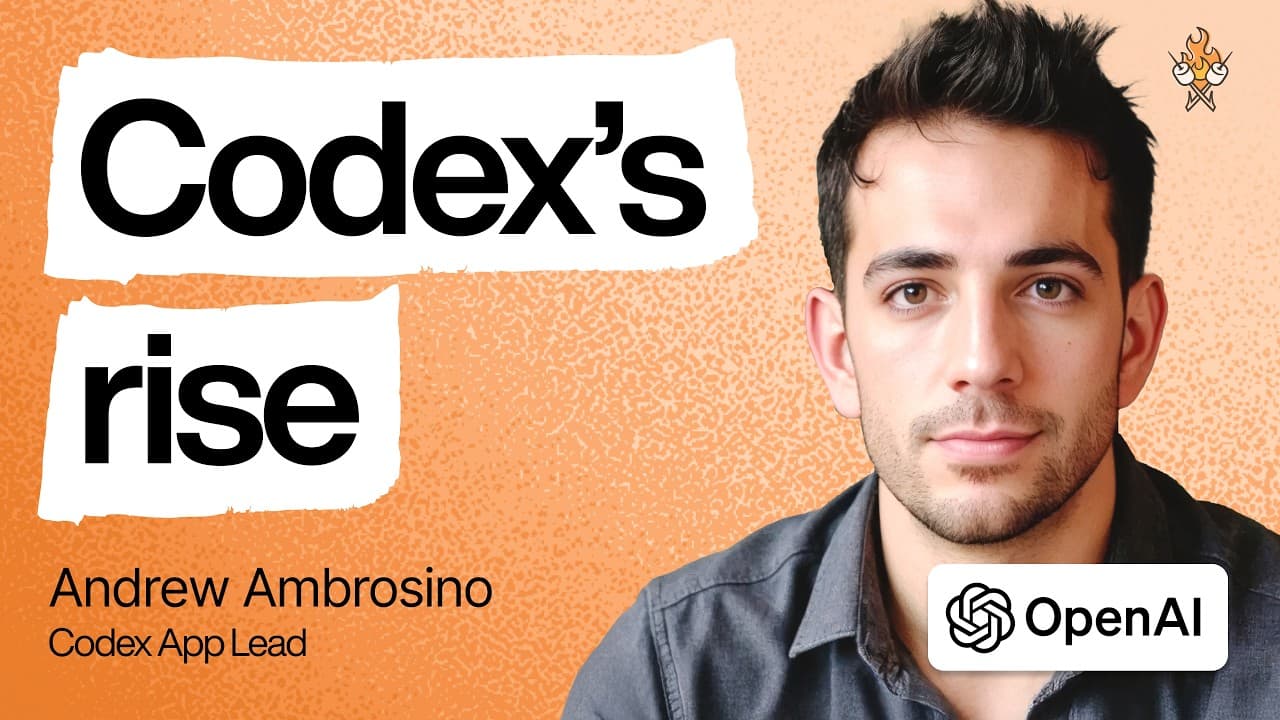
AI makes implementation cheap enough that product teams can build prototypes before fully derisking ideas, shifting the main constraint toward taste, curation, and choosing the right medium. Codex is evolving into a desktop home base that can coordinate work across ChatGPT, Codex, and existing tools, while supporting technical and nontechnical workflows.
Transcript
90% of people at Opening Eye use Codex. Not 90% of engineers. That's 90% of the entire company. >> Yeah. This tweet the other day where you said that you intend to make Codex the best desktop app that has ever existed. >> Yeah. The quality bar for Codex had to be so high that there was never like a hesitation that you have opening this app to do th... Read More
Key Insights
- AI has inverted the economics of product development because implementation is no longer necessarily the most expensive stage. Teams can generate many working explorations quickly, so their harder responsibility becomes deciding which ideas deserve attention, how they should be framed, and what should reach users.
- Taste is emerging as a critical professional skill because abundant implementation creates a larger volume of plausible outputs. Product teams must judge what is good, identify useful elements across competing attempts, decide how features fit together, and align the final experience with user and business needs.
- Documents remain valuable when the central problem is conceptual clarity in a vague product area. Cheap prototyping does not make product requirements or written reasoning obsolete, because a visual or interactive artifact can prematurely anchor a team before the underlying problem, research, or business objective is understood.
- Prototypes are most useful when teams need people to try an interaction pattern and expose its weaknesses. Their purpose should be stated clearly because modern prototypes can resemble production software even when research, design review, business alignment, and core assumptions remain unresolved.
- The medium of an artifact no longer reliably indicates its maturity. Production-like software once implied that substantial validation and resource allocation had already occurred, but AI can now produce polished explorations early, separating apparent completeness from actual confidence in the product direction.
- Product work increasingly centers on curation rather than initial implementation. When many people can independently build versions of the same feature, teams need mechanisms for comparing attempts, combining their strongest elements, eliminating duplication, and deciding whether an idea belongs inside another feature.
- Roles can overlap more when everyone has access to capable building tools, but specialized skills have not necessarily disappeared. The described shift changes the order and economics of product work, while preserving the need for research, engineering, design, product judgment, and coordination.
- Codex is used across OpenAI rather than only within engineering. Nearly 100% of employees reportedly use it weekly, with applications including product building, file organization, document drafting, data analysis, and email reading, supporting a vision of coordinated work across Codex, ChatGPT, and existing tools.
Install to Summarize YouTube Videos and Get Transcripts
Explore YouTube Video Summarizer or Get YouTube Transcript Extractor
Questions & Answers
Q: How is AI changing the product development process?
AI is making implementation inexpensive enough that teams can create working versions of ideas before completing the extensive research, documentation, design, and risk reduction that traditionally preceded development. This reverses the older process. The main difficulty shifts toward choosing what to build, comparing many explorations, combining their best elements, and ensuring that the selected direction serves users and the business.
Q: Why is taste becoming important in AI-first product teams?
Taste matters because AI allows many people to produce plausible implementations rapidly, creating more options than a team can reasonably pursue. The scarce capability becomes judging which attempts are strong, which details should be retained, how an idea fits with other features, and whether the overall framing is appropriate. Taste therefore guides selection and refinement after implementation becomes abundant.
Q: Are product requirement documents obsolete when AI can build prototypes?
Product requirement documents are not obsolete because different questions require different forms of communication. A document is useful when a team needs conceptual clarity around an ambiguous area, while a prototype is useful for testing an interaction directly. Jumping immediately to implementation can anchor discussion around one visible solution before research, user needs, business goals, or alternative models have been examined.
Q: When should a product team create a prototype instead of a document?
A team should create a prototype when it needs people to experience an interaction pattern, test how a proposed workflow feels, or reveal practical weaknesses that are difficult to evaluate through prose. A document is more appropriate when the primary challenge is clarifying the problem or framing a vague area. The medium should match the specific point the team needs to communicate.
Q: Why can polished AI prototypes mislead product teams?
Polished prototypes can be misleading because visual completeness no longer proves that an idea is mature. In the older process, production-like software usually appeared only after research, design review, business alignment, and risk reduction. AI can now produce something that looks finished much earlier, so teams may overvalue its appearance even when its assumptions and product model remain unresolved.
Q: How should teams manage many AI-generated product explorations?
Teams should treat the abundance of explorations as a curation problem. They need to compare attempts, identify what is genuinely useful in each one, combine compatible ideas, decide whether a concept belongs within another feature, and select an appropriate framing. Clear labels about an artifact's purpose and maturity can also prevent early experiments from being mistaken for validated production directions.
Q: Does AI eliminate specialized roles on product teams?
AI allows more people to cross traditional role boundaries because they can turn ideas into implementations without waiting for the same level of dedicated engineering capacity. However, the conversation does not claim that research, design, engineering, or product skills have vanished. Instead, implementation becomes cheaper while judgment, coordination, communication, curation, and specialized forms of expertise remain necessary for coherent products.
Q: How is Codex used beyond software engineering?
Codex is described as a desktop application for both product development and broader knowledge work. People use it to build products, organize files on their computers, draft documents, analyze data, and read email. Nearly 100% of OpenAI employees reportedly use Codex weekly, not only engineers, illustrating the intended reach across technical and nontechnical workflows.
Summary & Key Takeaways
-
AI has inverted the traditional product development process. Teams once reduced implementation risk through research, documents, designs, and limited prototypes because building software was expensive. Frontier models now let almost anyone create working explorations quickly, making implementation abundant while increasing the importance of selecting, combining, and refining the strongest ideas.
-
Documents and prototypes remain useful, but they serve different purposes. A document can clarify an ambiguous product area, while a prototype can place an interaction pattern in users' hands for testing. Because prototypes can now look production-ready very early, teams must clearly communicate their maturity and avoid treating visual polish as evidence of validation.
-
Codex is becoming a general desktop workspace rather than a tool used only by engineers. OpenAI employees use it for building products and for tasks such as organizing files, drafting documents, analyzing data, and reading email. The broader vision connects Codex, ChatGPT, and existing tools through a coordinated home base for knowledge work.
Read in Other Languages (beta)
Share This Summary 📚
Summarize YouTube Videos and Get Video Transcripts with 1-Click
Try YouTube Summary with ChatGPT & Claude or YouTube Transcript Generator
Explore More Summaries from Lenny's Podcast 📚






Summarize YouTube Videos and Get Video Transcripts with 1-Click
Try YouTube Summary with ChatGPT & Claude or YouTube Transcript Generator