Why Are China and the US Facing Debt Crises?
TL;DR
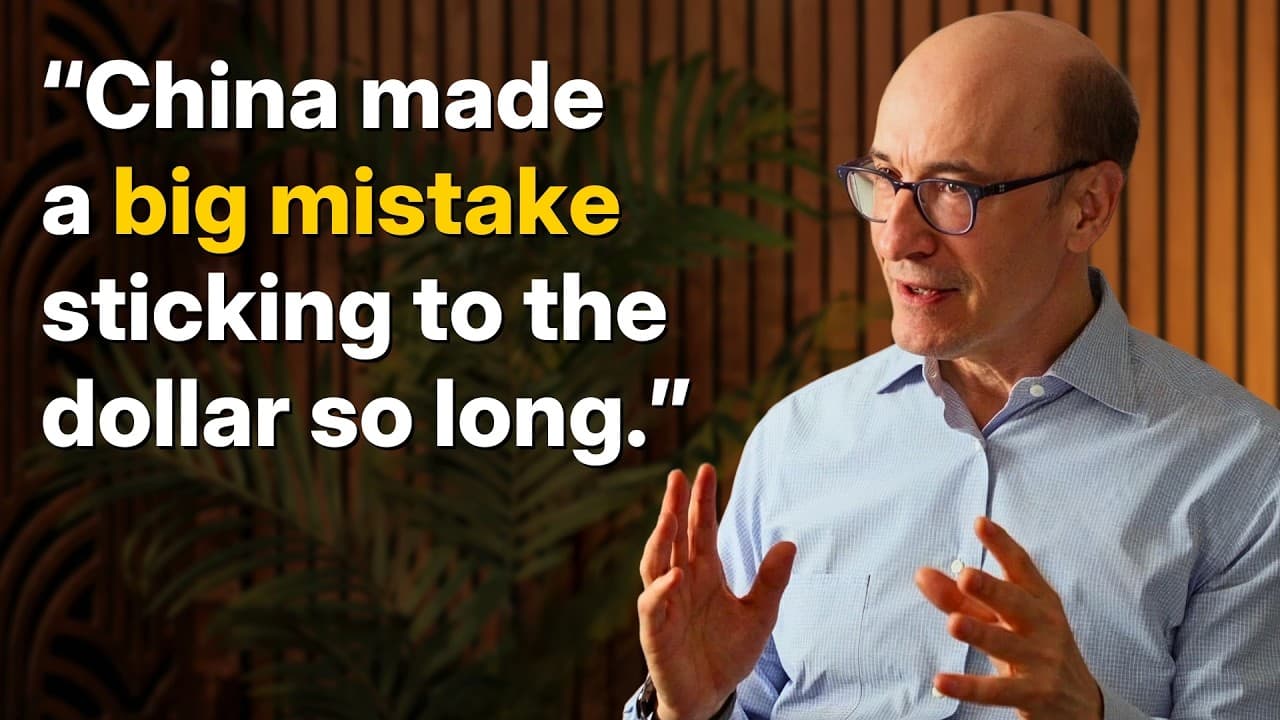
China’s economic crisis stems from prolonged dependence on property, infrastructure, local government debt, and state-directed investment, while centralized leadership has made reform more difficult. Ken Rogoff also predicts that the United States will face a debt-induced inflation crisis within the next decade, as fiscal pressure and declining dollar dominance weaken advantages that previously helped it manage debt.
Transcript
Today I’m speaking with Ken Rogoff, who is a professor at Harvard, recent author of Our Dollar, Your Problem, and former Chief Economist at the IMF. Ken, thanks so much for coming on the podcast. Thanks so much for having me and welcome to Harvard, which is where we’re filming this. In your book you have a lot of anecdotes of meeting differen... Read More
Key Insights
- China’s leadership historically emphasized competence and exposure to many viewpoints. Rogoff encountered impressive technocrats, mayors, and officials who could ask unusually direct questions within the Party training school, where rising bureaucrats received preparation comparable in purpose to a leading business school.
- Xi Jinping has moved China toward more centralized authority and greater reliance on loyalists since becoming president in 2013. Rogoff believes this weakened the earlier technocratic system, reduced risk-taking, and contributed to a decline in leadership quality during a period requiring difficult economic reforms.
- China’s current crisis has roots in the large stimulus introduced around 2010. Local government debt became a lasting financing mechanism because local authorities lacked sufficient revenue sources and depended on land sales and construction companies to fund activity and sustain themselves.
- China’s reported growth looks weaker when measured using purchasing power comparisons. Rogoff says official growth averaged almost 10 percent from 1980 to 2012, while a purchasing power parity measure was just over 7 percent, and he estimates the more recent comparable pace at roughly 3.5 percent.
- China is overbuilt in both housing and infrastructure. Smaller cities contain impressive roads, stations, housing compounds, entertainment facilities, and tourist developments, yet many lack corresponding demand, economic vitality, employment opportunities, and appeal for younger people who prefer not to live there.
- Real estate accounts for roughly one-third of China’s economy by some measures. Green energy, artificial intelligence, and electric vehicles offer alternative sources of activity, but Rogoff says they remain tiny compared with the enormous economic role historically played by property and infrastructure.
- China’s economic reorientation is difficult because workers and institutions are not highly flexible. When construction activity and its indirect employment disappear, people cannot automatically move into new industries, while attempts to direct population and investment toward smaller cities have encountered powerful resistance.
- The United States is likely to experience a debt-induced inflation crisis within the next decade, according to Rogoff’s prediction in the description. He distinguishes this scenario from a Japan-type financial crisis, which he considers substantially worse and capable of leaving a country poorer for generations.
Install to Summarize YouTube Videos and Get Transcripts
Explore YouTube Video Summarizer or Get YouTube Transcript Extractor
Questions & Answers
Q: Why is China experiencing an economic crisis?
China is experiencing a crisis because property development, infrastructure construction, local government borrowing, and land sales continued for too long as engines of growth. The country built housing, roads, stations, and large facilities beyond the demand visible in many smaller cities. Reform is difficult because real estate represents roughly one-third of the economy by some measures, while replacement industries remain comparatively small.
Q: How did China’s 2010 stimulus contribute to the crisis?
The stimulus introduced around 2010 created a local government debt mechanism that remained in use after the immediate intervention. Local governments lacked enough independent funding sources, so they sold land, supported construction companies, collected related revenue, and used development as continuing stimulus. Rogoff argues that leaders allowed this arrangement to keep running, causing debt, construction, housing, and infrastructure imbalances to accumulate.
Q: How did Xi Jinping change China’s economic leadership?
Xi Jinping gradually shifted the leadership system away from its earlier emphasis on technocratic competence and toward centralization and loyalty after becoming president in 2013. Rogoff had heard expectations that Xi would liberalize markets and pursue major changes, but those reforms largely did not occur. He believes Xi’s reluctance to take risks contributed to slower growth and delayed responses to overbuilding and debt.
Q: Why are China’s smaller cities important to its economic problems?
China’s tier-three cities account for about 60 percent of Chinese income, according to Rogoff, and received exceptionally heavy investment. Many have impressive roads, real estate, housing, stations, entertainment complexes, and tourist sites, but insufficient activity, jobs, or residents to match their scale. Young people often do not want to live there, making it harder to generate demand for what has already been built.
Q: How reliable are China’s official economic growth figures?
Rogoff says growth comparisons depend on the method used because China and the United States produce different goods and use different currencies. From 1980 to 2012, China’s official growth rate was almost 10 percent, while a purchasing power parity measure was just over 7 percent. In more recent years, he suggests official growth of 6 or 7 percent could correspond to roughly 3.5 percent under the alternative measure.
Q: Can green energy, AI, and electric vehicles replace Chinese real estate?
Green energy, artificial intelligence, and electric vehicles provide China with promising areas of economic activity, but Rogoff says they are still tiny compared with infrastructure and real estate. Property alone represents roughly one-third of the economy by some measures. Consequently, these newer industries cannot yet absorb the full economic role, investment volume, and employment connected directly or indirectly to construction and property development.
Q: Why is China’s economic transition so difficult?
China must reorient an economy that has relied heavily on building property and infrastructure, but workers, institutions, and locations cannot adjust instantly. Construction supports many direct jobs and additional industries, so its decline creates broad disruption. Attempts to attract people toward smaller cities also struggle because employment is limited and many young people prefer larger centers, leaving completed developments without sufficient demand.
Q: What kind of debt crisis does Ken Rogoff expect in the United States?
Rogoff predicts that the United States will face a debt-induced inflation crisis within the next decade. He does not expect a Japan-type financial crisis, which he describes as much worse and capable of making a country poorer for generations. The description also connects the American outlook with eroding dollar dominance, a potential rebalancing toward foreign equities, and questions about how AGI may affect deficits and interest rates.
Summary & Key Takeaways
-
China’s earlier leadership cultivated technically capable officials who listened to diverse opinions, but Xi Jinping gradually replaced parts of that system with greater centralization and loyalty. Rogoff argues that this change reduced the government’s willingness to take risks, liberalize markets, and confront economic weaknesses that had become increasingly visible by 2016.
-
China’s present difficulties grew from the large stimulus introduced around 2010. Local governments financed themselves through land sales, debt, and construction companies, while property and infrastructure investment continued as an ongoing stimulus mechanism. The resulting overbuilding is especially visible in smaller cities where enormous facilities exist without enough residents, jobs, or demand.
-
China must shift away from construction-led growth, but green energy, artificial intelligence, and electric vehicles remain small compared with real estate and infrastructure. Meanwhile, Rogoff expects American debt to produce an inflation crisis within the next decade, though not the more damaging Japan-type financial crisis, as dollar dominance erodes and fiscal pressures accumulate.
Read in Other Languages (beta)
Share This Summary 📚
Summarize YouTube Videos and Get Video Transcripts with 1-Click
Try YouTube Summary with ChatGPT & Claude or YouTube Transcript Generator
Explore More Summaries from Dwarkesh Patel 📚






Summarize YouTube Videos and Get Video Transcripts with 1-Click
Try YouTube Summary with ChatGPT & Claude or YouTube Transcript Generator