How Did a Pilot Down an Enemy With His Propeller?
TL;DR
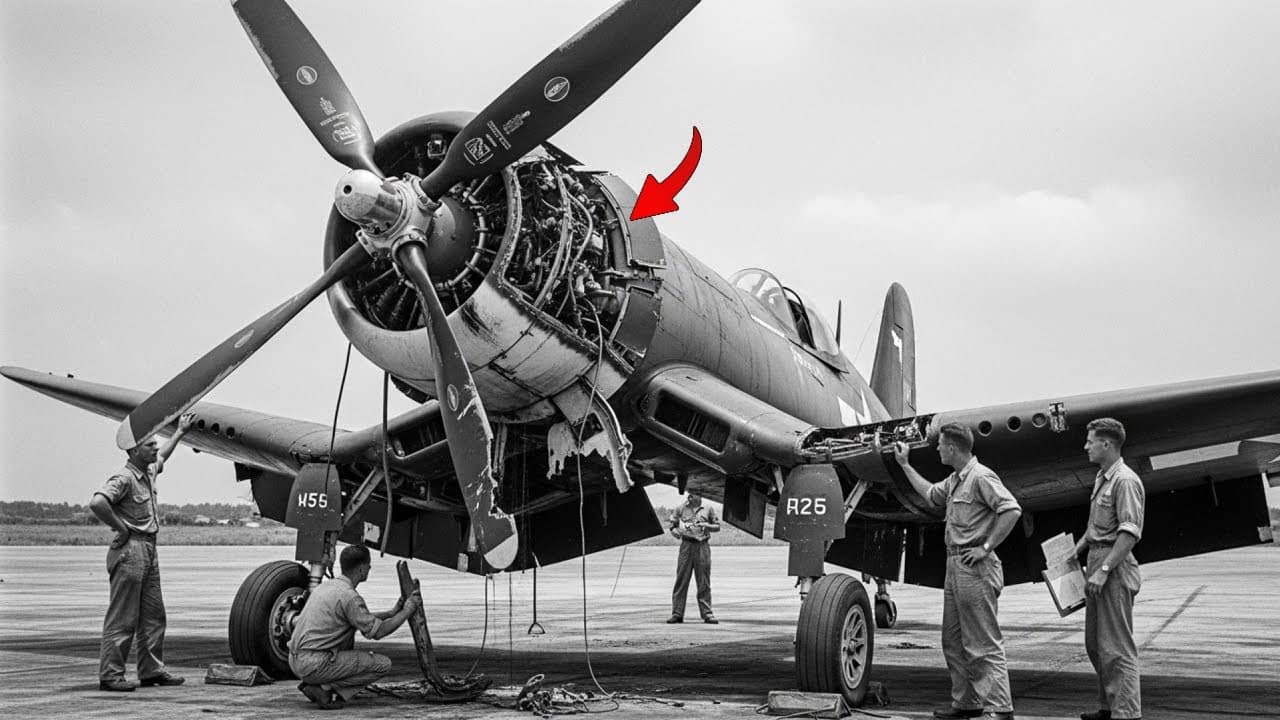
Robert Klingman downed a Japanese Ki-45 reconnaissance aircraft after his guns froze by striking its tail three times with his F4U Corsair’s propeller at 38,000 feet. Despite severe propeller, engine, and airframe damage, he returned toward Kadina and completed a dead-stick landing after his engine quit at 1,000 feet. Read on for the precise sequence of attacks and his narrow survival.
Transcript
At 11:14 a.m. on May 10th, 1945, First Lieutenant Robert Klingman reached 38,000 ft above Okinawa, pursuing a Japanese Nick reconnaissance plane. 28 years old, he had flown 43 combat missions since arriving at Kadina airfield 6 weeks earlier. His F4U Corsair was 3,000 ft above its service ceiling, where the air was thin enough to kill. The Japanese... Read More
Key Insights
- Robert Klingman's mission occurred on May 10, 1945, above Okinawa, where Japanese Ki-45 reconnaissance flights gathered fleet-position information associated with kamikaze strikes. The aircraft flew high enough to avoid antiaircraft fire and challenge interception by American fighters.
- Weight reduction was essential to the pursuit because Klingman's flight needed every possible improvement in climb performance. The pilots dropped their belly tanks and fired ammunition into the ocean, with Klingman expending 2,000 rounds and removing 687 pounds from his Corsair.
- The Corsair was pushed beyond its rated limits when Klingman and Reusser climbed past its 36,000-foot service ceiling to 38,000 feet. Thin air weakened control response, increased stall danger, and forced both pilots to use maximum emergency power while engine temperatures rose beyond the red line.
- Reusser's attack disabled the Ki-45's right engine but did not destroy the aircraft. After firing his remaining ammunition, he moved aside, leaving Klingman to engage an enemy that was damaged, trailing smoke, and still capable of escaping on one engine.
- Klingman's guns became unusable because extreme cold at 38,000 feet froze their firing mechanisms. With much of his ammunition already expended to reduce weight, he chose to use the Corsair's four-bladed propeller, spinning at 2,000 revolutions per minute, as an improvised weapon.
- Three propeller strikes were required to destroy the Ki-45. The first damaged its rudder, the second tore through the rear cockpit and removed the machine-gun mount, and the third struck the vertical stabilizer's base, separating the entire tail assembly and sending the aircraft into an uncontrolled dive.
- The Corsair remained barely controllable after the final impact because two propeller blades were bent toward the cowling and six inches of a third blade were missing. Klingman reduced power, used careful rudder inputs, and stabilized the aircraft while overheating, declining oil pressure, and burning oil threatened engine failure.
- Klingman's return ended in a dead-stick landing after his engine quit at 1,000 feet. He touched down 800 feet past the threshold of Kadina's 3,600-foot runway, used maximum braking, and stopped with 300 feet remaining before maintenance crews declared the Corsair beyond repair.
Install to Summarize YouTube Videos and Get Transcripts
Explore YouTube Video Summarizer or Get YouTube Transcript Extractor
Questions & Answers
Q: How did Robert Klingman down an enemy aircraft with his propeller?
After his guns froze at 38,000 feet, Klingman climbed above the Japanese Ki-45 and deliberately drove his F4U Corsair’s four-bladed propeller into its tail. He made three attacks, with the final strike separating the enemy aircraft’s tail assembly and sending it into an uncontrolled dive.
Q: Why was the Japanese Ki-45 reconnaissance aircraft dangerous?
The Ki-45 photographed American fleet positions and transmitted coordinates to coordinators of kamikaze strikes. It flew high enough to avoid antiaircraft fire and make interception difficult, allowing it to complete two passes over the fleet before heading home.
Q: How did Klingman’s Corsair reach 38,000 feet?
Klingman dropped his reserve-fuel belly tank and fired 2,000 rounds into the ocean, reducing the Corsair’s weight by 687 pounds. He then used maximum emergency power and climbed beyond the aircraft’s rated 36,000-foot service ceiling to 38,000 feet.
Q: Why did Robert Klingman’s guns fail during the attack?
The extreme cold at 38,000 feet froze the guns’ firing mechanisms. When Klingman pressed the trigger about 50 feet behind the damaged Ki-45, nothing happened, leaving his remaining ammunition unusable.
Q: What happened during Klingman’s three propeller attacks?
The first strike damaged the Ki-45’s aluminum rudder, while the second tore through the rear cockpit and removed the machine-gun mount. On the third attack, Klingman struck the base of the vertical stabilizer, separating the entire tail assembly.
Q: How badly was Klingman’s F4U Corsair damaged?
Two propeller blades were bent toward the engine cowling, and six inches were missing from a third blade, causing severe vibration. The Corsair also suffered overheating, falling oil pressure, burning oil, and bullet damage to its right wing; maintenance crews later declared it beyond repair.
Q: How did Klingman survive the return flight to Kadina?
Klingman reduced power to limit vibration and used careful rudder inputs to stabilize the damaged Corsair. He headed toward Kadina while managing overheating, declining oil pressure, burning oil, and nearly exhausted fuel until the engine quit at 1,000 feet.
Q: How did Klingman complete the emergency landing?
After the engine failed, Klingman manually lowered the landing gear and made a dead-stick approach to Kadina’s 3,600-foot runway. He touched down 800 feet beyond the threshold, applied maximum braking, and stopped with 300 feet of runway remaining.
Summary & Key Takeaways
-
On May 10, 1945, Robert Klingman and Captain Kenneth Reusser pursued a Japanese Ki-45 reconnaissance aircraft above Okinawa. They discarded fuel tanks and fired ammunition into the ocean to reduce weight, then pushed their Corsairs to 38,000 feet, about 3,000 feet above the aircraft's rated service ceiling.
-
Reusser damaged one of the Ki-45's engines before exhausting his ammunition. Klingman approached from behind, but extreme cold had frozen his remaining guns. He converted his spinning propeller into a weapon, making three attacks that damaged the rudder, eliminated the rear gun position, and finally separated the enemy aircraft's tail.
-
Klingman's Corsair suffered bent and broken propeller blades, extreme vibration, overheating, falling oil pressure, and nearly exhausted fuel. The engine quit at 1,000 feet during his return to Kadina. He glided onto the runway, braked to a stop with 300 feet remaining, and escaped an aircraft later declared beyond repair.
Read in Other Languages (beta)
Share This Summary 📚
Summarize YouTube Videos and Get Video Transcripts with 1-Click
Try YouTube Summary with ChatGPT & Claude or YouTube Transcript Generator
Explore More Summaries from WW2 Records 📚
Summarize YouTube Videos and Get Video Transcripts with 1-Click
Try YouTube Summary with ChatGPT & Claude or YouTube Transcript Generator