How Did Piano Wire Improve the P-38's Controls?
TL;DR
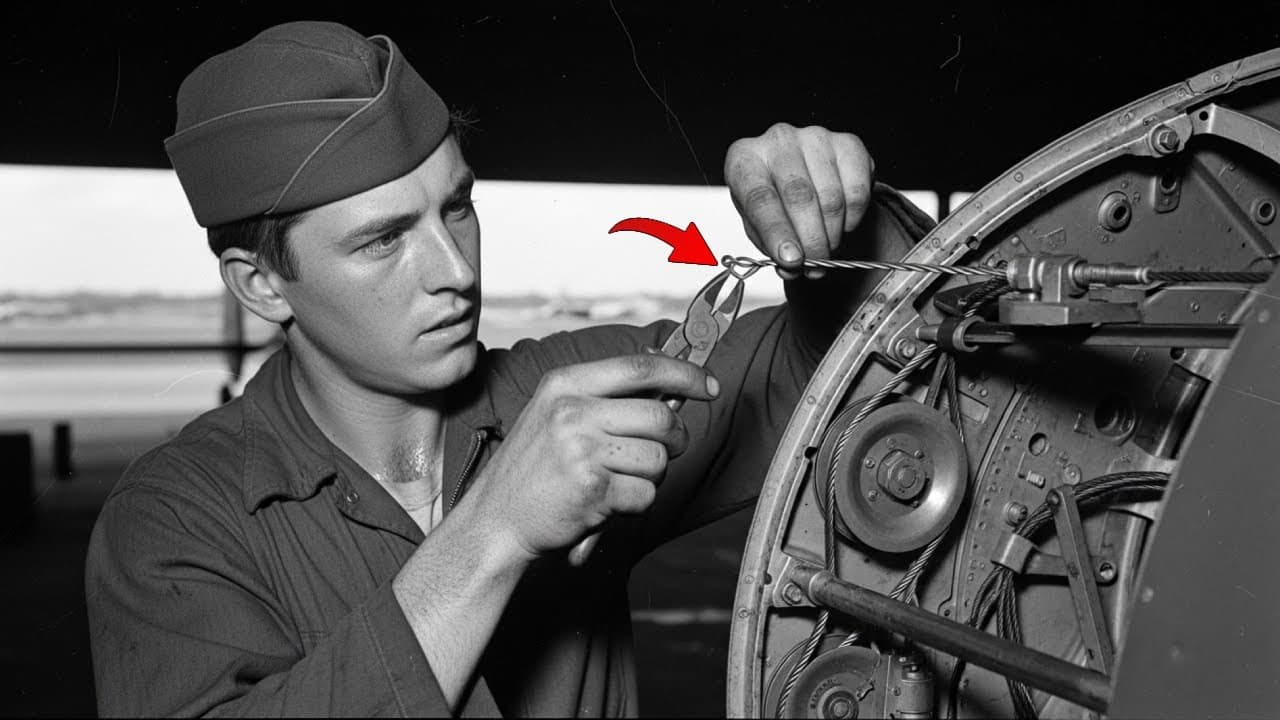
A six-inch piano-wire tensioner reportedly removed slack from the P-38 Lightning's aileron control cable, making the aircraft respond faster during hard maneuvers. Technical Sergeant James McKenna installed the unauthorized modification before Lieutenant Robert Hayes fought Japanese Zeros, and the description says it subsequently spread among Pacific fighter squadrons, improving pilots' survival and combat results.
Transcript
At 7:42 a.m. on August 17th, 1943, Technical Sergeant James McKenna crouched under the left wing of a P38 Lightning at Doadorura Airfield in New Guinea, watching his pilot prepare for a mission he probably wouldn't survive. The pilot was Lieutenant Robert Hayes, 23 years old, six combat missions, zero kills. The Japanese had sent 18 Mitsubishi A6M0... Read More
Key Insights
- The P-38's reported weakness was a small amount of slack in its aileron control cables, which delayed the aircraft's response after a pilot moved the stick. McKenna believed this delay became especially dangerous during low-speed, hard-turning maneuvers against more agile Zeros.
- American doctrine was to avoid turning fights with Zeros and instead exploit the P-38's speed and altitude through diving attacks, firing passes, and climbs. Combat conditions still allowed Japanese pilots to bait Americans into turns or attack while they attempted to disengage.
- The official explanation for many losses was pilot error, even when experienced pilots and survivors reported mushy or delayed controls. McKenna connected those recurring accounts with the cable slack he could feel and hear while maintaining aircraft on the flight line.
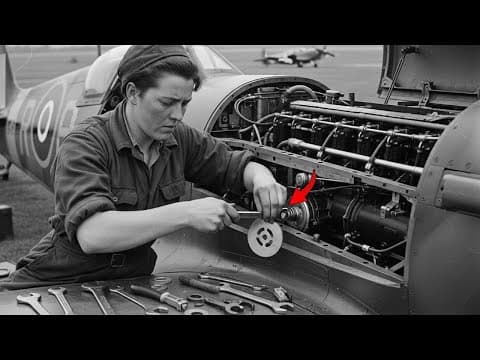
- McKenna's unauthorized solution was a six-inch piece of piano wire bent into a Z-shape and installed as a tensioner on Hayes's left aileron cable. The transcript says it added 0.4 pounds of tension, eliminated the slack, and required eight minutes to install.
- The modification bypassed maintenance rules because a field mechanic lacked authority to alter flight-control systems. An engineering officer had already told McKenna that the existing tension met factory specifications and that changing it required engineering approval from Lockheed in California.
- Lieutenant Robert Hayes had completed six combat missions without a kill before receiving the modification. Earlier missions showed that his P-38 responded too slowly when he tried to follow a Zero's roll or quickly reverse direction and dive away from an incoming attack.
- The description states that Hayes destroyed three Zeros in seven minutes during the August 17, 1943 mission. It further says the modification spread informally between crew chiefs, with forty P-38s carrying it by September despite its unauthorized origin.
- The reported operational effect was a shift from a two-to-one combat ratio against American pilots to a ratio that was nearly even. The description also credits the modification with saving 80 to 100 American pilots before Lockheed incorporated the approach.
Install to Summarize YouTube Videos and Get Transcripts
Explore YouTube Video Summarizer or Get YouTube Transcript Extractor
Questions & Answers
Q: What problem did piano wire fix in the P-38 Lightning?
The piano wire addressed slack in the P-38 Lightning's aileron control-cable system. McKenna believed the slack created a short delay between a pilot moving the control stick and the ailerons responding. That delay mattered most during hard maneuvers, when a pilot needed to roll immediately to follow a target, reverse direction, or escape a Zero attacking from behind.
Q: How did McKenna modify the P-38's control system?
McKenna cut a six-inch piece of piano wire from a damaged aircraft, bent it into a Z-shape, and fitted it to Lieutenant Robert Hayes's left aileron control cable as a tensioner. The transcript says the modification took eight minutes, added 0.4 pounds of tension, and completely removed the cable slack that McKenna associated with delayed roll response.
Q: Why was the P-38 modification unauthorized?
Field mechanics were not authorized to modify flight-control systems, and the existing cable tension was officially within factory specifications. An engineering officer had rejected McKenna's concern two months earlier, saying that the permitted slack fell within factory tolerances. According to the transcript, any approved change required engineering authorization from Lockheed, located 7,000 miles away in California.
Q: Why could P-38 pilots struggle against Japanese Zeros?
The P-38 was fast in a straight line and powerful at high altitude, but it could not match the Zero in a horizontal turning fight. The Zero was lighter and could reportedly complete a full turn in half the time. Cable slack also made the P-38 feel slow to respond when pilots attempted hard rolls, reversals, or escape maneuvers.
Q: What tactics were P-38 pilots taught to use against Zeros?
Pilots were taught never to enter a turning fight with a Zero. Their doctrine emphasized using the P-38's advantages in speed and altitude: dive onto the target, fire, and climb away. The transcript says Japanese pilots complicated this approach by baiting Americans into turns, cutting inside the P-38's larger turning radius, and attacking from behind during attempted disengagements.
Q: What happened when Lieutenant Robert Hayes flew the modified P-38?
Lieutenant Robert Hayes departed Dobodura Airfield on August 17, 1943, in the P-38 carrying McKenna's unauthorized cable tensioner. The description states that Hayes destroyed three Zeros in seven minutes. Before that mission, the 23-year-old pilot had flown six combat missions without recording a kill and had repeatedly experienced slow aircraft response during engagements.
Q: How did McKenna identify cable slack as the underlying problem?
McKenna connected pilots' repeated reports of mushy or delayed controls with what he observed during maintenance. He could feel the small amount of slack in the cable system and learned to distinguish cable tension by the sound produced when a cable was plucked. Loose cables made a lower twang, and he found that every P-38 on the line sounded slightly loose while remaining within specification.
Q: How widely did the piano-wire modification spread?
The description says the modification spread unofficially from mechanic to mechanic and crew chief to crew chief across Pacific fighter squadrons. By September, forty P-38s reportedly carried the change. It also says the combat ratio improved from two-to-one against American pilots to nearly even, and credits the technique with saving 80 to 100 pilots before Lockheed integrated it.
Summary & Key Takeaways
-
Technical Sergeant James McKenna concluded that control-cable slack, not simply pilot error, contributed to the P-38's slow response during hard maneuvers. Although the cable tension remained within factory specifications, returning pilots repeatedly described a slight lag between moving the stick and getting the aircraft to roll away from attacking Japanese Zeros.
-
After engineering personnel rejected his concern, McKenna fashioned a six-inch piece of piano wire into a Z-shaped tensioner. He secretly attached it to Lieutenant Robert Hayes's left aileron cable, adding 0.4 pounds of tension and eliminating the slack before Hayes departed Dobodura Airfield for a mission on August 17, 1943.
-
The description states that Hayes destroyed three Zeros in seven minutes while flying the modified aircraft. The unauthorized technique then spread informally from mechanic to mechanic, reaching forty P-38s by September. It reportedly moved the combat ratio from two-to-one against the Americans to nearly even before Lockheed integrated the idea.
Read in Other Languages (beta)
Share This Summary 📚
Summarize YouTube Videos and Get Video Transcripts with 1-Click
Try YouTube Summary with ChatGPT & Claude or YouTube Transcript Generator
Explore More Summaries from WW2 Records 📚
Summarize YouTube Videos and Get Video Transcripts with 1-Click
Try YouTube Summary with ChatGPT & Claude or YouTube Transcript Generator