How Did Joe Foss Defeat Japanese Zero Fighters?
TL;DR
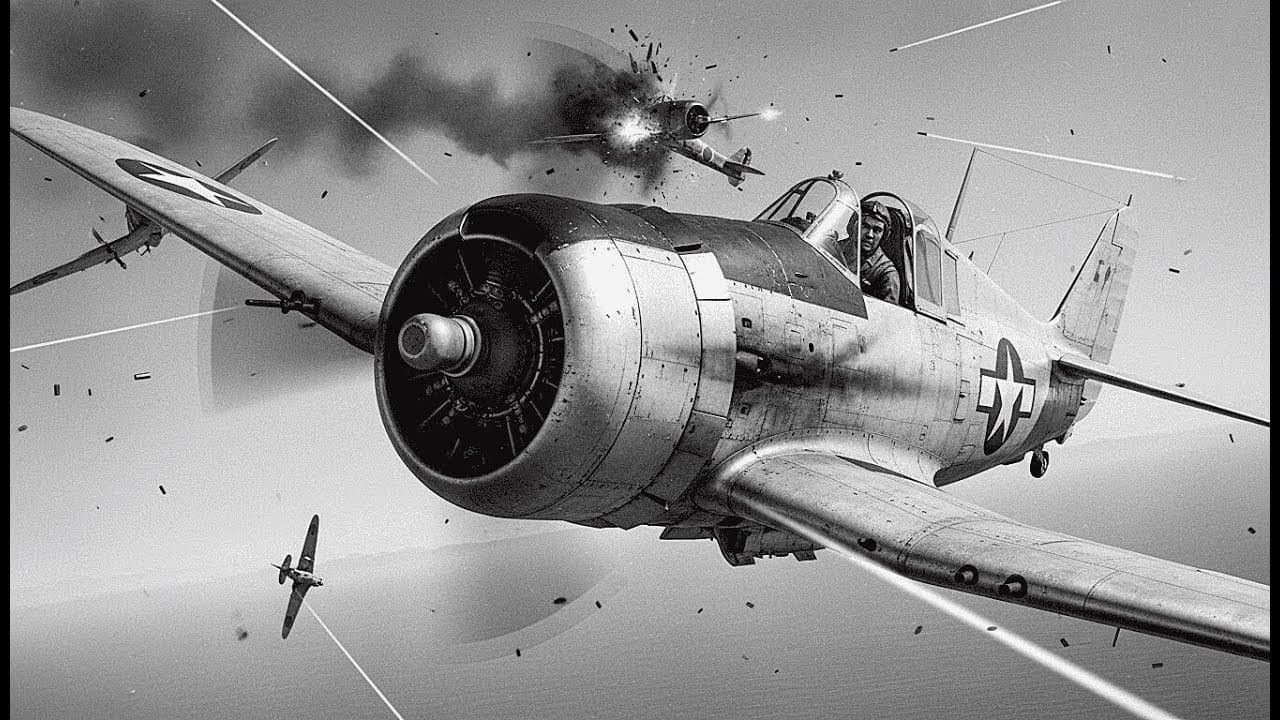
Joe Foss defeated Japanese aircraft by firing ahead of moving targets, using deflection shooting instincts developed while hunting jackrabbits in South Dakota. Instead of chasing the more agile Zero through tight turns, he anticipated its flight path and placed streams of machine-gun fire where it was going, helping him record 26 victories in 44 days.
Transcript
On October 9th, 1942, 20,000 ft above a jungle island called Guadal Canal, a 22-year-old American pilot named Marian Carl was fighting for his life. He was flying a Grumman F4F Wildcat, a stubby, heavy carrierbased fighter, and he was being hunted. His enemy was a Mitsubishi A6M0, a plane so light, so agile, it felt like it was from the future. It ... Read More
Key Insights
- Joe Foss learned deflection shooting as a child by hunting jackrabbits with an old shotgun. Because the animals darted, weaved, and reversed direction, he had to predict their future position instead of aiming directly at their current location.
- The F4F Wildcat was heavier and less agile than the Mitsubishi Zero. American doctrine therefore warned pilots never to turn with a Zero and advised them to use the Wildcat's speed, armor, diving ability, and firepower to attack and escape.
- The standard escape-focused doctrine could help Wildcat pilots survive without necessarily helping them win. After his first patrol, Foss concluded that repeatedly diving away surrendered the initiative and that successful combat required anticipating an opponent's movement rather than merely reacting to it.
- Foss's first victory came from firing a three-second burst about 200 feet ahead of a Zero that was pursuing his wingman. The Japanese aircraft completed its tight turn, entered the stream of fire, and lost a wing.
- Deflection shooting works by placing gunfire along a moving target's predicted path. Foss did not need to match the Zero's turning ability because he aimed at the point the aircraft would reach, transforming empty sky into an interception zone.
- Foss reached combat only after overcoming an age restriction. At 26, he was rejected because the fighter-pilot cutoff was 25, so he joined the Marine Corps Reserve, became an instructor, and persistently pressed his superiors for a combat assignment.
- Henderson Field operated under severe conditions during the Guadalcanal campaign. Its pilots faced damaged aircraft, a rough runway, malaria, exhaustion, primitive living quarters, and experienced Japanese aviators who understood how to exploit the Wildcat's slower response.
- Foss recorded 26 victories in 44 days by combining prediction, accurate shooting, and an aggressive hunting mentality. His method was a mental adaptation rather than a physical aircraft modification, and he encouraged other pilots to lead targets farther than they initially thought necessary.
Install to Summarize YouTube Videos and Get Transcripts
Explore YouTube Video Summarizer or Get YouTube Transcript Extractor
Questions & Answers
Q: How did Joe Foss shoot down Japanese Zero fighters?
Joe Foss used deflection shooting, aiming at the future position of a moving aircraft rather than directly at the aircraft itself. Against a turning Zero, he placed a stream of machine-gun fire across its predicted path and allowed the target to fly into the bullets. This approach reduced his need to equal the Zero's superior turning performance.
Q: What was Joe Foss's jackrabbit hunting tactic?
When hunting jackrabbits in South Dakota, Joe Foss learned that a fast, weaving animal could not be hit reliably by aiming at its current position. Following his father's instruction not to waste shells, he estimated the rabbit's speed, direction, and likely movement, then fired ahead. That childhood practice developed the predictive shooting instincts he later used in aerial combat.
Q: Why was the Mitsubishi Zero difficult for Wildcat pilots to fight?
The Mitsubishi Zero was lighter and more agile than the Grumman F4F Wildcat. It could turn inside the Wildcat's radius and climb rapidly, while experienced Japanese pilots knew how to bait Americans into turning engagements. The heavier Wildcat responded more slowly, leaving pilots vulnerable when they tried to follow a Zero through tight aerial maneuvers.
Q: Why did Joe Foss reject the standard Wildcat doctrine?
The standard doctrine told Wildcat pilots never to turn with a Zero and instead to dive, shoot, and run. Foss followed the escape tactic during his first patrol and shook the pursuing aircraft by diving toward the jungle canopy. He returned convinced that running could preserve his life but could not produce victory, so he adopted a more aggressive predictive shooting method.
Q: How did Joe Foss score his first aerial victory?
On October 13, 1942, Foss saw a Zero closing on his wingman's tail during a chaotic fight involving Japanese bombers and their escorts. He rolled his Wildcat, predicted the Zero's turning path, and fired a three-second burst roughly 200 feet ahead of it. The Zero flew into the bullets, and its wing came off.
Q: Why was Joe Foss initially prevented from flying in combat?
When Foss tried to enlist as a Navy pilot after Pearl Harbor, he was 26 years old, while the fighter-pilot cutoff in 1941 was 25. He was directed toward work as a flight instructor instead. Foss joined the Marine Corps Reserve, trained younger pilots, repeatedly demanded combat duty, and eventually received advanced fighter training and an assignment to VMF-121.
Q: What conditions did Joe Foss face at Henderson Field?
Henderson Field was a rough, dangerous base rather than a comfortable military installation. Its dirt-and-gravel runway was damaged, wrecked aircraft stood beside it, pilots lived in mud-floored tents, and the air smelled of engine oil, rotting jungle, and death. Aircrews also endured malaria, exhaustion, limited sleep, and continuing attacks by experienced Japanese pilots.
Q: What advice did Joe Foss give other Wildcat pilots?
Foss advised the other pilots not to chase agile Zeros through maneuvers the Wildcat could not match. Instead, they should lead the target by aiming ahead of its movement and then increase that lead beyond what initially felt correct. His central lesson was that prediction and accurate placement of fire could compensate for the Wildcat's weaker turning performance.
Summary & Key Takeaways
-
Joe Foss developed an instinct for deflection shooting while hunting jackrabbits on his family farm in South Dakota. Because ammunition could not be wasted, he learned to predict where a weaving target would move and fire ahead of it. That practical skill later shaped his distinctive approach to aerial combat over Guadalcanal.
-
Military rules initially kept Foss from combat because, at 26, he exceeded the fighter-pilot age cutoff of 25. He entered the Marine Corps Reserve, worked as an instructor, repeatedly demanded a combat assignment, and eventually joined VMF-121. In October 1942, the 27-year-old pilot arrived at Henderson Field on Guadalcanal.
-
Flying the heavy F4F Wildcat against agile Japanese Zeros, Foss rejected tactics focused mainly on escape and survival. He targeted the space ahead of turning aircraft, allowing enemies to fly into his gunfire. His first victory demonstrated the method, which he shared with fellow pilots before achieving 26 victories within 44 days.
Read in Other Languages (beta)
Share This Summary 📚
Summarize YouTube Videos and Get Video Transcripts with 1-Click
Try YouTube Summary with ChatGPT & Claude or YouTube Transcript Generator
Explore More Summaries from WW2 Missing Pages 📚
Summarize YouTube Videos and Get Video Transcripts with 1-Click
Try YouTube Summary with ChatGPT & Claude or YouTube Transcript Generator