How Did a Wire-Modified M14 Reach 800 Meters?
TL;DR
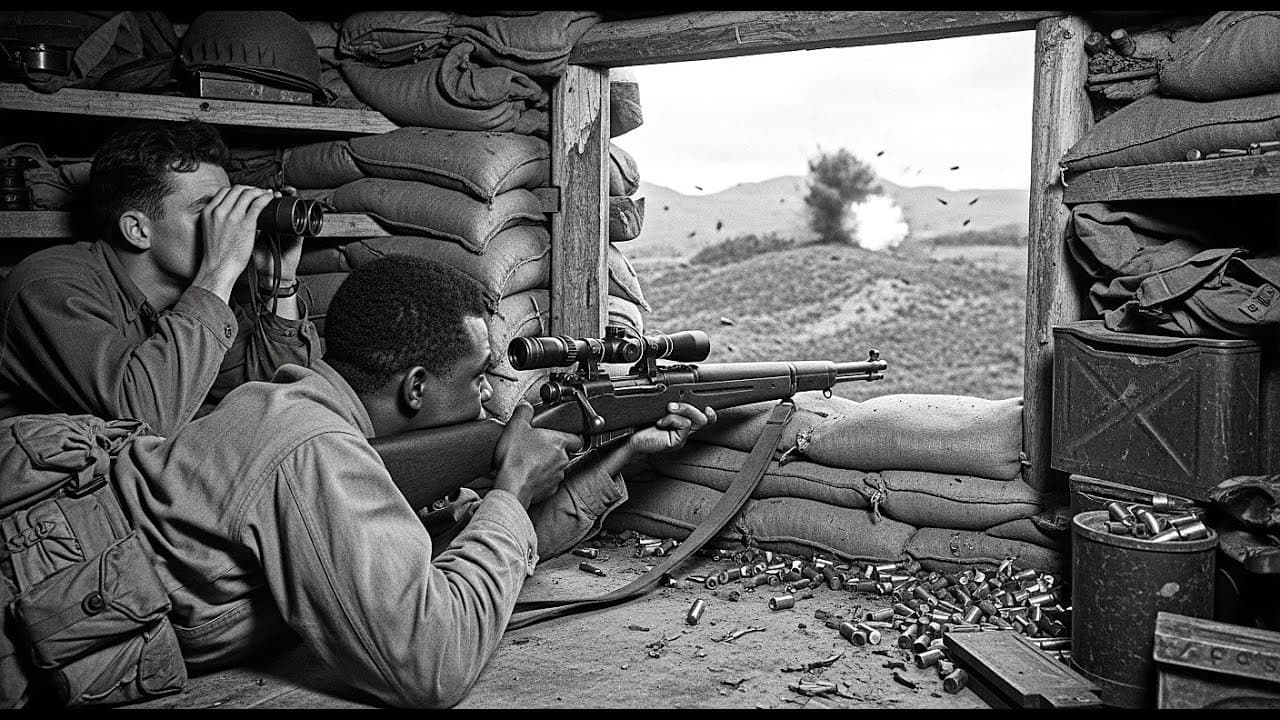
Sergeant Mitchell Townsend reportedly used a simple copper-wire modification on his M14 to engage NVA snipers from roughly 800 meters before they could attack Marines entering the valley below. The account credits his marksmanship, weapons expertise, and study of physics with turning an unauthorized modification into a battlefield solution that helped protect 2,000 Marines.
Transcript
declassified a 75 cent piece of wire, an M14 rifle that shouldn't have worked, and one Marine who defied military law to take an impossible 800 meter shot. In the next 60 minutes, you will learn the untold story of Sergeant Mitchell Townsend, a man who faced a court marshal, but instead saved 2,000 lives and the enemy snipers who never saw it comin... Read More
Key Insights
- Townsend’s shooting ability began as a childhood survival skill in Greenwood, Mississippi, where he learned to use his family’s only firearm, an old Remington bolt-action rifle, for hunting and developed an intuitive understanding of wind and bullet drop.
- Townsend’s technical advantage came from combining marksmanship with physics. His teacher, Eleanor Jackson, gave him access to advanced textbooks and engineering manuals that introduced him to internal ballistics, thermodynamics, and harmonic resonance despite the limited resources of his segregated school.
- Townsend enlisted in the Marine Corps in January 1963 and demonstrated his ability on the rifle range. He qualified as an expert marksman by hitting 48 of 50 targets, including targets at distances where many other recruits struggled.
- Townsend’s military role expanded beyond shooting because he understood why weapons malfunctioned. Although he was assigned to infantry rather than an elite scout sniper unit, he became his platoon’s unofficial armorer and earned recognition for diagnosing and repairing weapon problems.
- The battlefield problem was a reported 300-meter capability gap between the rifles. The Dragunov SVD could support accurate fire at approximately 800 meters or farther in capable hands, while the scoped M14 was described as effective to approximately 500 meters.
- The copper-wire modification was unauthorized and wrapped around the M14’s gas system. The narration describes it as costing 75 cents, while the title and description call it a 50-cent trick, creating an internal inconsistency about the wire’s stated price.
- Townsend chose to fire because artillery was expected to arrive too late. With four NVA snipers preparing positions on a distant ridge, he believed Marines moving through the valley below faced immediate danger and that waiting for conventional support would leave them exposed.
- Townsend’s first reported 800-meter shot struck the lead NVA sniper and produced unusually violent recoil, which the narrative presents as evidence that his modification was working. He then fought the rifle’s unfamiliar pressure while preparing to engage a second target.
Install to Summarize YouTube Videos and Get Transcripts
Explore YouTube Video Summarizer or Get YouTube Transcript Extractor
Questions & Answers
Q: How did Mitchell Townsend modify his M14 rifle?
Mitchell Townsend reportedly coiled a simple loop of copper wire tightly around the M14’s gas system. The modification was crude, unauthorized, and described as a violation that could expose him to punishment or a court-martial. The account links the wire to increased pressure, unusually violent recoil, and the rifle’s ability to engage a target at roughly 800 meters.
Q: Why was an 800-meter shot considered impossible with the M14?
The M14 was described as a battle rifle designed for infantry engagements, with an effective range of approximately 500 meters even when fitted with a scope. NVA snipers were positioned about 800 meters away, leaving a reported 300-meter gap between the expected capabilities of the American rifle and the range at which the enemy could engage safely.
Q: Why did Townsend fire instead of requesting artillery support?
Townsend’s spotter, Lance Corporal Franklin Riley, proposed reporting the enemy position and letting artillery handle it. Townsend believed artillery would arrive too late because four NVA snipers were already preparing their rifles above a valley where hundreds of Marines were about to advance. He therefore treated the threat as immediate and chose to attempt the long-range shot himself.
Q: What role did physics play in Townsend’s marksmanship?
Townsend studied mathematics, physics, engineering, internal ballistics, thermodynamics, and harmonic resonance while growing up in segregated Mississippi. His teacher, Eleanor Jackson, provided advanced materials beyond those normally available at his underfunded school. The account presents this education as the foundation for understanding weapon behavior and devising the copper-wire modification rather than relying on shooting instinct alone.
Q: How did Townsend become an expert Marine marksman?
Townsend learned to shoot as a child with his family’s old Remington bolt-action rifle, developing an understanding of wind and bullet drop. After enlisting in January 1963, he demonstrated that skill during Marine Corps training by hitting 48 of 50 targets. His performance silenced hostile reactions and earned recognition from Staff Sergeant Raymond Wilkins.
Q: Why was Townsend not initially assigned to a scout sniper unit?
Despite exceptional marksmanship and additional weapons training, Townsend was assigned to an infantry unit. The account says the scout sniper community of the mid-1960s was small, insular, and not readily welcoming to Black Marines. He nevertheless built a strong reputation within infantry as a skilled shooter, technically minded Marine, and unofficial armorer who could diagnose weapon malfunctions.
Q: What advantage did the Dragunov SVD provide to NVA snipers?
The Soviet-designed Dragunov SVD was described as a rugged, accurate, semi-automatic rifle intended for squad support and capable of accurate fire at 800 meters or farther in skilled hands. That range allowed NVA snipers to attack American forces from distant ridges while remaining beyond the M14’s stated effective range of approximately 500 meters.
Q: How many Marines did Townsend’s action reportedly save?
The title and description credit Townsend’s action with saving 2,000 Marines who were approaching what the account calls a perfect killing field in Quang Tri Province. The transcript specifically describes hundreds of Marines preparing to enter the valley beneath the enemy position. The larger figure of 2,000 is asserted by the supplied title and description.
Summary & Key Takeaways
-
Mitchell Townsend grew up in segregated Greenwood, Mississippi, where his father taught him marksmanship with the family’s Remington bolt-action rifle. Townsend also excelled in mathematics and physics, supported by teacher Eleanor Jackson, who supplied advanced textbooks covering subjects such as internal ballistics, thermodynamics, and harmonic resonance.
-
Townsend enlisted in the Marine Corps in January 1963 and qualified as an expert marksman by hitting 48 of 50 targets. Although access to scout sniper units was largely closed to him, he became an infantryman and unofficial armorer whose technical understanding helped him diagnose and repair weapon problems.
-
In Quang Tri Province, NVA snipers armed with Dragunov SVD rifles could reportedly engage Marines from about 800 meters, beyond the M14’s stated effective range of approximately 500 meters. Townsend attached copper wire around his rifle’s gas system and used the unauthorized modification to engage the distant threat before an ambush unfolded.
Read in Other Languages (beta)
Share This Summary 📚
Summarize YouTube Videos and Get Video Transcripts with 1-Click
Try YouTube Summary with ChatGPT & Claude or YouTube Transcript Generator
Explore More Summaries from WW2 Missing Pages 📚
Summarize YouTube Videos and Get Video Transcripts with 1-Click
Try YouTube Summary with ChatGPT & Claude or YouTube Transcript Generator