What Is Obsessive-Compulsive Disorder (OCD) and How Is It Treated?
TL;DR
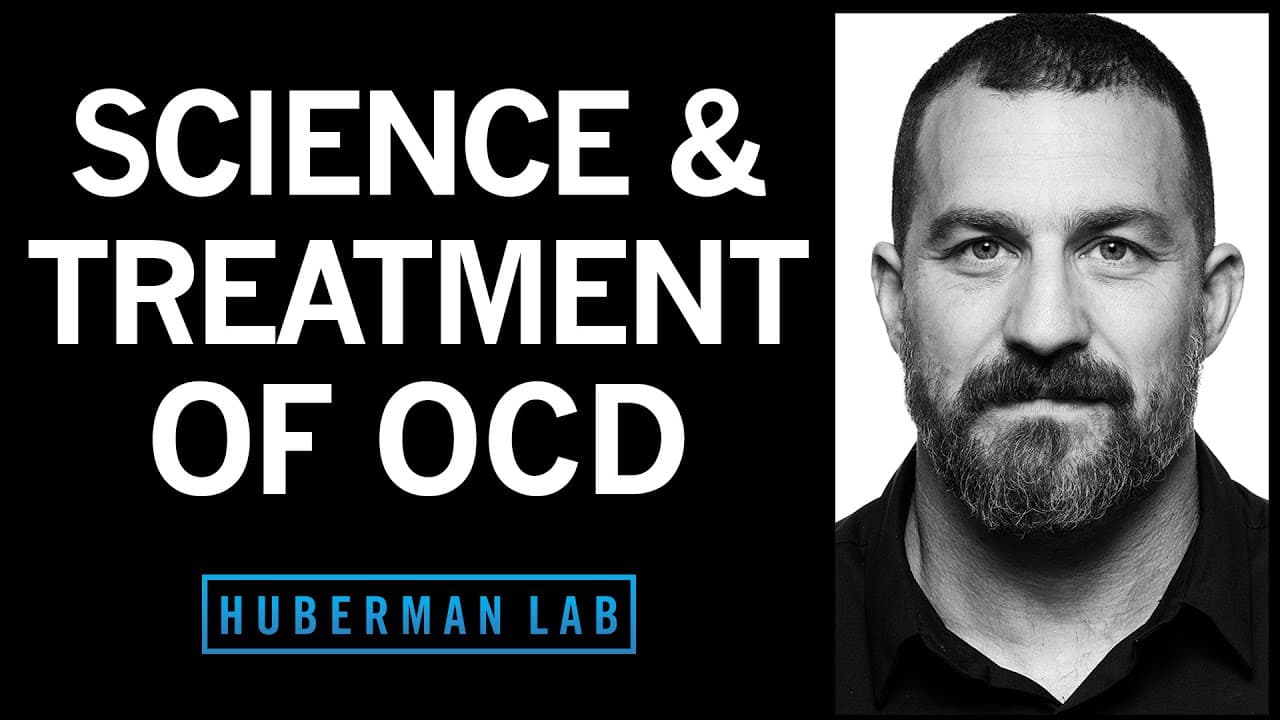
Obsessive-Compulsive Disorder (OCD) is an anxiety disorder characterized by intrusive thoughts and compulsive behaviors that provide only temporary relief, leading to increased obsession. Approximately 2.5% to 4% of the population is affected, making it highly debilitating. Effective treatments include cognitive behavioral therapy and exposure therapy, which target the neural circuitry associated with the condition.
Transcript
- Welcome to The Huberman Lab Podcast where we discuss science and science-based tools for everyday life. [upbeat guitar music] I'm Andrew Huberman and I'm a professor of neurobiology and ophthalmology at Stanford School of Medicine. Today, we are talking about obsessive-compulsive disorder or OCD. We are also going to talk about obsessive-compulsi... Read More
Key Insights
- ❓ OCD is a highly debilitating disorder that affects a significant portion of the population.
- 🔁 The cortico-striatal-thalamic loop is the neural circuit involved in OCD, and dysfunction in this loop leads to obsessive thoughts and compulsive behaviors.
- 🎯 Cognitive behavioral therapy and exposure therapy are effective treatments for OCD, targeting the underlying neural circuitry and helping individuals manage their symptoms.
Install to Summarize YouTube Videos and Get Transcripts
Explore YouTube Video Summarizer or Get YouTube Transcript Extractor
Questions & Answers
Q: What is the main difference between OCD and OCPD?
OCD is characterized by intrusive thoughts and compulsions, while OCPD involves a need for order and perfectionism. OCD involves anxiety-inducing obsessions, while OCPD behaviors are often enjoyed and result in delayed gratification.
Q: How does the cortico-striatal-thalamic loop contribute to OCD?
The loop is involved in generating obsessive thoughts and compulsive behaviors. Dysfunction in this circuit results in the intrusive and repetitive nature of OCD. Treatments target this circuit to alleviate symptoms.
Q: Are there effective treatments for OCD?
Yes, treatments for OCD include cognitive behavioral therapy (CBT), exposure therapy, medication (such as selective serotonin reuptake inhibitors), and holistic therapies. The choice of treatment depends on the individual and the specific subtype of OCD.
Q: How do cognitive behavioral therapy and exposure therapy work for OCD?
Cognitive behavioral therapy involves identifying and challenging irrational thoughts and behaviors associated with OCD. Exposure therapy exposes individuals to anxiety-inducing situations or triggers in a controlled environment to reduce the fear response and break the cycle of obsessions and compulsions.
Summary & Key Takeaways
-
OCD and OCPD are distinct disorders, with OCD involving intrusive thoughts and compulsions, and OCPD centered around a need for order and perfectionism.
-
OCD is highly debilitating and affects a significant percentage of the population. It is characterized by recurrent and intrusive obsessions, as well as compulsions that provide temporary relief but reinforce the obsessions.
-
The cortico-striatal-thalamic loop is the neural circuit involved in OCD, with dysfunction in this loop leading to obsessive thoughts and compulsive behaviors. Treatments such as cognitive behavioral therapy and exposure therapy target this circuit.
Read in Other Languages (beta)
Share This Summary 📚
Summarize YouTube Videos and Get Video Transcripts with 1-Click
Try YouTube Summary with ChatGPT & Claude or YouTube Transcript Generator
Explore More Summaries from Andrew Huberman 📚



Summarize YouTube Videos and Get Video Transcripts with 1-Click
Try YouTube Summary with ChatGPT & Claude or YouTube Transcript Generator