How to Lead High-Intensity, Understaffed Teams
TL;DR
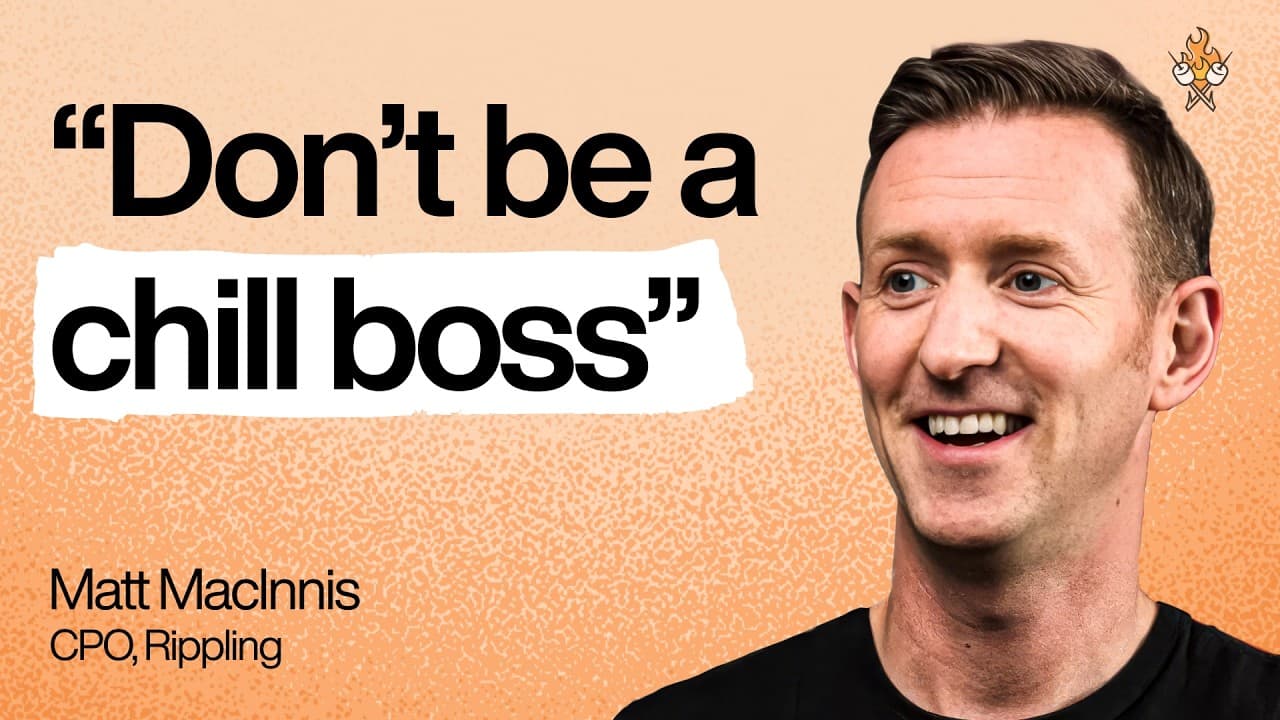
Deliberately understaff projects so teams focus on the highest priorities and avoid politics, waste, and organizational crust. Extraordinary outcomes require sustained effort, candid feedback, rapid escalation, and leaders who preserve intensity, but that effort is easiest to inspire when employees can see a credible path to an extraordinary result.
Transcript
It is really important to me that we feel that we've deliberately understaffed every project at the company. If you overstaff, you get politics. You get people working on things that are further down the priority list than necessary. That is poison. It's wasteful. It slows you down. It creates crust. You've been a longtime COO at Ripling. Recently,... Read More
Key Insights
- Deliberate understaffing keeps attention on the highest priorities. MacInnis argues that overstaffing creates politics, encourages people to pursue less important work, wastes resources, slows execution, and produces organizational crust that becomes increasingly difficult to remove.
- Extraordinary effort is necessary but insufficient for extraordinary outcomes. A team cannot guarantee a 99th-percentile result through hard work alone, but MacInnis believes it cannot reach such a result without accepting substantial difficulty, discomfort, and exhaustion.
- Exceptional execution is built through thousands of small actions. The decisive moments are often Jira tickets, bug triage, and Friday-night escalations rather than a single grand event, because these routine pressures reveal the difference between good teams and great ones.
- Visible success makes intense effort easier to inspire. Rippling's growth gives leaders evidence that extra work can contribute to an exceptional outcome, whereas contributors may reasonably resist sacrificing weekends when a company's trajectory offers little prospect of a comparable result.
- Competitive organizations cannot collectively relax for long. MacInnis says valuable markets attract hungry competitors that will exploit openings, although maintaining organizational intensity does not mean denying vacations, personal lives, or movement into and out of the company.
- Withholding useful feedback is a selfish choice. Avoiding a candid observation protects the leader's comfort while denying another person information that could help them improve, so direct feedback should be treated as service rather than interpersonal aggression.
- Management layers can dilute founder-level intensity. MacInnis describes the founder CEO as the business's purest source of ambition and warns that every additional concentric layer of management can produce a major drop in energy unless executives actively preserve it.
- Product leadership is an instance of general management. MacInnis argues that a chief product officer and other functional executives rely on similar frameworks because each role requires coordinating people, maintaining standards, and helping a group achieve shared goals.
Install to Summarize YouTube Videos and Get Transcripts
Explore YouTube Video Summarizer or Get YouTube Transcript Extractor
Questions & Answers
Q: Why should leaders deliberately understaff projects?
Leaders should deliberately understaff projects to force clear prioritization and keep people focused on the most important work. According to MacInnis, overstaffing produces politics, encourages employees to work further down the priority list than necessary, wastes resources, slows execution, and creates organizational crust. Deliberate understaffing therefore acts as a constraint that protects speed and focus.
Q: Why do extraordinary results require extraordinary effort?
Extraordinary results require extraordinary effort because 99th-percentile outcomes are inherently difficult and uncomfortable. Hard work alone does not guarantee an exceptional result, but MacInnis considers it a necessary condition. The effort appears in recurring operational moments, such as resolving Jira tickets, triaging new bugs, and responding to Friday-night escalations when people are already tired.
Q: How can leaders motivate teams to sustain intense effort?
Leaders can motivate sustained effort by connecting demanding work to a credible opportunity for an extraordinary outcome. MacInnis says Rippling's strong growth gives him evidence that employees' additional effort can contribute to an exceptional result. When a business lacks that visible opportunity, contributors may reasonably doubt whether giving up more personal time will produce a meaningful return.
Q: Does relentless execution mean employees cannot take vacations?
Relentless execution does not mean employees must abandon vacations or their personal lives. MacInnis distinguishes between the organization and each individual: people are human beings who may take time off, live their lives, or enter and leave the team. The collective organization, however, must remain alert because competitors will exploit openings in a valuable market.
Q: Why is withholding feedback considered selfish?
Withholding feedback is selfish when a leader has an observation that could help someone improve but stays silent to avoid discomfort. The silence optimizes for the leader's immediate emotional comfort rather than the other person's development or the company's outcome. MacInnis therefore frames candid feedback as a responsibility, even when delivering it creates an uncomfortable conversation.
Q: How do management layers weaken organizational intensity?
Management layers can weaken organizational intensity because the founder CEO is often the company's strongest source of ambition and energy. MacInnis warns that each concentric circle beyond the founder can create a major decline in that intensity. An executive's job is to resist this dilution by preserving urgency and aligning teams with company outcomes rather than local comfort.
Q: What separates great teams from merely good teams?
Great teams distinguish themselves through their response to thousands of ordinary but demanding moments. MacInnis points to Friday-night escalations, unexpected engineering bugs, and repetitive ticket work as the places where the separation occurs. Exceptional performance is therefore less about one dramatic achievement and more about consistently applying energy and judgment when the work becomes inconvenient or exhausting.
Q: How is a chief product officer similar to other executives?
A chief product officer is similar to other executives because product leadership is an application of general management rather than an entirely separate discipline. MacInnis says chief officers must apply comparable frameworks and concepts to help people achieve goals together. The functional subject changes, but coordinating teams, maintaining intensity, setting priorities, and producing shared outcomes remain central responsibilities.
Summary & Key Takeaways
-
Matt MacInnis argues that 99th-percentile outcomes require uncomfortable and exhausting effort. Exceptional performance emerges through thousands of ordinary moments, including triaging bugs and handling late escalations. Leaders can demand that intensity more credibly when company growth demonstrates that employees' additional effort has a realistic chance of producing an extraordinary result.
-
Projects should be deliberately understaffed because excess capacity encourages politics and lower-priority work. MacInnis believes organizations must remain relentless in competitive markets while still allowing individuals to take vacations and live their lives. The collective team must stay alert even though leaders should not grind individual employees down.
-
Leadership requires preserving the founder CEO's ambition as it passes through management layers, confronting organizational entropy, and giving useful feedback despite personal discomfort. MacInnis treats product leadership as an application of general management: aligning people around shared goals through the same fundamental frameworks used by other functional executives.
Read in Other Languages (beta)
Share This Summary 📚
Summarize YouTube Videos and Get Video Transcripts with 1-Click
Try YouTube Summary with ChatGPT & Claude or YouTube Transcript Generator
Explore More Summaries from Lenny's Podcast 📚



Summarize YouTube Videos and Get Video Transcripts with 1-Click
Try YouTube Summary with ChatGPT & Claude or YouTube Transcript Generator