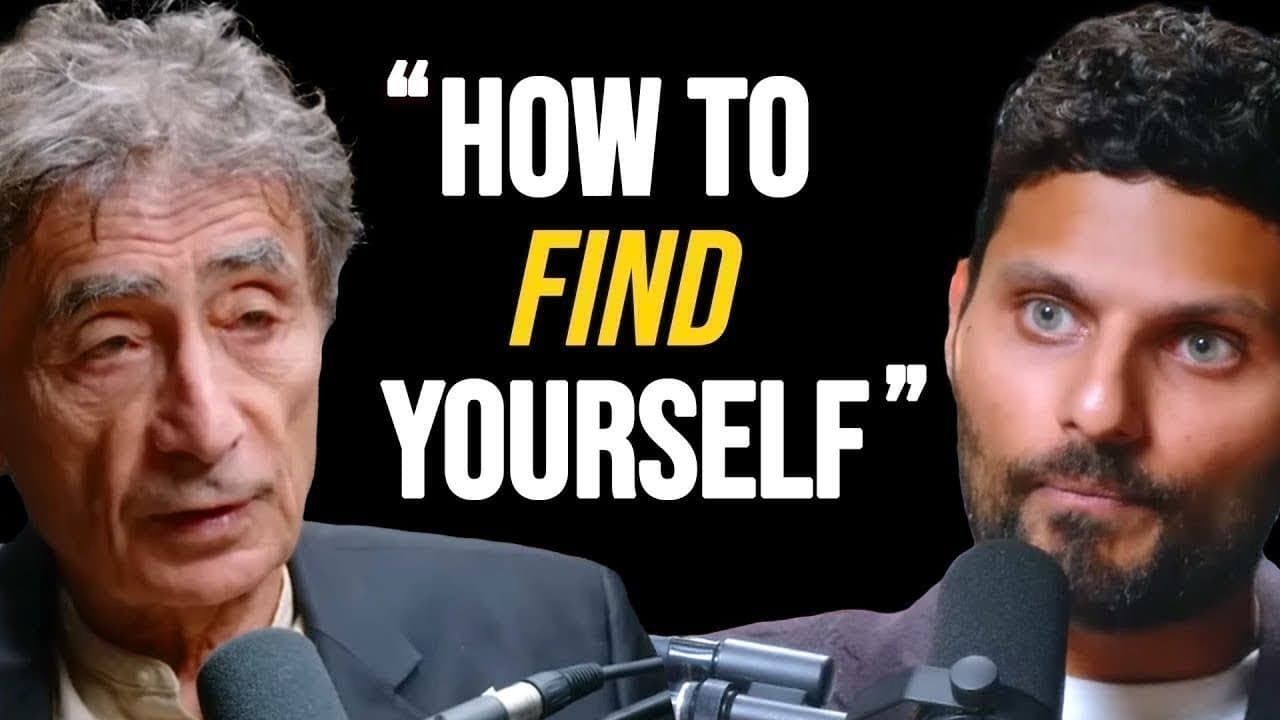
The ROOT CAUSE Of Trauma & Why You FEEL LOST In Life | Dr. Gabor Maté & Jay Shetty
TL;DR
Trauma manifests as psychic wounds that disrupt our emotional and physical well-being, and its healing requires embracing vulnerability. As Dr. Gabor Maté explains, acknowledging and addressing these wounds is crucial for personal growth and recovery from the societal pressures that contribute to feelings of loss and disconnection.
Transcript
uh tree doesn't grow where it's hard and thick does it it goes where it's soft and green and vulnerable the vulnerability is absolutely essential for growth and for vulnerability you gotta let go of those defenses such as the best-selling author and host the number one Health and Wellness podcast on purpose with Jay Shetty hey everyone welcome back... Read More
Key Insights
- 🌗 Trauma is not just about difficult experiences; it is the lasting impact and wound sustained as a result of those experiences.
- ☄️ Healing is the process of coming together, achieving wholeness, and reintegrating our fragmented selves.
- 🧑⚕️ Time alone does not heal wounds; active healing work is necessary to address and heal trauma.
- 🔤 Vulnerability is essential for personal growth and development, as it allows us to let go of defenses and embrace new experiences.
- 🐦⬛ Loneliness can be a result of societal values that prioritize individualism, leading to a lack of connection and fulfillment.
- ⛔ Identifying with certain roles or beliefs can limit growth and understanding of oneself.
- ⤵️ Human nature is not fixed; it is based on human needs and potential, which can be realized with the right conditions.
- ▶️ Genuine play and connection can help combat loneliness and foster healthier relationships.
- 🏭 Perception and identification with external factors can contribute to feelings of loneliness and disconnection.
Install to Summarize YouTube Videos and Get Transcripts
Explore YouTube Video Summarizer or Get YouTube Transcript Extractor
Questions & Answers
Q: How would you define trauma?
Trauma is a psychic wound that leaves a lasting imprint on our nervous system, body, and psyche. It disrupts our growth, development, and overall well-being.
Q: What is the difference between trauma and difficult experiences?
Difficult experiences are not necessarily traumatic, as trauma refers to the wounds sustained as a result of those experiences. Trauma is not what happened to you, but rather the lasting impact and scar it leaves.
Q: How can healing be defined?
Healing is a process of coming together and reintegrating our fragmented self. It involves reconnecting with our true selves, emotions, and bodies, thereby achieving wholeness and well-being.
Q: How does time affect unhealed wounds?
Time alone does not heal wounds. Unhealed wounds may lie dormant but can be triggered and resurface when something touches them. It requires active healing work to address and heal these wounds.
Q: How can vulnerability be developed and embraced?
Vulnerability is necessary for growth, and it involves letting go of defenses, such as the need to be right or constantly protect oneself. It requires embracing the idea that vulnerability is essential for personal and emotional development.
Key Insights:
- Trauma is not just about difficult experiences; it is the lasting impact and wound sustained as a result of those experiences.
- Healing is the process of coming together, achieving wholeness, and reintegrating our fragmented selves.
- Time alone does not heal wounds; active healing work is necessary to address and heal trauma.
- Vulnerability is essential for personal growth and development, as it allows us to let go of defenses and embrace new experiences.
- Loneliness can be a result of societal values that prioritize individualism, leading to a lack of connection and fulfillment.
- Identifying with certain roles or beliefs can limit growth and understanding of oneself.
- Human nature is not fixed; it is based on human needs and potential, which can be realized with the right conditions.
- Genuine play and connection can help combat loneliness and foster healthier relationships.
- Perception and identification with external factors can contribute to feelings of loneliness and disconnection.
- Rwandan society's healing journey after the genocide was facilitated by leadership that encouraged letting go of divisive identification and embracing a sense of unity.
Summary
In this video, Dr. Gabor Mate discusses the topics of trauma, healing, and the impact of childhood experiences on development. He explains the nature of trauma, the importance of vulnerability for growth, and the connection between trauma and wounds. Dr. Mate also delves into the concept of healing and the need for wholeness. He explores the challenges faced by children in our society and the impact of unmet needs on their development. Additionally, he addresses the issue of mollycoddling and the importance of allowing children to experience pain in order to grow. Dr. Mate also emphasizes the significance of present moment choices and the potential negative effects of over-identifying with past experiences.
Questions & Answers
Q: How would you describe trauma and why is it so misunderstood?
Trauma is a psychic wound that leaves an imprint in our nervous system, body, and psyche. It is a result of difficult experiences that can hinder our emotional growth and development. However, trauma is often misunderstood because people use the term loosely to refer to non-traumatic experiences. On the other hand, the healing profession fails to recognize trauma in many conditions of mind and body.
Q: How does time relate to unhealed wounds?
Time by itself does not heal wounds. Unhealed wounds may lie dormant for a while, but they can resurface with full painful impact when triggered. Time may make wounds less available to immediate memory, but they require active healing work to be resolved.
Q: What is healing and how is it related to wholeness?
Healing is the process of reconnecting with our true selves and becoming whole. It involves coming together and integrating the fragmented parts of ourselves. Trauma disconnects us from our true selves, emotions, and bodies. Healing, therefore, involves addressing these disconnections and restoring integrity.
Q: How does childhood experiences impact development?
Children can be wounded not just by traumatic experiences but also by unmet needs. Children have evolutionary determined needs, including unconditional love and acceptance by multiple adult caregivers, freedom to experience all emotions, and space for spontaneous play. Failure to meet these needs can distort child development and have long-term implications for health and well-being.
Q: How would children raised in a natural way adapt to a society built on results and performance?
Children raised in a more natural and nurturing environment would not automatically buy into the values of a performance-driven society. They would struggle with societal pressures but would hold on to their own sense of purpose and authenticity. By not identifying solely with external values of success, they would navigate the world with greater emotional grounding and health.
Q: How do we support children through pain and loss?
Pain and loss are inevitable in life, and children will naturally experience them. The key is to validate their emotions and support them through the process. Instead of shaming or dismissing their pain, we should acknowledge and empathize with their feelings. By creating a safe space for them to experience and navigate grief, we help them develop resilience and emotional growth.
Q: What is the difference between analyzing and overanalyzing past experiences?
The focus should not be on delving into the past or dwelling on it but on dealing with the present impact of past wounds. Overanalyzing or overthinking past experiences might not be helpful. Instead, the focus should be on understanding how the past shows up in the present and addressing the emotions and reactions that arise now.
Q: Is there a healthy identification with certain aspects of life?
Identification in itself limits us and prevents true authenticity. While it is natural to have a sense of belonging and connection, healthy identification should not override our ability to have an independent perspective and sense of self. Attachment to identities or roles can lead to suffering, as we become defined and limited by those identifications.
Q: How and when should children and young adults be exposed to pain to develop vulnerability?
There is no need to deliberately expose children to pain, as life will naturally bring pain and challenges. The key is to support children in experiencing pain and moving through it, helping them learn that they can endure difficult emotions without falling apart. The focus should be on guiding them through the present emotions rather than dwelling on past experiences.
Q: How can we integrate the lessons from past selves and identities without over-identification?
We need to recognize that our past selves and identities do not define us. While we can learn from our past and grow through different experiences, over-identification can restrict our growth and prevent us from being authentic in the present. The focus should be on the present moment choices that can transform everything.
Takeaways
Dr. Gabor Mate reminds us of the importance of vulnerability for growth and emphasizes the need to let go of defenses that hinder our emotional development. He highlights the impact of childhood experiences on adult well-being and mental health. Dr. Mate encourages us to support children in their emotional journeys through validation and empathy. He also cautions against over-identification or attachment to past roles or identities, highlighting the importance of present moment choices and authentic living. Ultimately, healing and growth are not about dwelling on the past but about addressing the wounds that show up in the present.
Summary & Key Takeaways
-
Dr. Gabor Mate explores the concept of trauma and its impact on our mental, physical, and emotional well-being.
-
He emphasizes the significance of vulnerability and the need to let go of defenses to experience growth and healing.
-
Dr. Mate highlights the misunderstood nature of trauma and the importance of addressing it for overall well-being.
Read in Other Languages (beta)
Share This Summary 📚
Summarize YouTube Videos and Get Video Transcripts with 1-Click
Try YouTube Summary with ChatGPT & Claude or YouTube Transcript Generator
Explore More Summaries from Health & Wellness 📚



Summarize YouTube Videos and Get Video Transcripts with 1-Click
Try YouTube Summary with ChatGPT & Claude or YouTube Transcript Generator