10 Mind-blowing Interstellar Propulsion Systems
TL;DR
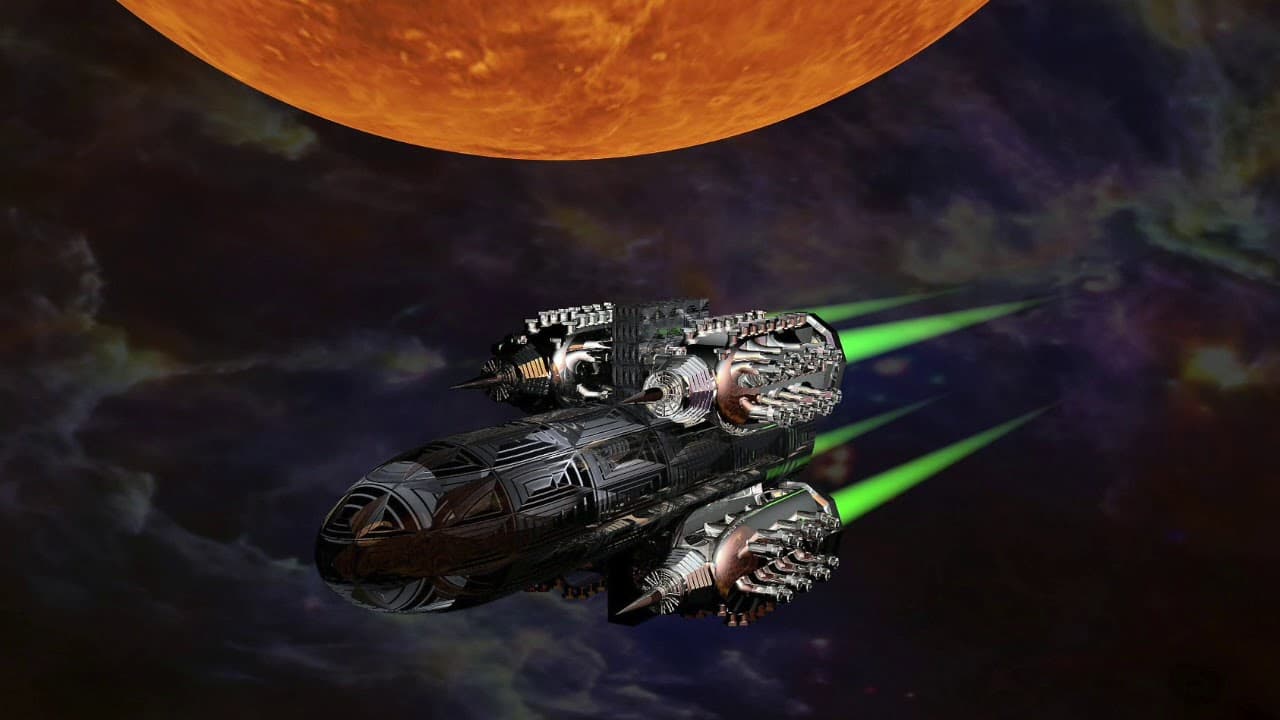
The 10 proposed interstellar propulsion systems range from relatively achievable light sails and nuclear pulse propulsion to speculative wormholes, warp drives, and black hole engines. Breakthrough Starshot aims to send light-sail microprobes to Alpha Centauri at up to 20 percent of light speed, while a Starseed could make the one-way journey in roughly 13.5 years. Read on to compare how the leading concepts work and what prevents their development.
Transcript
If we’re ever going to explore and eventually colonize the galaxy, we’re going to need functioning propulsion systems to do it. This goes for the nearest star, or the other side of the Milky Way. So here are 10 hypothetical interstellar propulsion systems we might some day use to travel interstellar space. Number 10. Light Sails Light sails at thei... Read More
Key Insights
- 🙂 Light sails and nuclear pulse propulsion are among the closest methods to achieving interstellar travel with current technology.
- 🙈 Starseeds offer the advantage of researchers seeing results within their lifetimes, but nanotechnology is still in its early stages.
- 🖤 Dyson's slingshot and Halo drives propose utilizing binary systems or black holes for propulsion, respectively.
- 👾 Nuclear fusion drives could provide a significant power source for space exploration.
- ❓ Traversable wormholes remain hypothetical, but their feasibility is uncertain.
- 🙂 The Alcubierre star drive offers the possibility of faster-than-light travel but faces challenges with energy requirements and negative matter production.
Install to Summarize YouTube Videos and Get Transcripts
Explore YouTube Video Summarizer or Get YouTube Transcript Extractor
Questions & Answers
Q: What are the 10 hypothetical interstellar propulsion systems?
The list covers light sails, nuclear pulse propulsion, Starseeds, slow travel with Dyson’s slingshot, nuclear fusion drives, the antimatter Valkyrie, the Alcubierre star drive, black hole starships, traversable wormholes, and the Halo drive. Some use technologies close to current capabilities, while others depend on hypothetical phenomena or capabilities that do not yet exist.
Q: How would light sails enable interstellar travel?
Light sails use pressure from lasers stationed on Earth or in space rather than wind. Breakthrough Starshot proposes sending a swarm of light-sail microprobes to Alpha Centauri at up to 20 percent of light speed, reaching it in about two decades, although scaling the system for crewed travel would be difficult.
Q: How does nuclear pulse propulsion work, and what has hindered it?
A nuclear pulse spacecraft would periodically release and detonate nuclear bombs behind a rear blast shield, pushing the craft forward. Nuclear test bans and public opposition sidelined development, while launching radioactive materials from Earth would also pose risks.
Q: What is a Starseed, and how quickly could it reach Alpha Centauri?
A Starseed is an exploratory nanomachine electrostatically accelerated through a 1,000-kilometer hollow tube lined with electrodes. At up to one-third of light speed, it could make a one-way trip to Alpha Centauri in roughly 13.5 years, but tube stability, undeveloped materials, and immature nanotechnology remain obstacles.
Q: How would Dyson’s slingshot accelerate a spacecraft?
A spacecraft would pass near a rapidly moving binary system, such as closely orbiting white dwarfs or binary neutron stars. The encounter could transfer some of the system’s energy to the spacecraft and send it onto a new trajectory at much higher, relativistic speeds.
Q: Could nuclear fusion drives power interstellar spacecraft?
Fusion could provide energy generation in space on an unprecedented scale if compact reactors become practical. The transcript highlights Lockheed Martin Skunk Works’ Compact or High Beta fusion reactor as a project that might be small enough to launch, while noting that large reactors such as ITER could remain impractical for space for decades.
Q: How would the Alcubierre star drive work, and what limits it?
The Alcubierre concept would create a region of spacetime that moves faster than light, potentially enabling faster-than-light travel while shielding travelers from relativistic effects. Its major barriers are enormous energy requirements and the need to produce negative matter, which is not currently possible.
Q: How could black holes be used for interstellar propulsion?
Black hole starships would attempt to use a black hole’s energy or Hawking radiation for propulsion, though the feasibility remains debated. The Halo drive instead proposes using lasers and binary black holes to propel spacecraft, potentially forming a travel network within the Milky Way.
Summary & Key Takeaways
-
Light sails are sails that function on light pressure, and programs like Breakthrough Starshot aim to send probes to Alpha Centauri using this technology.
-
Nuclear pulse propulsion involves detonating nuclear bombs to propel spacecraft, although public opinion on nuclear projects has hindered development.
-
Starseeds are exploratory nanomachines launched at high speed using a hollow tube lined with electrodes, which would allow researchers to see results within their lifetimes.
-
Dyson's slingshot involves using certain binary systems to gain momentum and travel to desired destinations.
-
Nuclear fusion drives, if successfully developed, could provide a significant power source for space travel.
-
The antimatter Valkyrie would use antimatter to reach relativistic speeds, but it is hindered by the current lack of antimatter production capability.
-
The Alcubierre star drive, if possible, would allow for faster-than-light travel and shield from relativistic effects.
-
Black hole starships would utilize black holes' energy or hawking radiation to propel the ship, but this method is still being debated.
-
Traversable wormholes are hypothetical tunnels that could lead to other parts of the universe or different universes, but their feasibility is uncertain.
-
The Halo drive proposes using binary black holes to propel a spacecraft using lasers, which could create a network for space travel within the Milky Way.
Read in Other Languages (beta)
Share This Summary 📚
Summarize YouTube Videos and Get Video Transcripts with 1-Click
Try YouTube Summary with ChatGPT & Claude or YouTube Transcript Generator
Explore More Summaries from John Michael Godier 📚
Summarize YouTube Videos and Get Video Transcripts with 1-Click
Try YouTube Summary with ChatGPT & Claude or YouTube Transcript Generator