How to Transform Confusion into Learning Advantage
TL;DR
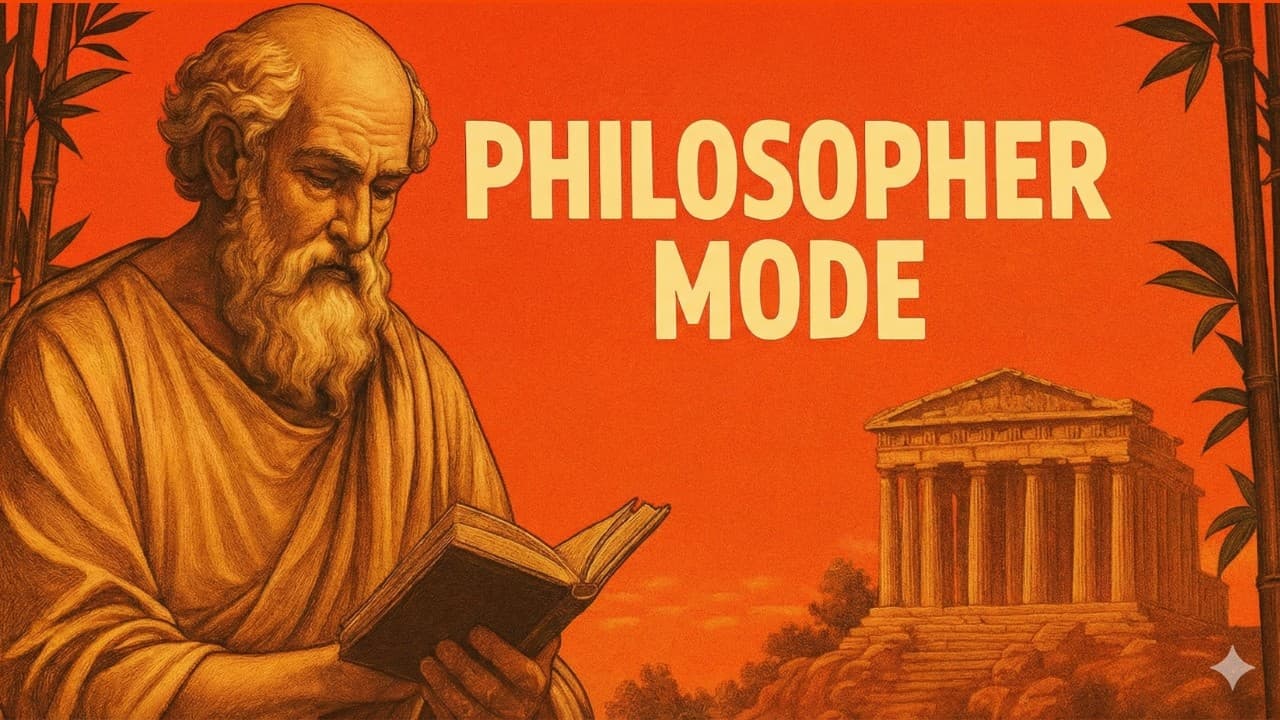
Confusion is not the enemy of learning; it's a catalyst for deeper understanding. Greek philosophers like Plato and Aristotle identified 'thaumazein' or philosophical wonder as the starting point for genuine inquiry. By embracing confusion and curiosity, students can shift from memorizing to truly understanding concepts, leading to better retention and academic success.
Transcript
There's a reason why you can't focus and the Greek philosophers discovered it 2,400 years ago. And no, it's not your phone's fault. Have you ever sat down to study, opened a book, read the same sentence three times in a row, and understood nothing? Your brain was there, but you weren't? While everyone tells you to turn off notifications, eliminate ... Read More
Key Insights
- Confusion is a natural and essential part of the learning process.
- Thaumazein, or philosophical wonder, is the beginning of genuine inquiry.
- Memorization is often mistaken for understanding, but they are not the same.
- Productive confusion leads to deeper neural connections and better retention.
- Curiosity-driven learning naturally enhances focus and engagement.
- Educational systems often prioritize memorization over true understanding.
- Real learning involves dwelling on questions until answers emerge naturally.
- Transforming confusion into curiosity can fundamentally change study habits.
Install to Summarize YouTube Videos and Get Transcripts
Explore YouTube Video Summarizer or Get YouTube Transcript Extractor
Questions & Answers
Q: How can confusion be beneficial in learning?
Confusion can be beneficial in learning as it signals the beginning of genuine inquiry. When learners embrace confusion, they engage in a deeper cognitive process that leads to true understanding rather than mere memorization. This approach activates the brain more intensely, fostering the development of new neural pathways and enhancing long-term retention.
Q: What is thaumazein and why is it important?
Thaumazein, or philosophical wonder, is the sense of amazement and curiosity that initiates the quest for knowledge. It is important because it drives individuals to explore and understand complex concepts deeply. By fostering this sense of wonder, learners can transform confusion from a hindrance into a powerful motivator for discovery and comprehension.
Q: Why is memorization not equivalent to understanding?
Memorization is not equivalent to understanding because it often involves rote learning without grasping underlying principles. While memorization may help in recalling information temporarily, it doesn't equip learners to apply knowledge to new or varied situations. Understanding, on the other hand, involves connecting concepts and applying them flexibly, leading to more robust and adaptable knowledge.
Q: How does curiosity enhance focus in learning?
Curiosity enhances focus in learning by naturally drawing attention to the subject matter. When learners are genuinely curious, they become intrinsically motivated to explore and understand, which leads to sustained engagement without the need for forced concentration. This intrinsic interest makes the learning process more enjoyable and effective.
Q: What role does confusion play in the learning process?
Confusion plays a crucial role in the learning process as it marks the beginning of inquiry and exploration. It encourages learners to question and investigate, leading to a deeper understanding of the material. By tolerating and embracing confusion, students can develop critical thinking skills and the ability to solve complex problems more effectively.
Q: How can students transform confusion into an advantage?
Students can transform confusion into an advantage by viewing it as a catalyst for exploration rather than a barrier. By asking 'why' and delving deeper into concepts without rushing to find answers, they can foster a deeper understanding. This approach encourages active engagement and curiosity, leading to more meaningful and lasting learning experiences.
Q: What did Greek philosophers understand about learning?
Greek philosophers like Plato and Aristotle understood that confusion and wonder are essential to the learning process. They recognized that genuine inquiry begins with curiosity and the willingness to explore the unknown. This philosophical approach suggests that true understanding arises not from memorization, but from engaging with and questioning the material deeply.
Q: Why is focus considered a side effect of curiosity?
Focus is considered a side effect of curiosity because when learners are truly interested in a subject, they naturally concentrate on it without effort. Curiosity drives engagement and exploration, making the learning process enjoyable and immersive. This intrinsic motivation eliminates the need for external discipline to maintain attention, as curiosity naturally sustains focus.
Summary & Key Takeaways
-
Confusion is integral to learning, as Greek philosophers recognized 2,400 years ago. Embracing 'thaumazein' or philosophical wonder, learners can transform confusion from an obstacle into a powerful tool for understanding. This shift from memorization to curiosity-driven inquiry leads to deeper comprehension and lasting knowledge.
-
Henry's story illustrates how embracing confusion and curiosity can change one's approach to studying. By questioning 'why' instead of rushing to answers, Henry moved from memorizing to truly understanding, improving both his academic performance and his enjoyment of learning.
-
Modern education often overlooks the value of confusion in learning. By adopting the mindset of ancient philosophers, students can foster a deeper connection with the material, leading to genuine understanding and long-term academic success. Curiosity, not focus, is the key to effective learning.
Read in Other Languages (beta)
Share This Summary 📚
Summarize YouTube Videos and Get Video Transcripts with 1-Click
Try YouTube Summary with ChatGPT & Claude or YouTube Transcript Generator
Explore More Summaries from Presence & Path 📚





Summarize YouTube Videos and Get Video Transcripts with 1-Click
Try YouTube Summary with ChatGPT & Claude or YouTube Transcript Generator