How to Stop Overthinking and Take Action
TL;DR
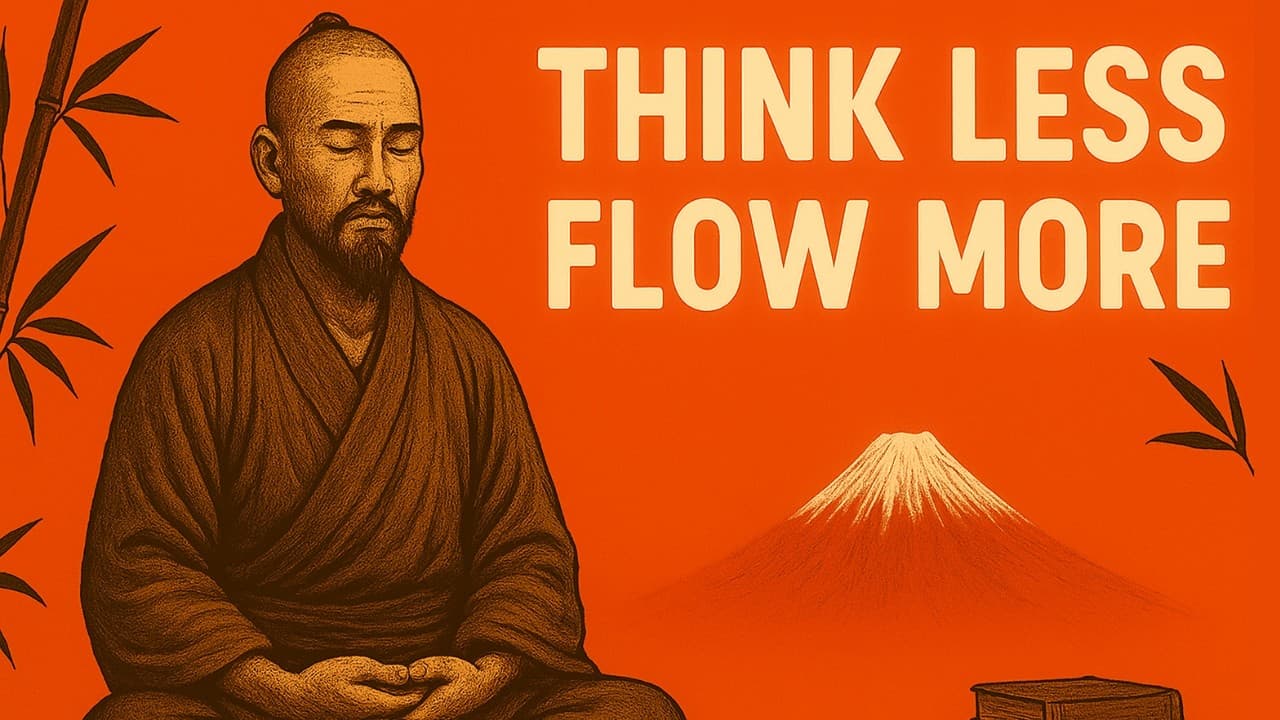
Act before the search for certainty turns useful reflection into paralysis. Ku no Sekai is presented as a practical state of removing excessive thought, fear, and preconceptions from the moment of action, allowing competence and instinct to operate. Thinking cannot guarantee the future or eliminate fear, but courageous action can prevent opportunities from disappearing.
Transcript
There's a Japanese philosophy that samurai used before going into combat. And the lack of this philosophy applied to your life might be exactly what's preventing you from acting on what you most want to achieve. Nowadays, we live in the information age, the era where you have access to everything. Courses, mentorship, strategies, data, analytics. W... Read More
Key Insights
- The modern obstacle is often a lack of action rather than a lack of information. Courses, mentorship, strategies, data, and analytics make knowledge widely available, yet abundant options can create confusion about which path to follow and whose advice to trust.
- Overthinking is not necessarily evidence of laziness, weak motivation, or insufficient ambition. It can arise when decisions interact with fear, insecurity, and expectations, creating a growing burden of analysis, comparison, and imagined consequences that prevents a person from moving forward.
- Paralysis by analysis occurs when planning how to act consumes the energy and opportunity required for action itself. A person may research a business for months, plan a career change for years, or analyze a personal project until the original interest disappears.
- Ku no Sekai is presented as a practical world of emptiness, free from excessive mental interference, paralyzing fear, and fixed preconceptions. Its purpose is not to eliminate purpose or knowledge, but to let a person respond fluidly when action is required.
- Miyamoto Musashi's sword-duel example shows why trained action cannot always wait for conscious calculation. In a rapidly unfolding confrontation, stopping to analyze movements or calculate an ideal angle can be fatal, so instinct and practiced ability must operate immediately.
- The search for certainty can disguise itself as responsible preparation. Emily believes that more spreadsheets, research, and scenario analysis will control future risks, but each question creates further doubts because questions about an unrealized future cannot provide complete guarantees.
- Competence can remain hidden from the person who possesses it. Emily consistently solves team problems, unblocks projects, understands clients, and demonstrates business vision, yet she applies those abilities to other people's goals while doubting her capacity to pursue her own.
- Courage is action despite fear, not the absence of fear. Ko argues that thinking does not remove fear and that nobody can become completely certain about the future, so meaningful progress requires acting with incomplete knowledge and allowing experience to provide the next lesson.
- Related book: The Book of Five Rings
- Export your Kindle highlights to Glasp: How to Download Highlights and Notes from Kindle
Install to Summarize YouTube Videos and Get Transcripts
Explore YouTube Video Summarizer or Get YouTube Transcript Extractor
Questions & Answers
Q: What is Ku no Sekai and how does it reduce overthinking?
Ku no Sekai is described as the world of emptiness, a mental state in which action is not obstructed by excessive thinking, paralyzing fear, or rigid preconceptions. It does not mean mystically erasing every thought or abandoning purpose. Instead, the mind stops interfering long enough for competence, training, and instinct to guide an appropriate response in the present moment.
Q: Why does having more information sometimes prevent action?
More information creates additional strategies, comparisons, predictions, and possible paths to evaluate. A person may become unsure about whom to trust or which option to choose, then continue researching instead of testing a decision through action. The transcript argues that modern people often possess enough information to begin, but remain stuck because analysis keeps generating hesitation, fear, and further questions.
Q: How does overthinking create paralysis by analysis?
Overthinking creates paralysis when mental effort becomes concentrated on eliminating every uncertainty before beginning. Each decision requires analysis, comparison, and prediction, while fear, insecurity, and expectations add further imagined risks. The person becomes occupied with deciding how to act but never performs the action itself. Opportunities can then disappear, circumstances can change, and the original enthusiasm for a project can fade.
Q: Why is waiting for certainty different from waiting to be ready?
Waiting to be ready suggests acquiring enough ability or preparation to take a reasonable next step. Waiting for certainty demands guarantees about events that have not happened, such as whether a partnership will succeed or whether a career change will be safe. Ko tells Emily that she will never reach this standard because the future cannot be controlled through thought, regardless of how much research she completes.
Q: What does Miyamoto Musashi's sword-duel example teach about action?
The sword-duel example teaches that some moments demand an immediate response rather than extended conscious calculation. A fighter cannot pause to analyze every movement or calculate an ideal angle without creating danger. The body and trained instinct must respond while the mind avoids unnecessary interference. The video applies this principle metaphorically to opportunities that can disappear while someone continues thinking instead of acting.
Q: How does Emily Carter's story illustrate the cost of overthinking?
Emily is portrayed as talented, respected, and capable of solving difficult business problems, but she delays decisions affecting her own future. She researches a consulting firm for three months until the opportunity passes, then considers a startup partnership for two months until her friend chooses someone else. Her pattern shows that ability alone does not produce progress when action is repeatedly postponed.
Q: Does overthinking mean a person is lazy or unmotivated?
Overthinking does not necessarily mean someone is lazy, unmotivated, or lacking ambition. Emily works effectively, solves problems, understands clients, and demonstrates leadership potential. Her obstacle is an attempt to remove fear and uncertainty through more thought. That attempt backfires because every imagined risk generates more questions, leaving a capable and ambitious person unable to commit to opportunities involving her own goals.
Q: How can someone act when they are still afraid of failure?
The principle presented is to stop treating the disappearance of fear as a requirement for action. Ko says that thinking does not eliminate fear, while action does, and defines courage as acting despite fear rather than feeling no fear. A person does not need complete knowledge or guarantees. The practical shift is allowing existing competence to guide the next action while accepting uncertainty about the final outcome.
Summary & Key Takeaways
-
The central problem of the information age is not always insufficient knowledge, but insufficient action. Access to courses, strategies, data, and mentorship can produce more comparison and hesitation. When people repeatedly analyze risks and possible outcomes, they may postpone businesses, career changes, or personal projects until interest or opportunity disappears.
-
Ku no Sekai, described as the world of emptiness, means acting without interference from excessive thought rather than mystically eliminating every thought. Miyamoto Musashi's sword-fighting philosophy illustrates the principle: during a duel, prolonged calculation is dangerous, so trained ability and instinct must operate without hesitation or attachment to a guaranteed outcome.
-
Emily Carter's story shows how capable people can become trapped by attempts to secure certainty. She repeatedly researches opportunities until they vanish, then hesitates over Ko's partnership proposal. Ko teaches her that readiness is not the real issue. Emily wants guarantees, but courage requires acting despite fear because certainty does not exist.
Read in Other Languages (beta)
Share This Summary 📚
Summarize YouTube Videos and Get Video Transcripts with 1-Click
Try YouTube Summary with ChatGPT & Claude or YouTube Transcript Generator
Explore More Summaries from Presence & Path 📚
Summarize YouTube Videos and Get Video Transcripts with 1-Click
Try YouTube Summary with ChatGPT & Claude or YouTube Transcript Generator