How to Manage Your Emotions: Solved
TL;DR
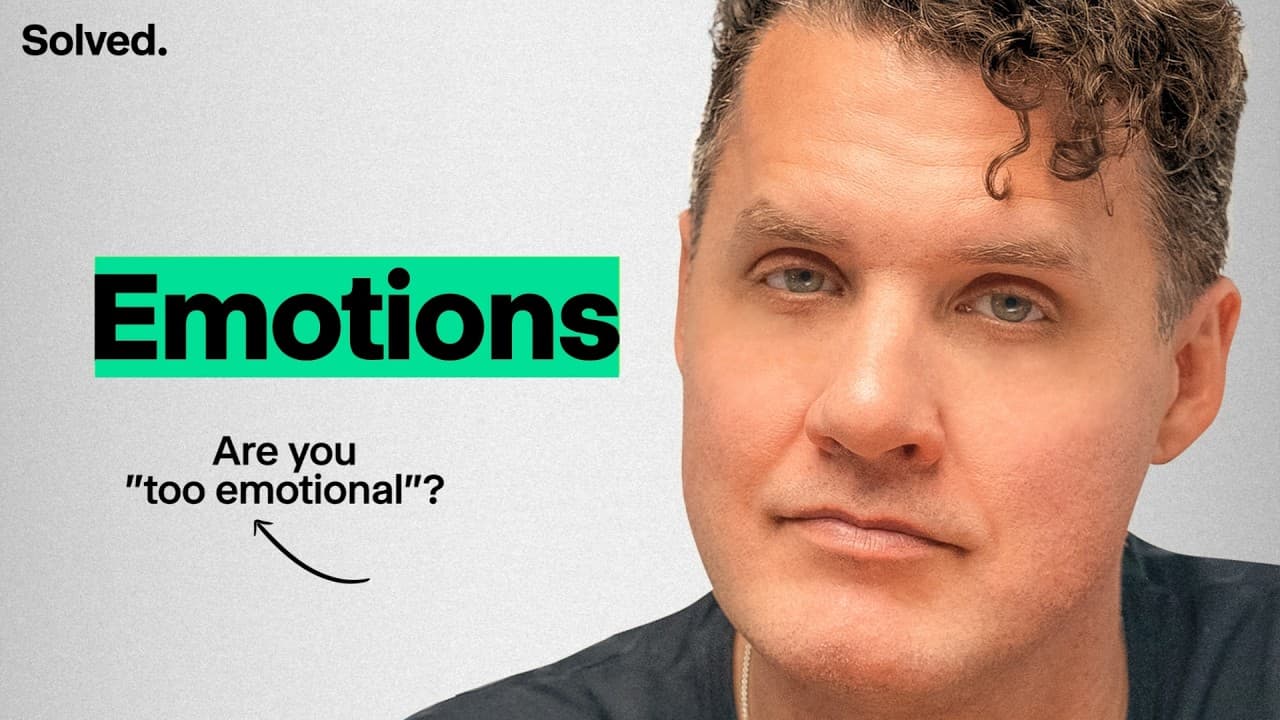
Managing emotions starts with understanding them as coordinated mind-and-body responses involving feelings, physiology, interpretation, and motivation. Emotional patterns vary with physiology, culture, relationships, trauma, genetics, childhood, and past experience, so regulation requires an adaptable toolkit rather than one universal strategy. Read on to distinguish emotions from feelings and moods, understand personal reactions, and explore healthier regulation.
Transcript
welcome back everybody to the Solved Podcast the last podcast that you will ever need now if you're new here my name is Mark Manson i'm three-time number one New York Times bestselling author and with me is Drew Bernie a failed neuroscience PhD a a promising young academic until I came along and ruined his life uh the the premise of the show is... Read More
Key Insights
- Emotions are complex psychological states combining subjective experience, bodily responses, cognitive interpretation, and behavioral expression. These components form a coordinated mind-and-body response that can arise rapidly when a person encounters a significant internal stimulus, external event, or socially meaningful situation.
- Emotions guide behavior, decision-making, and social interaction by functioning as meaningful signals. They do more than create an internal sensation, because the body responds, the mind interprets what is happening, and the resulting state can motivate a person toward a particular action.
- Feelings are internal experiences associated with what is happening within a person. They may include tightness in the chest, warmth through the body, or anxious tingling, but a feeling alone does not necessarily constitute the complete coordinated response identified as an emotion.
- Moods are longer-lasting states that may continue for an hour, part of a day, or an entire day. Unlike a rapid emotional response, a mood does not always have a clearly identifiable internal or external event that triggered its appearance.
- Affect is the broader experience encompassing emotion, feeling, and mood. It describes the general quality or vibe of a person's internal state, offering a wider category than any single emotional episode or particular bodily sensation.
- Emotional responses are shaped by personal experience, physiology, and culture, producing substantial variation between individuals. The same difficult event, such as a breakup, can motivate very different behaviors because people handle, express, and interpret their emotional experiences differently.
- Default negative emotions can differ from one person to another. Under stress or disappointment, some people become angry, while others move toward sadness, guilt, hopelessness, or another familiar state, suggesting that individuals may be especially susceptible to particular emotional patterns.
- Relationships can operate through the co-regulation of emotions, which means interactions with other people may intensify distress or improve emotional states. Understanding this dynamic can clarify why some relationships help people feel better while others leave them feeling emotionally depleted.
- "we're going to understand on a very deep level what emotions are where they come from and why they even exist in the first place" (2:42)
- "relationships as most of us have experienced can make our emotions much worse but they can also make them a lot better" (3:53)
- "there's so many different levels at which you can analyze emotions" (5:20)
- "there's no agreement among scientists among philosophers about what the definition of an emotion is" (5:36)
- "finally we will give you the most effective and useful practices to help you manage your emotions in your everyday life" (3:59)
Install to Summarize YouTube Videos and Get Transcripts
Explore YouTube Video Summarizer or Get YouTube Transcript Extractor
Questions & Answers
Q: What are emotions?
Emotions are coordinated psychological states involving subjective feelings, physiological responses, cognitive interpretations, and motivation for behavior. They can arise rapidly in response to significant internal stimuli, external events, or socially meaningful situations.
Q: Why do people experience emotions?
Emotions act as meaningful signals that guide behavior, decisions, and social interactions. The body responds, the mind interprets what is happening, and the resulting state can motivate a particular action.
Q: What are the four main components of an emotion?
The four components are subjective feelings, physiological responses, cognitive interpretations, and motivated behavior. Together they form a coordinated response involving both the mind and body.
Q: How are emotions different from feelings?
An emotion is a coordinated response involving subjective experience, bodily activity, interpretation, and motivation. A feeling is the internal experience within that process, such as chest tightness, warmth through the body, or anxious tingling, but it does not necessarily constitute the complete emotional response.
Q: What is the difference between an emotion and a mood?
An emotion is generally a rapid response to a significant stimulus, while a mood is a longer-lasting state. A mood may continue for an hour, part of a day, or an entire day without a clearly identifiable trigger.
Q: Why do people react differently to the same emotional event?
Emotional reactions are shaped by physiology, past experiences, culture, trauma, genetics, childhood, and relationships. After the same event, such as a breakup, one person might seek comfort through eating while another might exercise intensely.
Q: Why do some people default to anger while others become sad?
People can be especially susceptible to particular negative emotional patterns. Under stress or disappointment, one person may default to anger, while another may move toward sadness, guilt, or hopelessness.
Q: How do relationships affect emotional regulation?
Human relationships can be understood as people co-regulating one another's emotions. Interactions can make emotional states much worse or much better, connecting healthier emotional management with better relationships.
Summary & Key Takeaways
-
Emotions are complex psychological states involving subjective feelings, physiological responses, cognitive interpretations, and behavioral motivation. They arise rapidly in response to significant internal or external events, helping guide decisions, actions, and social interactions. Scientists and philosophers can analyze them at biological, evolutionary, cognitive, experiential, social, and cultural levels.
-
Emotions differ from feelings, moods, and affect. An emotion is a coordinated response involving the mind and body, while feelings describe internal experiences. A mood lasts longer and may lack an identifiable trigger. Affect is a broader category encompassing the overall emotional, feeling, and mood-based quality of a person's experience.
-
Emotional patterns are personal and can be shaped by physiology, past experiences, culture, trauma, genetics, childhood, and relationships. People may develop different default reactions to stress, such as anger, sadness, guilt, or hopelessness. Effective management therefore requires an adaptable toolkit instead of assuming that one strategy works equally well for everyone.
Read in Other Languages (beta)
Share This Summary 📚
Summarize YouTube Videos and Get Video Transcripts with 1-Click
Try YouTube Summary with ChatGPT & Claude or YouTube Transcript Generator
Explore More Summaries from Mark Manson 📚



Summarize YouTube Videos and Get Video Transcripts with 1-Click
Try YouTube Summary with ChatGPT & Claude or YouTube Transcript Generator