How Much Income Do You Need for a New Car?

TL;DR
A $48,000 new car can cost about $1,214 per month after loan payments, insurance, fuel, and maintenance, requiring roughly $85,000 to $90,000 in annual household income when other debts are considered. Loan approval does not prove affordability, because a stretched vehicle budget can eliminate savings and leave a household unable to absorb repairs, medical bills, or reduced work hours.
Transcript
You're sitting in the dealership parking lot staring at the window sticker on a basic Honda Accord. Not the luxury trim, not the sports package, just the standard model that looks like every other sedan on the highway. The price reads $32,000. You do the mental math on what you make per year, and something doesn't add up. This is supposed to be the... Read More
Key Insights
- The average new car price is about $48,000, compared with a median household income of roughly $75,000. That means a typical household is being asked to spend well over half of its annual gross income on an asset that immediately begins losing value.
- The 20% affordability guideline covers every vehicle expense, including the loan payment, insurance, fuel, and maintenance. For a household earning $75,000 annually, this guideline creates a total vehicle budget of $1,250 per month, not a $1,250 allowance for the payment alone.
- Financing $45,000 at 8% for six years produces a monthly payment of approximately $789. The extended loan term makes the payment appear manageable, but it does not include the necessary costs of insuring, fueling, maintaining, registering, or parking the vehicle.
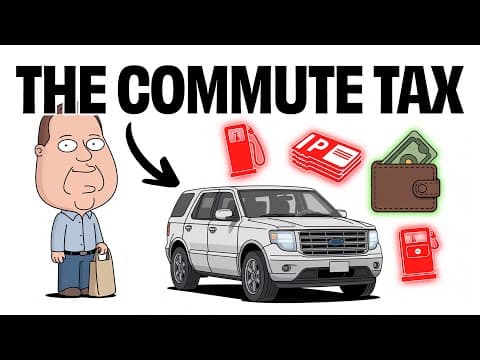
- The estimated ownership cost of an average new car is $1,214 per month. That total combines a $789 payment, $200 for insurance, $125 for fuel, and $100 for maintenance, leaving only $36 beneath the stated $1,250 vehicle budget for a $75,000 household.
- The income needed to support a $1,214 monthly vehicle cost is approximately $71,500 per year under the 20% guideline, assuming no other debt. When credit cards, student loans, and competing obligations are included, the suggested income rises to about $85,000–$90,000.
- Roughly 65% of American households cannot comfortably afford the average new car under the video's standard. Only about 35% make at least $85,000, the lower end of the estimated income range needed when other household debts and obligations are considered.
- Loan approval is not evidence that a vehicle is comfortably affordable. Dealers, finance managers, banks, and insurers can earn money when a buyer completes the transaction, while none of those parties financially benefits when the buyer decides that the purchase creates excessive risk.
- Being car poor means routine setbacks can become new debt because the vehicle budget prevents emergency savings. Tires, braces, reduced work hours, an alternator failure, a collision deductible, or uncovered medication can force a household to borrow when every dollar is already committed.
Install to Summarize YouTube Videos and Get Transcripts
Explore YouTube Video Summarizer or Get YouTube Transcript Extractor
Questions & Answers
Q: How much income is needed to afford an average new car?
The estimated income needed is about $85,000–$90,000 per year when the household also has realistic debts and financial obligations. A $1,214 monthly vehicle cost technically fits the 20% guideline at roughly $71,500 in annual income, but that lower figure assumes no other debt payments. Credit cards, student loans, housing, child care, and other expenses make the higher income range more realistic.
Q: What is the true monthly cost of a $48,000 new car?
The estimated monthly cost is $1,214 before registration, parking, or unexpected repairs. That figure includes a payment of about $789 after financing $45,000 at 8% for six years, plus $200 for required insurance, $125 for fuel, and $100 reserved for maintenance. The calculation shows why evaluating only the advertised loan payment understates the financial commitment.
Q: How does the 20% car affordability rule work?
The guideline limits all vehicle expenses to 20% of gross monthly income. It includes the car payment, insurance, fuel, and maintenance rather than applying only to the loan. At an annual income of $75,000, gross monthly income is $6,250, producing a total vehicle allowance of $1,250. A calculated ownership cost of $1,214 nearly consumes that entire allowance.
Q: Why does loan approval not mean a new car is affordable?
Loan approval shows that a lender is willing to finance the transaction, not that the buyer can comfortably handle every ownership expense while meeting other goals. A household can qualify for a loan yet lack room for emergency savings, repairs, medical costs, or reduced income. The dealership, finance manager, bank, and insurer also earn money from a completed purchase, so their incentives differ from the buyer's long-term financial interests.
Q: Why can a six-year auto loan create financial risk?
A six-year loan can make an expensive car appear affordable by spreading repayment across more monthly installments. In the example, financing $45,000 at 8% produces a payment near $789, but the complete ownership cost reaches $1,214 after insurance, fuel, and maintenance. If the buyer relies on future raises or overtime, any income disruption can make the payment structure difficult to sustain.
Q: Can a family earning $95,000 comfortably own a $47,000 SUV?
The hypothetical Martinez family shows why that purchase may still be unaffordable. After taxes, FICA, state taxes, and a modest 401k contribution, the family takes home about $5,800 monthly. The SUV costs approximately $1,214 per month, and rent, a second car, groceries, student loans, health premiums, child care, and utilities push the household underwater before clothing, school costs, medical co-pays, recreation, or savings.
Q: What does being car poor look like in everyday life?
Being car poor means transportation consumes enough income that normal expenses become sources of stress or debt. The household may check its bank balance before buying groceries, decline a child's activity, delay necessary brake work, or use a credit card for a $600 alternator or $1,000 collision deductible. Because the budget leaves nothing for emergency savings, each setback threatens the household's financial stability.
Q: What costs should buyers include before purchasing a new car?
Buyers should calculate the loan payment, comprehensive and collision insurance, fuel, and routine maintenance as one combined monthly cost. The example assigns $789 to the payment, $200 to insurance, $125 to fuel, and $100 to maintenance. Registration fees, parking, and unexpected repairs must also be considered, even though they are not included in the video's $1,214 monthly estimate.
Summary & Key Takeaways
-
The average new car costs about $48,000, while median household income is roughly $75,000. Financing $45,000 at 8% for six years produces a payment near $789. After adding insurance, fuel, and maintenance, the estimated monthly transportation cost reaches $1,214 before registration, parking, or unexpected repairs.
-
A guideline limiting total vehicle expenses to 20% of gross monthly income suggests that $1,214 requires about $71,500 in annual income when no other debts exist. With credit cards, student loans, and normal household obligations, the estimated income needed to afford the average new car rises to $85,000–$90,000.
-
A hypothetical family earning $95,000 takes home about $5,800 monthly, yet its new SUV, second car, rent, groceries, student loans, health premiums, child care, and utilities push the budget underwater. The example shows how a seemingly affordable vehicle can prevent emergency savings and turn ordinary expenses into additional debt.
Read in Other Languages (beta)
Share This Summary 📚
Summarize YouTube Videos and Get Video Transcripts with 1-Click
Try YouTube Summary with ChatGPT & Claude or YouTube Transcript Generator
Explore More Summaries from Nick Invests 📚





Summarize YouTube Videos and Get Video Transcripts with 1-Click
Try YouTube Summary with ChatGPT & Claude or YouTube Transcript Generator