Why Is Meat Considered Both Good and Bad for the Planet?
TL;DR
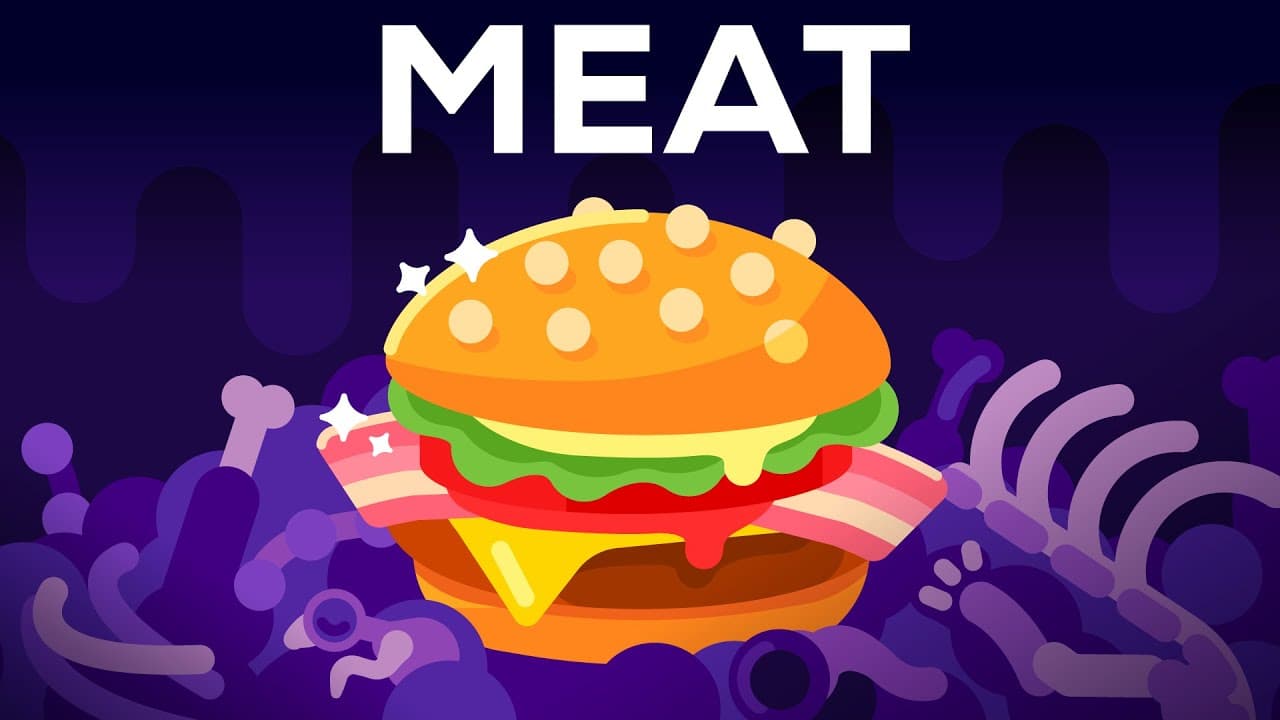
Meat production is highly resource-intensive, using substantial land and water, and contributes significantly to greenhouse gas emissions while often involving inhumane treatment of animals. Despite its environmental impact, meat remains a popular food due to its taste and cultural significance. Reducing consumption and opting for meat from trustworthy sources can help mitigate these issues.
Transcript
Humans love meat. Steak, fried chicken, bacon, pork belly, and sausages are just the best things! Eating meat has become so trivial that many people don't consider something a proper meal if there's no animal involved. Which is pretty amazing, since only a few decades ago meat was a luxury product. Today, you can get a cheeseburger for a dollar. Pa... Read More
Key Insights
- 🇦🇽 Meat production uses a significant amount of resources, including land, water, and food that could otherwise be used to feed humans.
- 😲 The meat industry is a major contributor to greenhouse gas emissions, contributing to climate change.
- 🏭 Factory farming prioritizes efficiency over animal welfare, leading to inhumane conditions for animals.
- 🥩 Buying organic meat may reduce cruelty, but it is still an unsustainable practice.
- 🍗 Opting for chicken and pig meat can be more environmentally friendly than consuming lamb and beef.
- 🎈 Reducing meat consumption, even by just one day per week, can make a positive impact on sustainability.
- 🥩 The future may see the emergence of lab-grown clean meat as a more sustainable alternative.
Install to Summarize YouTube Videos and Get Transcripts
Explore YouTube Video Summarizer or Get YouTube Transcript Extractor
Questions & Answers
Q: How does meat consumption contribute to environmental issues?
Meat production requires large amounts of land, water, and resources. It contributes to deforestation, freshwater depletion, and greenhouse gas emissions.
Q: Why is the meat industry inefficient?
Most of the nutrients from fodder crops fed to animals are used to keep them alive, resulting in only a fraction of those nutrients ending up in the meat we consume. It takes a significant amount of resources to produce a kilogram of steak.
Q: How does the meat industry impact animal welfare?
Factory farms prioritize efficiency over animal welfare. Animals are kept in crowded and often inhumane conditions, subjected to various forms of cruelty such as confinement, separation from offspring, and mutilation.
Q: Is buying organic meat a solution to these issues?
While buying organic meat may reduce cruelty to animals, it requires even more resources than conventional meat production. Organic farming regulations have varying standards, and scandals have revealed producers cheating the system.
Key Insights:
- Meat production uses a significant amount of resources, including land, water, and food that could otherwise be used to feed humans.
- The meat industry is a major contributor to greenhouse gas emissions, contributing to climate change.
- Factory farming prioritizes efficiency over animal welfare, leading to inhumane conditions for animals.
- Buying organic meat may reduce cruelty, but it is still an unsustainable practice.
- Opting for chicken and pig meat can be more environmentally friendly than consuming lamb and beef.
- Reducing meat consumption, even by just one day per week, can make a positive impact on sustainability.
- The future may see the emergence of lab-grown clean meat as a more sustainable alternative.
- Balancing the enjoyment of meat with ethical considerations requires conscious choices and respect for the resources it takes to produce it.
Summary & Key Takeaways
-
Meat production requires a significant amount of farmland and water, contributing to deforestation and freshwater depletion.
-
The majority of the nutrients from fodder crops fed to animals do not end up in the meat we consume.
-
The meat industry is a major contributor to greenhouse gas emissions and involves the inhumane treatment of animals in factory farms.
Read in Other Languages (beta)
Share This Summary 📚
Summarize YouTube Videos and Get Video Transcripts with 1-Click
Try YouTube Summary with ChatGPT & Claude or YouTube Transcript Generator
Explore More Summaries from Kurzgesagt – In a Nutshell 📚

Summarize YouTube Videos and Get Video Transcripts with 1-Click
Try YouTube Summary with ChatGPT & Claude or YouTube Transcript Generator