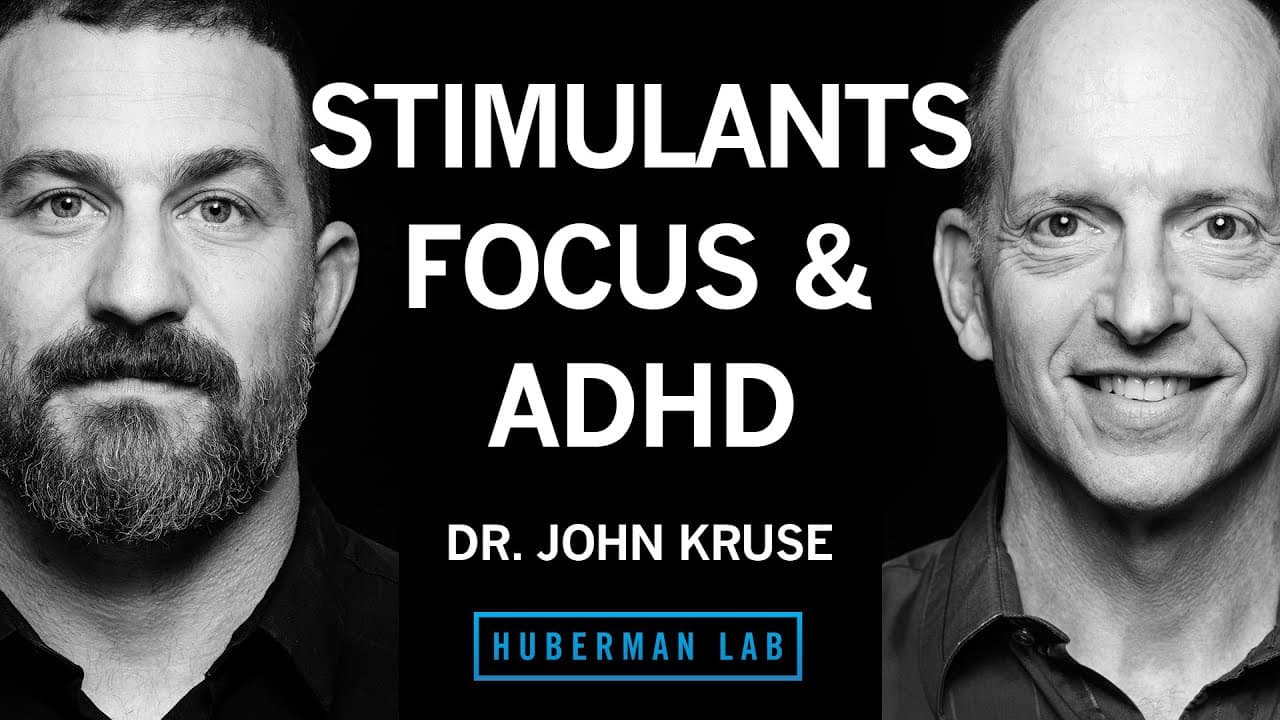
How to Improve Focus with ADHD Tools & Medication
TL;DR
ADHD can be managed using a combination of behavioral tools and medication. Stimulant medications like Adderall and non-stimulant options such as Wellbutrin are discussed, highlighting their benefits and risks. Behavioral strategies include maintaining a consistent sleep schedule, regular exercise, and proper nutrition, which can significantly enhance focus and attention in individuals with ADHD.
Transcript
welcome to the huberman Lab podcast where we discuss science and science-based tools for everyday life I'm Andrew huberman and I'm a professor of neurobiology and Opthalmology at Stanford School of Medicine my guest today is Dr John Cruz Dr John Cruz is an mdphd and practicing psychiatrist who specializes in the treatment of ADHD in both kids and i... Read More
Key Insights
- ADHD is not just an attention deficit but a deficit in controlling attention.
- Stimulant medications are the most effective treatment for ADHD symptoms.
- Regular sleep and a consistent schedule are crucial for managing ADHD.
- Exercise and proper nutrition can improve focus and attention in ADHD.
- ADHD has a strong genetic component but is also influenced by environment.
- Caffeine and nicotine can enhance focus but should be used cautiously.
- Behavioral interventions like cognitive behavioral therapy can be beneficial.
- ADHD increases the risk of addiction, but early stimulant treatment may reduce this risk.
Install to Summarize YouTube Videos and Get Transcripts
Explore YouTube Video Summarizer or Get YouTube Transcript Extractor
Questions & Answers
Q: How does ADHD medication work?
ADHD medications, primarily stimulants like Adderall, work by increasing the levels of dopamine and norepinephrine in the brain, which helps improve attention and focus. Non-stimulant medications, such as Wellbutrin, also affect these neurotransmitters but in different ways. Each medication has its own set of benefits and risks, and the choice of medication often depends on the individual's specific symptoms and health profile.
Q: What role does sleep play in managing ADHD?
Sleep plays a crucial role in managing ADHD as it affects attention, focus, and overall brain function. Maintaining a consistent sleep schedule helps regulate circadian rhythms, which can be disrupted in individuals with ADHD. Proper sleep hygiene, including regular sleep and wake times, avoiding stimulants before bedtime, and creating a restful sleep environment, is essential for improving ADHD symptoms.
Q: Can lifestyle changes help manage ADHD?
Yes, lifestyle changes can significantly help manage ADHD symptoms. Regular exercise, a balanced diet, and maintaining a consistent daily schedule are crucial. Exercise boosts brain function and helps regulate mood, while a balanced diet supports overall health and cognitive function. Structured routines help provide the external structure that individuals with ADHD often need to manage their symptoms effectively.
Q: What are the risks of ADHD stimulant medications?
Stimulant medications for ADHD, such as Adderall, carry risks including potential for addiction, increased heart rate, and blood pressure, and in rare cases, amphetamine-induced psychosis. It's important for individuals to be monitored by a healthcare professional while on these medications to manage any adverse effects and ensure the medication is working effectively for their ADHD symptoms.
Q: How does ADHD affect life expectancy?
ADHD is associated with a reduced life expectancy, primarily due to an increased risk of accidents and impulsivity-related behaviors. Individuals with ADHD are more prone to risky behaviors, which can lead to accidents, and they are also at a higher risk for substance abuse and related health issues. Effective management of ADHD through medication and behavioral strategies can help mitigate these risks.
Q: Is there a genetic component to ADHD?
Yes, ADHD has a strong genetic component, with heritability estimates around 80%. This means that if a parent has ADHD, there is a significant likelihood that their child may also have the condition. However, environmental factors also play a role, and the interaction between genetics and environment can influence the severity and presentation of ADHD symptoms.
Q: Can caffeine help with ADHD?
Caffeine can help improve focus and attention in individuals with ADHD, but its effects can vary. It acts as a mild stimulant, increasing alertness and concentration. However, excessive caffeine intake can lead to increased anxiety and jitteriness, which can exacerbate ADHD symptoms. It's important to monitor caffeine consumption and consider it as part of a broader ADHD management plan.
Q: What are the non-medication strategies for ADHD?
Non-medication strategies for managing ADHD include maintaining a consistent sleep schedule, regular exercise, a balanced diet, and structured routines. Cognitive behavioral therapy can also be effective in helping individuals develop coping strategies and improve organizational skills. These behavioral approaches can complement medication and provide a comprehensive strategy for managing ADHD symptoms.
Summary & Key Takeaways
-
ADHD management involves both medication and behavioral strategies. Stimulants like Adderall are effective but carry risks such as potential psychosis. Non-stimulants like Wellbutrin offer alternatives with different risk profiles. Regular sleep, exercise, and nutrition are essential behavioral tools.
-
ADHD has genetic and environmental components. Social media and modern lifestyles may exacerbate symptoms. ADHD is linked to a shorter lifespan due to accidents and impulsivity, emphasizing the need for effective management strategies.
-
Caffeine and nicotine can aid focus but should be monitored. Fish oil, particularly EPA, shows promise in supporting ADHD management. Cognitive behavioral therapy and structured task lists are recommended behavioral strategies.
Read in Other Languages (beta)
Share This Summary 📚
Summarize YouTube Videos and Get Video Transcripts with 1-Click
Try YouTube Summary with ChatGPT & Claude or YouTube Transcript Generator
Explore More Summaries from Andrew Huberman 📚

Summarize YouTube Videos and Get Video Transcripts with 1-Click
Try YouTube Summary with ChatGPT & Claude or YouTube Transcript Generator