How to Sell a $6,000 AI Workflow to a Business
TL;DR
Close an AI workflow deal by treating discovery as an investigation, letting the client talk, and using the listen, repeat, poke framework to uncover needs and confirm alignment. Qualify the buyer’s authority and expectations, quantify the time or business value the automation could create, and position the initial workflow as the foundation for a longer-term partnership.
Transcript
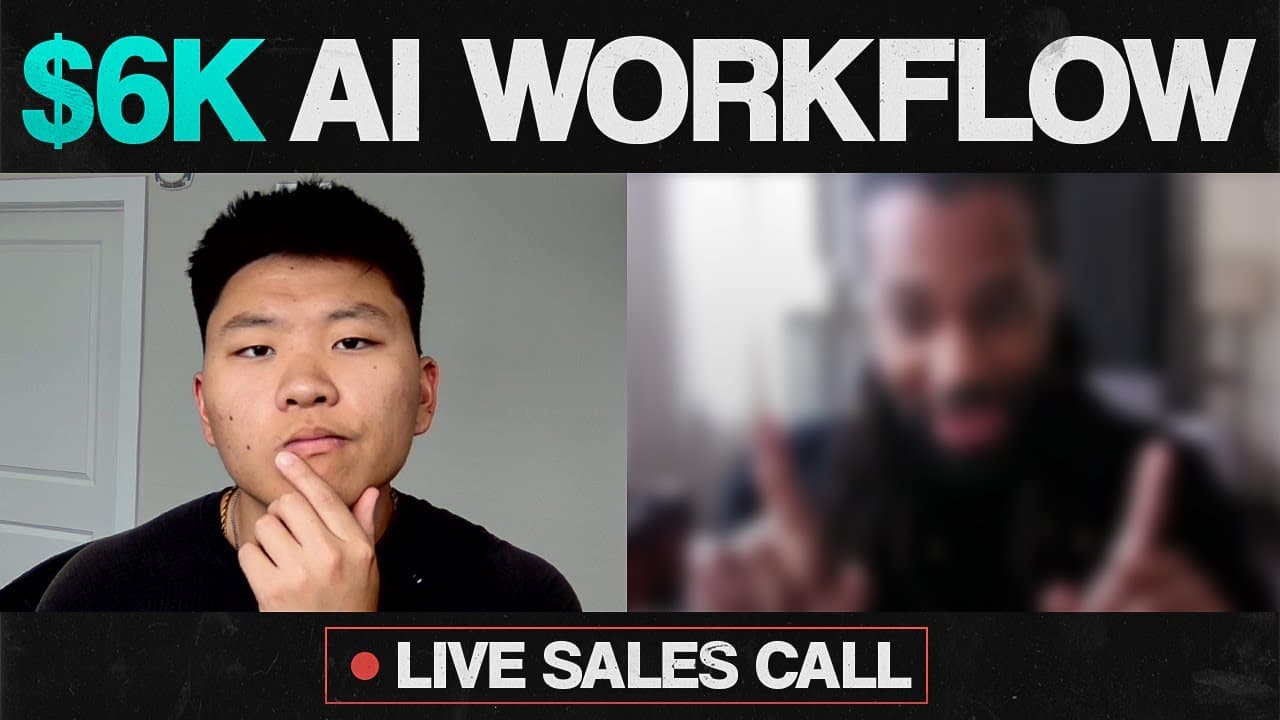
In this video, you're about to watch me sell a $6,000 AI agent. This close took place over three separate calls back in December of 2024. So, it was when I was pretty new to the space, but I still managed to close the call. So, today I'm going to break down these calls and show you guys what I did well, what I could have improved on, and how you ca... Read More
Key Insights
- The listen, repeat, poke framework is a discovery technique that keeps the client talking while maintaining alignment. The seller listens to the client’s explanation, repeats important details to confirm understanding, and then asks a focused question that encourages the client to reveal more about the business or desired automation.
- A discovery call is an opportunity to understand the client, the business, and the intended use of AI automation. Opening the floor with a question about why the prospect booked the call helps establish an agenda while allowing the buyer’s priorities to guide the conversation from the beginning.
- A prospect’s attitude toward AI is an important qualification signal. A buyer with existing AI initiatives, long-term goals, and realistic expectations may be easier to serve than someone who believes AI is magic or someone who still needs to be convinced that automation has value.
- The business value of automation becomes clearer when the seller quantifies repetitive work. Asking how often the prospect performs tasks and how much time is spent in email, Slack, calendars, or other tools helps connect workflow functionality to time savings and practical business outcomes.
- A long-term partnership can be positioned early in the discovery process. The agency described its role as a dedicated team that learns the company’s operations and goals, begins with a personal assistant, and then identifies additional areas where automation could progressively save time and support growth.
- Decision-making authority should be validated before advancing an opportunity. The prospect identified himself as the founder and CEO, confirming that he was positioned to make organizational decisions and dedicate a budget to the project, while his interest in AI further supported his qualification as a potential client.
- Data and context are foundational requirements for a personal AI assistant. The proposed approach involved collecting information from relevant integrations, storing it in a suitable database, enabling the agent to recall that information when prompted, and creating automated processes that keep the underlying information current.
- Technical expertise should support value discovery instead of replacing it. Discussing databases, integrations, and automated pipelines can demonstrate competence, but the seller recognized that he should first have explored the prospect’s pain more deeply and connected requested features to the consequences and value of solving them.
Install to Summarize YouTube Videos and Get Transcripts
Explore YouTube Video Summarizer or Get YouTube Transcript Extractor
Questions & Answers
Q: How do you sell a $6,000 AI workflow to a business?
Sell the workflow through a structured discovery process that uncovers the client’s operations, desired integrations, repetitive tasks, expectations, and broader goals for AI. Let the prospect speak for most of the call, confirm what you heard, and ask follow-up questions that reveal business value. Qualify decision-making authority, demonstrate relevant technical competence, and position the initial workflow as the beginning of a deeper partnership.
Q: What is the listen, repeat, poke sales framework?
The listen, repeat, poke framework is a method for conducting discovery calls without dominating the conversation. First, listen closely to the prospect’s explanation. Next, repeat the important details to verify that both parties understand the situation in the same way. Finally, poke with a relevant follow-up question that prompts more information about the client’s needs, pain points, tools, or expected outcomes.
Q: How should an AI automation discovery call begin?
An AI automation discovery call should begin with brief rapport building followed by an open question about why the prospect scheduled the conversation and what they hope to accomplish. This approach establishes the purpose of the call without forcing a premature solution. It also encourages the client to describe the business, current workflows, technology stack, desired assistant functions, and reasons for considering automation.
Q: How can you identify a qualified AI automation prospect?
A qualified prospect shows a practical interest in AI, has realistic expectations, and can describe meaningful business uses for automation. Existing AI initiatives and long-term integration goals are positive signals. The seller should also determine whether the prospect can make decisions and allocate budget. In the call, the buyer identified himself as the founder and CEO, which confirmed his organizational authority.
Q: How do you uncover the value of an AI workflow?
Uncover value by asking how frequently the prospect completes each relevant task and how much time those activities consume during a typical week. When a client describes work across email, Slack, calendars, meeting notes, or operational systems, follow up on the effort involved. These questions translate a list of integrations and features into clearer outcomes, such as reducing repetitive work and buying back the buyer’s time.
Q: Why position AI automation as a long-term partnership?
A long-term partnership allows an automation agency to understand the client’s operations, business goals, data, and evolving needs instead of delivering only one isolated project. The initial personal assistant can serve as a starting point. After that phase works, the agency and client can identify other areas where automation may progressively save time, improve workflow efficiency, and support the company’s growth objectives.
Q: What technical foundation does a personal AI assistant need?
A personal AI assistant needs access to relevant business data and enough context to respond usefully. The proposed approach begins by examining integrations and organizing available information in a database. The agent must be able to recall that information when prompted. An automated back-end process should also update the stored information whenever the client changes existing material or uploads something new.
Q: What sales mistakes were identified during the AI workflow call?
The seller identified several missed opportunities, including speaking without enough confidence, asking a limited question about calendar tools, and moving into technical explanations before fully exploring the prospect’s pain. When the client described multiple tools and tasks, stronger questions would have examined frequency, time spent, and business impact. Technical expertise was useful, but it should have followed deeper value discovery and outcome-focused questioning.
Summary & Key Takeaways
-
The discovery process begins with rapport and an open invitation for the prospect to explain why they booked the call. The seller listens for the client’s goals, existing tools, expectations, and attitude toward AI, then uses those details to determine whether the business appears suitable for a custom automation engagement and partnership.
-
The listen, repeat, poke framework keeps discovery focused on the prospect. The seller listens carefully, repeats important details to confirm mutual understanding, and asks a follow-up question that uncovers additional information. Strong follow-up questions connect technical requirements to measurable outcomes, including time spent across tools and areas where automation could reduce work.
-
The prospect wanted an assistant connected with tools including email, Slack, Google Calendar, Notion, and meeting notes. The proposed foundation involved gathering business information into a database, giving the agent sufficient data and context, and automating updates. The seller ultimately closed the $6,000 engagement across three calls in December 2024.
Read in Other Languages (beta)
Share This Summary 📚
Summarize YouTube Videos and Get Video Transcripts with 1-Click
Try YouTube Summary with ChatGPT & Claude or YouTube Transcript Generator
Explore More Summaries from Nate Herk | AI Automation 📚




Summarize YouTube Videos and Get Video Transcripts with 1-Click
Try YouTube Summary with ChatGPT & Claude or YouTube Transcript Generator