How to Make Better Career Decisions with Feedback
TL;DR
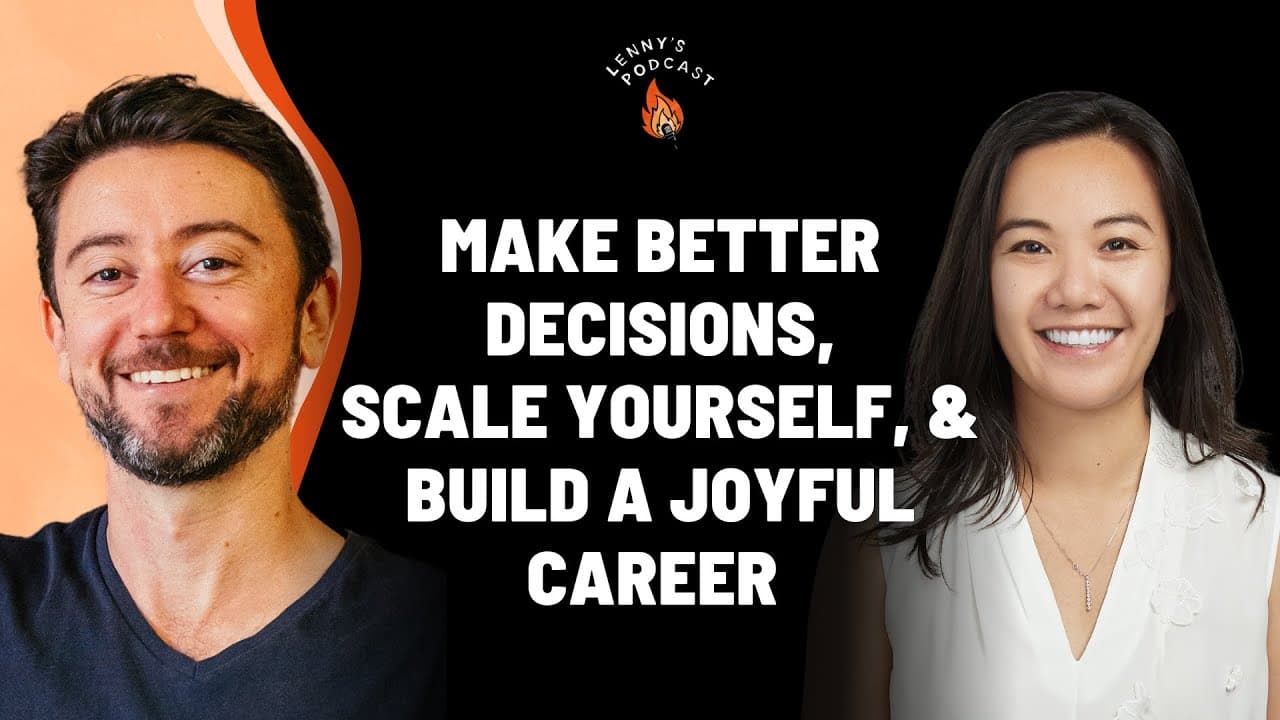
Make better career decisions by asking specific, unbiased questions of both subject matter experts and people who know you well. Ada Chen Rekhi’s curiosity loop turns lightweight feedback into contextual guidance, while values alignment and an explore-and-exploit approach can help balance career success, meaningful work, and personal fulfillment without becoming trapped by lifestyle expectations.
Transcript
you know it's a terrible outcome to wake up one day and be sort of late career and feel trapped because you have a certain lifestyle or a certain expectations of the people around you that you have to go work this job but then you look at yourself in the mirror and you're not happy going in there I think that's a terrible trap that we should all tr... Read More
Key Insights
- Curiosity loops are structured feedback processes that help people become better informed before making decisions. They involve asking a focused question, collecting perspectives from carefully chosen people, examining differences or surprises in the responses, and using the resulting context to improve judgment.
- A good question is specific, requests a rationale, and avoids biasing the respondent. Stating your preferred answer first can encourage people to agree or please you, while a neutral question makes it more likely that their feedback will reveal genuinely useful information.
- Context determines whether advice is useful. Recommendations such as quitting to pursue a dream or staying to build experience can both be well intentioned, yet either may be unsuitable without considering the person’s abilities, circumstances, plans, and available opportunities.
- The right feedback group includes subject matter experts and people who know the decision-maker well. Experts can evaluate the field, opportunity, or proposed path, while close contacts can assess whether the choice fits the person’s strengths, preferences, values, and established patterns.
- Lightweight requests improve participation by reducing cognitive load. Offering a short list and asking respondents to select a small number of choices with reasons lets busy people answer quickly, while still leaving room for anyone who wants to provide more extensive feedback.
- Curiosity loops can be incorporated into ordinary conversations instead of becoming formal research projects. Repeatedly raising the same current question with different people creates an ongoing stream of evidence and makes it possible to notice recurring themes, disagreements, and unexpected observations.
- Career fulfillment is usually a combination of success, meaningfulness, and alignment between work and personal values. A career can become a trap when lifestyle requirements or others’ expectations make someone feel obligated to remain in work that consistently leaves them unhappy.
- Giving feedback is not necessarily a one-sided exchange. Helping another person can feel rewarding, and being invited to share a perspective can make someone feel heard. Processing the responses and thanking contributors closes the loop and acknowledges the value of their effort.
Install to Summarize YouTube Videos and Get Transcripts
Explore YouTube Video Summarizer or Get YouTube Transcript Extractor
Questions & Answers
Q: How can curiosity loops improve career decisions?
Curiosity loops improve career decisions by replacing a single piece of generic advice with multiple contextual perspectives. Start with a specific, unbiased question about a concrete option, then ask both relevant experts and people who know you well. Compare their reasoning, look for patterns and surprises, process what you learn, and thank the contributors after using their feedback.
Q: What makes a good question in a curiosity loop?
A good curiosity-loop question is specific, asks respondents to explain their reasoning, and does not reveal the questioner’s preferred answer first. A broad question such as asking what to do next in a career creates excessive cognitive load and produces vague responses. A concrete proposal gives respondents clear assumptions, personal fit, and practical conditions to examine.
Q: Who should you ask for advice about a career choice?
Ask two complementary kinds of people: subject matter experts who understand the opportunity and trusted contacts who understand you. An expert can assess the role, training route, market, or professional requirements. Someone who knows you well can judge whether the choice matches your abilities, interests, values, temperament, and likely way of working.
Q: How do you make a feedback request easy to answer?
Make the request narrow, concrete, and lightweight. Ada’s podcast preparation email presented nine possible topics and asked recipients to choose their top two or three and explain why they resonated. That format allowed busy founders and product professionals to send a quick response, while still permitting some people to offer comments on every topic or identify one to avoid.
Q: When should a curiosity loop be formal or informal?
Use a formal, heavyweight curiosity loop when a decision benefits from deliberately selected respondents, written options, and a document for organizing rich feedback. Use a lightweight version when the question can be raised naturally during ongoing conversations. In either form, repeat a consistent question across people and examine their answers for differences, patterns, and surprises.
Q: Why can well-intentioned career advice still be bad?
Well-intentioned career advice can be bad because it often lacks context. Telling someone to quit and pursue a dream may ignore their experience or current opportunities, while telling them to remain and build skills may overlook a strong moment to act. Useful guidance accounts for the specific person, proposed path, abilities, circumstances, and relevant environment.
Q: How can personal values guide career choices?
Personal values can help evaluate whether a career produces both achievement and meaningfulness. Ada describes an optimal path as a mix of career success, work that matters to the individual, and alignment with personal values. Examining choices through those criteria can reveal whether external expectations or lifestyle commitments are keeping someone in work that makes them unhappy.
Q: Why should you thank people after collecting feedback?
Thanking people closes the curiosity loop and recognizes the time and thought they contributed. Asking for input is also not entirely one-sided, because helping can feel good and sharing a perspective can make a person feel heard. Still, the decision-maker should process the information carefully and acknowledge the respondents rather than treating their effort as an unlimited resource.
Summary & Key Takeaways
-
Ada Chen Rekhi presents curiosity loops as a structured method for collecting contextual advice. The process begins with a specific, unbiased question that requests reasoning. It then draws responses from relevant experts and people who understand the decision-maker personally, reducing dependence on generic career advice that may not fit the actual situation or person.
-
A curiosity loop can be heavyweight, using an email, document, and deliberately selected respondents, or lightweight, with one recurring question raised during everyday conversations. Both versions look for patterns, differences, and surprises. Requests should be easy to answer so busy people can contribute useful feedback without facing excessive effort or cognitive load.
-
Career satisfaction requires more than conventional success. Ada emphasizes meaningful work, alignment with personal values, and avoiding lifestyle expectations that make an unhappy job feel unavoidable. The broader discussion applies these ideas through values exercises, an explore-and-exploit framework for opportunities, executive coaching, constructive feedback, and advice for women working in Silicon Valley.
Read in Other Languages (beta)
Share This Summary 📚
Summarize YouTube Videos and Get Video Transcripts with 1-Click
Try YouTube Summary with ChatGPT & Claude or YouTube Transcript Generator
Explore More Summaries from Lenny's Podcast 📚




Summarize YouTube Videos and Get Video Transcripts with 1-Click
Try YouTube Summary with ChatGPT & Claude or YouTube Transcript Generator