Yuval Noah Harari on Human Power and Cooperation

TL;DR
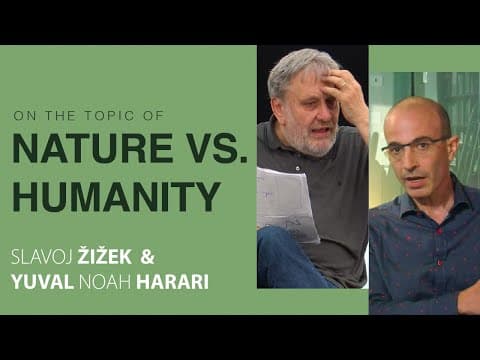
Humanity can address climate change and live more harmoniously with nature, but only by restraining its pursuit of greater power and cooperating globally. Harari argues that humans are both stronger than other animals and difficult to satisfy, making humanity its own greatest danger. Wisdom, compassion, and concern for other animals and future generations can redirect that power.
Transcript
[Applause] good evening hello and welcome everybody to this very first edition of Brave Young Minds thank you so much for being here guys and we're very excited because we have an exciting program today all together now if you're wondering who is this lady telling me all of this my name is I'm 22. I'm a former youth ... Read More
Key Insights
- Human identity is broader than national, religious, or cultural identity. Learning only the story of one's own group reveals just one part of who a person is, while global human history and the history of animals provide a fuller perspective.
- Human emotions are products of a history older than humanity itself. Understanding fear, love, family bonds, and friendship requires looking beyond individual societies and recognizing that humans are animals shaped by millions of years of evolution.
- Everyday pleasures reflect connections across distant societies. Harari notes that football was invented by the English, chocolate was first prepared more than four thousand years ago in Central America, and sugar was domesticated in New Guinea.
- Humans are unstoppable in two distinct senses. They possess more power than other animals, including lions, whales, and elephants, yet they also struggle to stop themselves because achievements and accumulated power rarely satisfy them for long.
- Harmony with nature is possible in principle, but it requires deliberate restraint. Humans must use wisdom and compassion to care about other animals and future generations instead of continually pursuing more power and overwhelming the natural world.
- Humanity's greatest danger is its own power. The central challenge is managing that power through global cooperation, since coordinated action gives people the capacity to undertake projects that would otherwise remain beyond the reach of separate groups.
- Climate change is presented as financially solvable through collective action. Harari says estimates place the necessary additional annual investment near two or three percent of humanity's budget, with even the highest estimates remaining below five percent.
- Human stupidity and human wisdom are both powerful historical forces. People repeatedly make serious mistakes in their private and collective lives, but successful cooperation can also make humanity unstoppable in addressing shared problems.
Install to Summarize YouTube Videos and Get Transcripts
Explore YouTube Video Summarizer or Get YouTube Transcript Extractor
Questions & Answers
Q: Why should children learn the history of humanity?
Children should learn the history of humanity because the histories of their own country, people, and religion provide only part of the explanation of who they are. Ordinary interests and experiences connect them to many societies, while emotions such as fear and love have roots that predate humanity. A broader history therefore supplies a fuller account of human identity.
Q: How does global history shape personal identity?
Global history shows that personal identity contains influences from far beyond a person's immediate group. Harari uses football, chocolate, and sugar to illustrate how familiar parts of life originated in different regions and among different peoples. Knowing only a national, religious, or cultural story leaves these connections unexplained and offers an incomplete understanding of the self.
Q: Why does Harari describe humans as unstoppable?
Harari calls humans unstoppable for two connected reasons. First, humanity has become more powerful than other animals, so lions, whales, and elephants cannot stop it. Second, humans have difficulty stopping themselves because achievements and power do not satisfy them for long. This combination allows humanity to keep expanding its influence while damaging other animals and nature.
Q: Can humans live in harmony with nature?
Humans can live in harmony with nature in principle, but they are not currently doing so. Their exceptional power and recurring desire for more make self-restraint difficult, particularly because other animals cannot force them to stop. Greater harmony requires wisdom, compassion, voluntary limits, and concern for both other animals and future generations.
Q: What is the biggest challenge facing humanity?
The biggest challenge is managing humanity's own power by developing effective global cooperation. Harari argues that humans are now the greatest danger to themselves, yet they can accomplish almost any project when they cooperate. Shared problems such as climate change are therefore not presented as impossible. The difficulty is coordinating priorities, resources, and collective action.
Q: How much investment does Harari say climate action requires?
Harari says economists place the required additional investment for solving climate change in the vicinity of two or three percent of humanity's budget each year over many years. He acknowledges that nobody knows the exact figure because the models are complicated, but says even the highest estimates are below five percent. The obstacle is allocation, not absolute impossibility.
Q: Why is humanity not investing enough in climate solutions?
Humanity is not investing enough because resources are directed toward competing priorities rather than coordinated climate action. Harari points to Russia's invasion of Ukraine as an example, saying money that should help fight climate change instead goes toward tanks and missiles. The problem reflects humanity's broader failure to cooperate globally and manage its power wisely.
Q: Why does Harari remain hopeful about humanity?
Harari remains hopeful because human stupidity is not the only force shaping history. People often make terrible mistakes individually and collectively, but they also possess wisdom and compassion. When humans successfully cooperate on a shared project, their collective capacity becomes extraordinarily powerful. That same power could support nature, future generations, and solutions to climate change.
Summary & Key Takeaways
-
Harari wrote Unstoppable Us to introduce young readers to the broad history of humanity. Schools often emphasize the histories of particular countries, peoples, and religions, but understanding human identity also requires examining global connections, the animal world, and the evolutionary origins of emotions such as fear and love.
-
Human identity extends beyond membership in a single national, religious, or cultural group. Football, chocolate, and sugar illustrate how ordinary parts of life originated among different peoples and places. A fuller understanding of oneself therefore depends on learning humanity's shared history and recognizing that humans are animals shaped by evolution.
-
Humans could live more harmoniously with nature, but their power and persistent desire for more make restraint difficult. Harari identifies global cooperation as humanity's central challenge, particularly when resources needed for problems such as climate change are redirected toward warfare. Human wisdom and compassion nevertheless provide grounds for hope.
Read in Other Languages (beta)
Share This Summary 📚
Summarize YouTube Videos and Get Video Transcripts with 1-Click
Try YouTube Summary with ChatGPT & Claude or YouTube Transcript Generator
Explore More Summaries from Yuval Noah Harari 📚





Summarize YouTube Videos and Get Video Transcripts with 1-Click
Try YouTube Summary with ChatGPT & Claude or YouTube Transcript Generator