Why Does AI Progress Depend So Much on Compute?

TL;DR
AI progress has historically depended more on scalable computation than on hand-crafted expertise, according to Rich Sutton’s Bitter Lesson. General learning and search methods can exploit growing compute even when they initially seem inefficient, while specialized techniques often lose their advantage over time. Future progress may also depend on scalable data annotation, hardware, software efficiency, and methods inspired by evolution.
Transcript
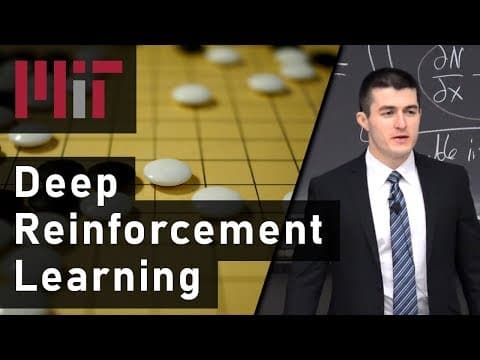
This video is looking at exponential progress of artificial intelligence from a historical perspective and anticipating possible future trajectories that may or may not lead to exponential progress of AI. At the center of this discussion is a blog post called The Bitter Lesson by Rich Sutton, which ties together several different concepts, specific... Read More
Key Insights
- The Bitter Lesson is the argument that most long-term AI progress has come from increasing computation rather than encoding more human expertise. Methods that appeared crude or wasteful often prevailed because they could continue improving as computational resources expanded.
- General learning and search methods are especially effective at exploiting massive computation. Their advantage is not necessarily immediate efficiency or human-like cleverness, but the capacity to scale beyond specialized systems whose performance depends on manually designed knowledge.
- Moore’s Law is presented as transistor counts doubling every two years, providing the principal source of exponential computational improvement across recent decades. From a long-term perspective, computational resources available today are small compared with those expected after continued exponential growth.
- Brute-force search is exemplified by IBM Deep Blue defeating Garry Kasparov in chess. Although such methods were criticized for lacking sophistication, their ability to use large amounts of computation made them historically important examples of scalable artificial intelligence.
- Self-play reinforcement learning is described as a brute-force learning approach because current methods can be wasteful in how efficiently they learn. That inefficiency can be outweighed by their ability to use more computation and discover solutions without directly encoding human expertise.
- Speech recognition and computer vision shifted away from hand-crafted heuristics and features toward statistical learning and neural networks. Neural networks achieved success by automatically discovering useful representations, including hierarchies of visual features, instead of relying primarily on human feature selection.
- Data annotation is a major limitation missing from the Bitter Lesson’s central argument. Successful real-world supervised learning depends on human-labeled examples, and the transcript notes that growth in available computation does not naturally produce a corresponding increase in annotated data.
- Evolution is an open conceptual model for scalable intelligence because it created the human brain through a process that appears computationally wasteful and brute-force. Whether evolution should be classified as search, learning, a combination, a broader category, or something different remains unresolved.
Install to Summarize YouTube Videos and Get Transcripts
Explore YouTube Video Summarizer or Get YouTube Transcript Extractor
Questions & Answers
Q: What is the Bitter Lesson in artificial intelligence?
The Bitter Lesson is Rich Sutton’s argument that most progress in artificial intelligence across roughly seventy years has resulted from greater computational power rather than from increasingly elaborate human-designed knowledge. General methods, especially learning and search, ultimately outperform specialized techniques because they can exploit expanding computation and discover solutions automatically instead of depending mainly on fixed heuristics or expert assumptions.
Q: Why do general AI methods outperform specialized methods over time?
General methods can continue benefiting when computational capacity grows, whereas specialized methods are often optimized around current resources and manually encoded expertise. A human-designed technique may produce an immediate incremental improvement, but its advantage can disappear as scalable learning or search receives much more compute. Long-term success therefore depends heavily on whether a method can absorb additional computation productively.
Q: How does Moore’s Law relate to progress in AI?
Moore’s Law is described as transistor counts doubling every two years, creating exponential growth in available computation. AI methods capable of using that growth can improve even if their underlying procedures remain comparatively simple or inefficient. The historical argument is that learning and search advanced by riding this computational trend, while many carefully tailored methods could not scale in the same way.
Q: Why are search and learning central to the Bitter Lesson?
Search and learning are central because they are the two categories Rich Sutton identifies as particularly capable of using massive computation. Search can evaluate many possible actions or solutions, while learning can discover patterns and representations from experience. Both approaches may consume resources inefficiently, but that apparent weakness becomes less important when computation grows exponentially and the methods remain scalable.
Q: What historical examples support computation-driven AI progress?
The transcript points to IBM Deep Blue’s brute-force search in chess, DeepMind’s reinforcement learning and self-play in Go, and the evolution of speech recognition from heuristics through hidden Markov models to neural networks. It also cites computer vision’s transition from manually selected features, including SIFT, to neural networks that automatically learn hierarchies of useful visual features.
Q: Why is human-annotated data a challenge for scaling AI?
Supervised learning, described as highly successful in real-world applications, requires data labeled by people. More computation does not automatically create more human annotations, so computational scaling alone cannot guarantee corresponding improvements in a supervised system. Any account of future exponential progress must therefore consider how data production and annotation can scale, with active learning mentioned as one potentially exciting area.
Q: How should researchers evaluate whether an AI method is scalable?
Researchers should ask how a proposed method would behave if it received ten times or one hundred times more computation over the next five, ten, or twenty years. A valuable method should continue benefiting from those resources, ideally scaling at least linearly with compute. The transcript suggests that research papers could explicitly discuss this long-term scaling question when presenting new approaches.
Q: Is evolution a form of search or learning in AI terms?
The transcript treats this as an unresolved question. Evolution might be a search process, a learning process, a combination of both, a superset, or a fundamentally different phenomenon. It nevertheless resembles scalable AI methods because it created intelligent life through a process that appears brute-force and wasteful from a human perspective, suggesting that it may use computation effectively.
Summary & Key Takeaways
-
Rich Sutton’s Bitter Lesson argues that most major AI improvements across roughly seventy years resulted from increased computation rather than clever, specialized algorithms. General learning and search methods succeeded because they could absorb growing computational resources, while systems built around human knowledge and carefully designed heuristics tended to provide only temporary advantages.
-
Historical examples include chess systems using extensive search, Go systems learning through reinforcement learning and self-play, speech recognition moving from heuristics toward statistical models and neural networks, and computer vision replacing hand-selected features with automatically learned feature hierarchies. These cases illustrate how general methods can improve as computational capacity expands.
-
The argument leaves important questions unresolved. Supervised learning relies on human-annotated data, which does not automatically scale alongside computation. Researchers should therefore assess whether methods remain useful with ten or one hundred times more compute, while exploring parallel processing, specialized hardware, efficient deep learning, active learning, and evolution-inspired approaches.
Read in Other Languages (beta)
Share This Summary 📚
Summarize YouTube Videos and Get Video Transcripts with 1-Click
Try YouTube Summary with ChatGPT & Claude or YouTube Transcript Generator
Explore More Summaries from Lex Fridman 📚





Summarize YouTube Videos and Get Video Transcripts with 1-Click
Try YouTube Summary with ChatGPT & Claude or YouTube Transcript Generator